Loading lot details…
The Fall 2011 Internet Only Auction
Swipe left for previous · Swipe right for next
Lot 273
Estimate: $225
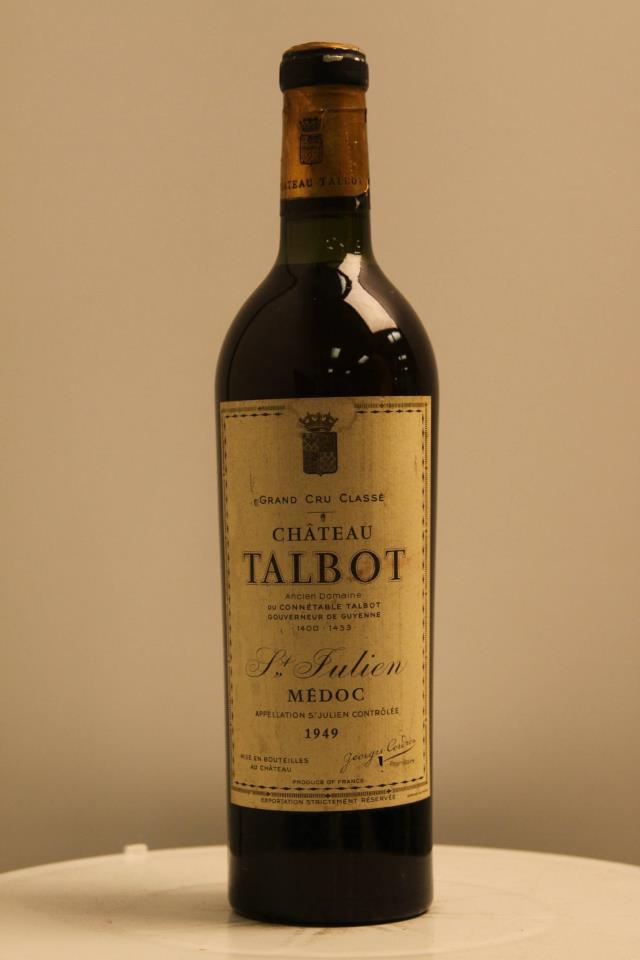
Base neck; scuffed capsule cut to reveal Chateau and vitnage branded cork, lightly bin soiled and nicked label.
Sold:
This auction has ended. Bidding is closed.
Collection name
Reviews
***MB
"[1949 is] The third of the great trio of post-war vintages. Stylistically quite different from the concentrated '45s and the ripe and more opulent '47s. At their best, and there were many wines of great style, avoiding some of the constraints and excesses of the two other vintages just mentioned. What on earth were the growing conditions to produce wines like these? Certainly not predictable, perhaps not even understandable. The year started with the driest January and February all round. The always crucial flowering period took place in cold, rainy weather which cause the worst coulure ever remembered and, consequently, a much reduced crop. Hot weather followed, increasing to an almost unprecedented heat wave, 43°C recorded in the Médoc on 11 July. Then storms and, finally, a late harvest in fine weather. It was a very popular vintage with merchants and their customers, prices being very reasonable: Lafite 'for laying down' (in 1954) a mere 24 shillings a bottle, unsurprisingly sold out by the following year. The best are still superb . . . . [Château Talbot 1949 is] More masculine than its 'cousin' Gruaud. An aged classic."
Region
Red
Country
Score
"[1949 is] The third of the great trio of post-war vintages. Stylistically quite different from the concentrated '45s and the ripe and more opulent '47s. At their best, and there were many wines of great style, avoiding some of the constraints and excesses of the two other vintages just mentioned. What on earth were the growing conditions to produce wines like these? Certainly not predictable, perhaps not even understandable. The year started with the driest January and February all round. The always crucial flowering period took place in cold, rainy weather which cause the worst coulure ever remembered and, consequently, a much reduced crop. Hot weather followed, increasing to an almost unprecedented heat wave, 43°C recorded in the Médoc on 11 July. Then storms and, finally, a late harvest in fine weather. It was a very popular vintage with merchants and their customers, prices being very reasonable: Lafite 'for laying down' (in 1954) a mere 24 shillings a bottle, unsurprisingly sold out by the following year. The best are still superb . . . . [Château Talbot 1949 is] More masculine than its 'cousin' Gruaud. An aged classic."
Have questions?
The world's most influential fine-wine producer and the benchmark for Bordeaux, Burgundy, Champagne and the Rhone. Its appellation (AOC) system codifies geography, grape and method, and its wines set the global standard for age-worthiness and terroir expression.
The world's largest fine-wine region, built around blends of Cabernet Sauvignon and Merlot. Divided by the Gironde estuary into the structured Left Bank and the plush, Merlot-led Right Bank, it is the historic benchmark for age-worthy claret and sweet Sauternes.
Chateau Talbot is a Fourth Growth estate in Saint-Julien, Bordeaux, producing generous, supple and reliably classic Cabernet-based wines from its large single vineyard.
An aromatic red grape lending perfume, red fruit and a leafy, savory edge. It thrives in the Loire and as a key blending partner in Bordeaux, especially Saint-Emilion.
The world's most planted premium red grape, yielding deeply colored, tannic and structured wines with cassis, cedar and graphite notes. Firm tannins and acidity make it exceptionally age-worthy, whether as a varietal or the backbone of a Bordeaux blend.
Produces plush, supple, fruit-forward reds with plum and chocolate notes. Softer and earlier-maturing than Cabernet, it adds flesh and roundness to blends and stars in Right Bank Bordeaux.
A deeply colored, tannic Bordeaux blending grape adding color, structure and floral, spicy complexity in small proportions.