
Loading lot details…
The Spring 2012 Live Auction
Swipe left for previous · Swipe right for next
 1 / 2
Lot 1033
Estimate: $1,200
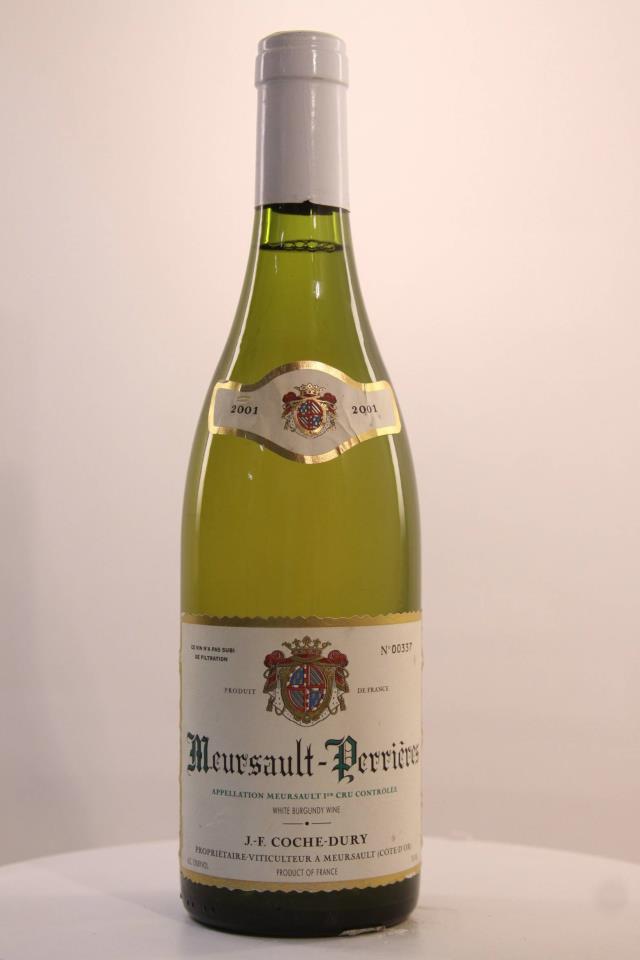
Lightly scuffed capsule, bin soiled label and vintage neck tag, nicked.
This auction has ended. Bidding is closed.
Collection name
Reviews
98-100WA
"The towering aromatics of the 2001 Meursault Perrières reveal oodles of candied apples, flowers, minerals, pears, and gravel. A wine of unbelievable purity and breadth, it conquers the palate with bacon-laced minerals, spiced stones, smoky pears, and buttered toast. Satin-textured, lush, and medium-bodied, this awe-inspiring wine is complete. Described by the exceedingly modest Coche as 'un vin de grande classe' (a wine of great class) it has perfect balance, harmony, and unheard of depth . . . . By the time I entered the cellars of Jean-François Coche, I’d been tasting in Burgundy for nearly three weeks. The vintage remained perplexing . . . . Within minutes of my arrival, Coche took all those pieces of the puzzle, rearranged them, and showed me a clear picture of the vintage. 'People simply harvest too early, and they’re thinking about finishing before they even start, so they harvest too early and too quickly.' He went on to explain that he takes 11 days to harvest his 9.43 hectare (23.3 acres) estate even though he could do it much more quickly. 'The key is to wait for each parcel to ripen. I wait seven days between my Vireuils-Dessous and Vireuils-Dessus because that’s what it takes. I don’t simply send the harvesters up the hill just because they happen to be in the vicinity' . . . . To Jean-François Coche, 2001 is a great vintage for whites, 'because the grapes were healthy, perfectly ripe with golden colors, yields were moderate, certainly lower than 2000 and 1999, and the malolactic fermentations took a really long time, from early winter to September for most of them (one was still gurgling away). These wines will age extremely well, in fact I’m considering not releasing the top wines for a number of years like I’ve done with the 1996s' . . . . What sets Coche apart from the world’s hordes of winemakers is more than his picking dates and harvesting techniques. It is dedication. With exceedingly few exceptions, producers throughout the world wish for their wines to be tasted between 10am and 11:30am, because somebody’s told them the wines showed best during that time-frame. Coche demands that tastings be conducted after nightfall: 'I’ll be in the vineyards starting at dawn, so we must meet at night.' Therein lies the answer as to why Coche has yields low enough that they can ripen, healthy bunches, and the conscientiousness to harvest only when the grapes are fully mature."
Region
White
Country
Score
"The towering aromatics of the 2001 Meursault Perrières reveal oodles of candied apples, flowers, minerals, pears, and gravel. A wine of unbelievable purity and breadth, it conquers the palate with bacon-laced minerals, spiced stones, smoky pears, and buttered toast. Satin-textured, lush, and medium-bodied, this awe-inspiring wine is complete. Described by the exceedingly modest Coche as 'un vin de grande classe' (a wine of great class) it has perfect balance, harmony, and unheard of depth . . . . By the time I entered the cellars of Jean-François Coche, I’d been tasting in Burgundy for nearly three weeks. The vintage remained perplexing . . . . Within minutes of my arrival, Coche took all those pieces of the puzzle, rearranged them, and showed me a clear picture of the vintage. 'People simply harvest too early, and they’re thinking about finishing before they even start, so they harvest too early and too quickly.' He went on to explain that he takes 11 days to harvest his 9.43 hectare (23.3 acres) estate even though he could do it much more quickly. 'The key is to wait for each parcel to ripen. I wait seven days between my Vireuils-Dessous and Vireuils-Dessus because that’s what it takes. I don’t simply send the harvesters up the hill just because they happen to be in the vicinity' . . . . To Jean-François Coche, 2001 is a great vintage for whites, 'because the grapes were healthy, perfectly ripe with golden colors, yields were moderate, certainly lower than 2000 and 1999, and the malolactic fermentations took a really long time, from early winter to September for most of them (one was still gurgling away). These wines will age extremely well, in fact I’m considering not releasing the top wines for a number of years like I’ve done with the 1996s' . . . . What sets Coche apart from the world’s hordes of winemakers is more than his picking dates and harvesting techniques. It is dedication. With exceedingly few exceptions, producers throughout the world wish for their wines to be tasted between 10am and 11:30am, because somebody’s told them the wines showed best during that time-frame. Coche demands that tastings be conducted after nightfall: 'I’ll be in the vineyards starting at dawn, so we must meet at night.' Therein lies the answer as to why Coche has yields low enough that they can ripen, healthy bunches, and the conscientiousness to harvest only when the grapes are fully mature."
Have questions?
The world's most influential fine-wine producer and the benchmark for Bordeaux, Burgundy, Champagne and the Rhone. Its appellation (AOC) system codifies geography, grape and method, and its wines set the global standard for age-worthiness and terroir expression.
Produces the world's most revered Pinot Noir and Chardonnay from a mosaic of tiny, terroir-defined climats. Its hierarchy of village, Premier Cru and Grand Cru vineyards makes site the ultimate expression of quality.
The Cote de Beaune's largest white-wine village, known for rich, nutty, buttery Chardonnay of generous texture.
The world's most versatile white grape, producing everything from steely Chablis to rich, oaked whites. Its neutrality makes it a mirror of terroir and winemaking, and the foundation of white Burgundy and Champagne.