
Loading lot details…
The January 2016 Internet-Only Auction Part 2
Swipe left for previous · Swipe right for next
 1 / 4
Lot 2296
Estimate: $190
This auction has ended. Bidding is closed.
Collection name
Reviews
98WA
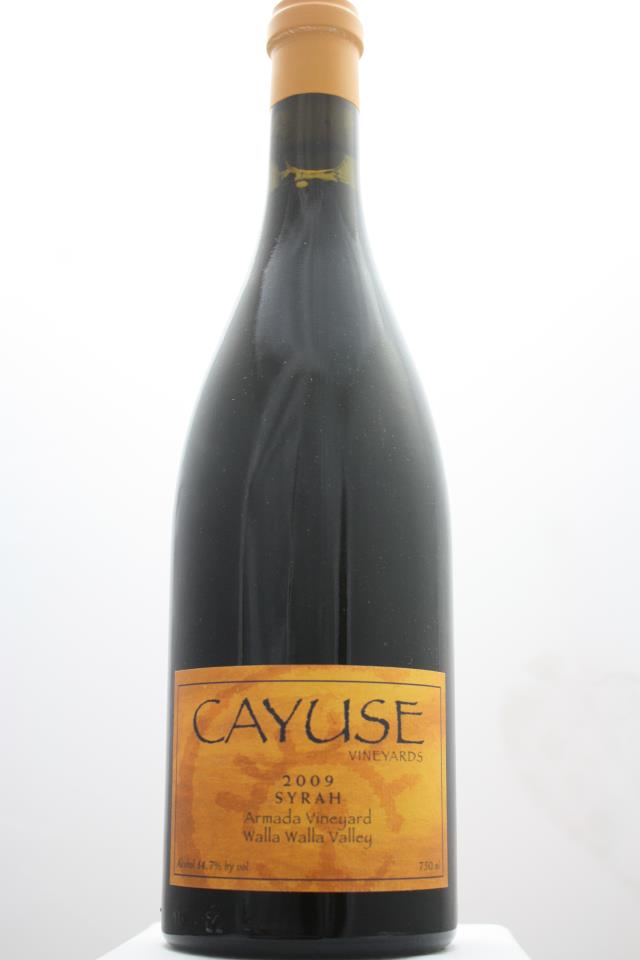
"From his high-density 2001 planting, Baron’s 2009 Syrah Armada Vineyard leads with a high-toned, penetrating nose that one can scarcely avoid calling Côte-Rôtie-like: bacon fat, fresh cherry, kirsch, framboise, and violet. But there are also black tea, caramel, and a penetrating note of sealing wax that’s reminiscent of mature Bordeaux. Around one quarter of the 600-liter barrels in which this was raised (following fermentation in a mixture of cement and wood) were new. Dense, fine-grained but more evident tannins than in most of the present collection appear on a palate whose savory salinity and saliva-inducement, however, are utterly Cayuesque. The interplay of flavors here is kaleidoscopic and at the same time almost eye-squintingly bright. What’s more, as the wine opens to the air, a real layering and interplay emerges of diverse carnal elements alone: smoked meat, game, bloody roasted red meat, marrow and bone meal. This Syrah’s phenomenal sense of energy as well as of sheer, sappy, expansive presence, make for a finish whose vibratory intensity shakes-up my entire mouth. A truly awesome effort, it will surely be worth following for at least 15 years, though I’ve a hunch – without knowing how Baron’s earliest wines (which were surely different in important respects anyway) have matured – that it will reward for significantly longer. (And if you wonder what Baron can do for an encore to such a performance, just sit tight for a year or two!) I’m relieved I didn’t consider it necessary to “score” this wine any higher, otherwise I’d have left no room to express symbolically that the best is yet to come. Just as the cobbled soils around Milton-Freewater captivated Champenois Christophe Baron’s imagination on what he calls “a fateful April morning in 1996,” so the 100% estate-bottled wines he has grown in them since have amazed and inspired oenophiles to the extent of creating a veritable cult. “I’m here because of the rocks,” says Baron, who, although he loved the Rhone as much as he did Burgundy, was at the time planning to grow Pinot in the Willamette Valley, “and because I just happened to open a book and show a friend in Walla Walla what vineyards look like in Chateauneuf. ‘I know where we have rocks like that,’ he told me, and I said: ‘Take me there tomorrow!’” “The only way to tell how deep” the striking carpet of stones in his vineyards extends, says Baron “is to go down a well.” Baron – who emphasizes that he is conservative but at the same time scientifically rigorous about when and how much water to drip onto his vines – was one of the few Washington growers I met who spoke about, much less offered some specifics regarding root penetration. “In the summer – after crop-thinning (is done) and the (bird) nets are on, we get bored, so we rent a backhoe and we dig holes. And by the third leaf (i.e. year) the roots are already ten feet down.” Laura Pursley – who assists Baron in the vineyards (her fellow “assistant vigneronne” and counterpart in the “wine studio” – Baron’s name for his facility – is Elizabeth Bourcier) – notes that “opposite to what you’d think, it’s our sites with the highest clay content, with a bit more soil and less rock, that dry-out soonest.” From the inception of Cayuse, Baron commenced the painstaking work of generating his own vine selection from the clonally monotonous Syrah and Grenache material then available. From 2000 on, he has been taking advantage of the new diversity of clones available stateside and begun grafting these onto rootstock, explaining “I believe that sooner or later phylloxera will make its way to Washington.” Baron’s most recent plantings of up to 4,840 vines per acre are, he believes, as high-density as any in North America and are horse-tilled, typically eight times a year. “That’s how to get fruit ripe at lower brix; get unbelievable (tannic) structure; and unlock the gates of terroir,” he opines (offering elucidation I won’t detail on this occasion). Farming biodynamically since 2002, Baron’s approach – which involves 25 full-time staff, one person per hectare – appears as labor-intensive and detail-attentive as I have encountered anywhere in the world."
Region
Red
Country
Score
"From his high-density 2001 planting, Baron’s 2009 Syrah Armada Vineyard leads with a high-toned, penetrating nose that one can scarcely avoid calling Côte-Rôtie-like: bacon fat, fresh cherry, kirsch, framboise, and violet. But there are also black tea, caramel, and a penetrating note of sealing wax that’s reminiscent of mature Bordeaux. Around one quarter of the 600-liter barrels in which this was raised (following fermentation in a mixture of cement and wood) were new. Dense, fine-grained but more evident tannins than in most of the present collection appear on a palate whose savory salinity and saliva-inducement, however, are utterly Cayuesque. The interplay of flavors here is kaleidoscopic and at the same time almost eye-squintingly bright. What’s more, as the wine opens to the air, a real layering and interplay emerges of diverse carnal elements alone: smoked meat, game, bloody roasted red meat, marrow and bone meal. This Syrah’s phenomenal sense of energy as well as of sheer, sappy, expansive presence, make for a finish whose vibratory intensity shakes-up my entire mouth. A truly awesome effort, it will surely be worth following for at least 15 years, though I’ve a hunch – without knowing how Baron’s earliest wines (which were surely different in important respects anyway) have matured – that it will reward for significantly longer. (And if you wonder what Baron can do for an encore to such a performance, just sit tight for a year or two!) I’m relieved I didn’t consider it necessary to “score” this wine any higher, otherwise I’d have left no room to express symbolically that the best is yet to come. Just as the cobbled soils around Milton-Freewater captivated Champenois Christophe Baron’s imagination on what he calls “a fateful April morning in 1996,” so the 100% estate-bottled wines he has grown in them since have amazed and inspired oenophiles to the extent of creating a veritable cult. “I’m here because of the rocks,” says Baron, who, although he loved the Rhone as much as he did Burgundy, was at the time planning to grow Pinot in the Willamette Valley, “and because I just happened to open a book and show a friend in Walla Walla what vineyards look like in Chateauneuf. ‘I know where we have rocks like that,’ he told me, and I said: ‘Take me there tomorrow!’” “The only way to tell how deep” the striking carpet of stones in his vineyards extends, says Baron “is to go down a well.” Baron – who emphasizes that he is conservative but at the same time scientifically rigorous about when and how much water to drip onto his vines – was one of the few Washington growers I met who spoke about, much less offered some specifics regarding root penetration. “In the summer – after crop-thinning (is done) and the (bird) nets are on, we get bored, so we rent a backhoe and we dig holes. And by the third leaf (i.e. year) the roots are already ten feet down.” Laura Pursley – who assists Baron in the vineyards (her fellow “assistant vigneronne” and counterpart in the “wine studio” – Baron’s name for his facility – is Elizabeth Bourcier) – notes that “opposite to what you’d think, it’s our sites with the highest clay content, with a bit more soil and less rock, that dry-out soonest.” From the inception of Cayuse, Baron commenced the painstaking work of generating his own vine selection from the clonally monotonous Syrah and Grenache material then available. From 2000 on, he has been taking advantage of the new diversity of clones available stateside and begun grafting these onto rootstock, explaining “I believe that sooner or later phylloxera will make its way to Washington.” Baron’s most recent plantings of up to 4,840 vines per acre are, he believes, as high-density as any in North America and are horse-tilled, typically eight times a year. “That’s how to get fruit ripe at lower brix; get unbelievable (tannic) structure; and unlock the gates of terroir,” he opines (offering elucidation I won’t detail on this occasion). Farming biodynamically since 2002, Baron’s approach – which involves 25 full-time staff, one person per hectare – appears as labor-intensive and detail-attentive as I have encountered anywhere in the world."
Have questions?
The fourth-largest wine producer in the world, led by California. American fine wine is defined by ripe, expressive fruit and a spirit of innovation, with Napa Valley Cabernet Sauvignon among the most sought-after wines globally.
Syrah (Shiraz) produces dark, powerful reds with black fruit, pepper and smoked-meat notes. It yields elegant, perfumed wines in the northern Rhone and bold, rich styles in Australia.