
Loading lot details…
The October 2016 Internet-Only Auction Part 2
Swipe left for previous · Swipe right for next
 1 / 2
Lot 455
Estimate: $300
OC. 1 nicked label.
Sold:
This auction has ended. Bidding is closed.
Collection name
Reviews
95WA
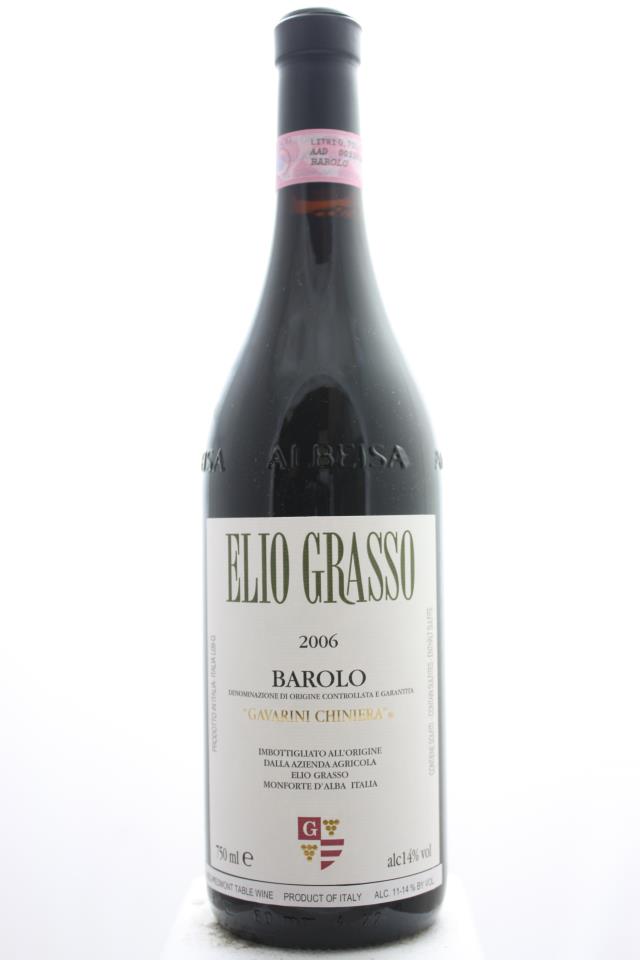
"Grasso’s 2006 Barolo Gavarini Vigna Chiniera is laced with racy, perfumed red fruit, flowers and minerals. The wine gains weight and depth in the glass as its energy and vibrancy take center stage. This is a supremely beautiful Barolo where expressive aromatics, generous fruit and silky tannins come together with unusual grace and elegance. Sweet, floral notes add a sense of lift on the finish. The 2006 is the best Gavarini since the 1989, and who knows if one day it might not match that legendary Barolo. Readers won’t want to miss the sublime 2006 Gavarini Vigna Chiniera . . . . I was deeply impressed with the Barolos I tasted this year from Elio and Gianluca Grasso. This is an important vintage for the Grasso family, and readers will want to get their hands on these exceptionally pure, beautiful wines before they disappear. In discussing their 2006s, many producers draw comparisons with their 1989s. This is one of the cases where such a comparison seems fitting. Speaking of which, readers may want to take a look at my notes on Grasso’s 1989s (and 1990s, too) in my “What About Now” feature in this issue. Grasso farms three vineyards in Monforte; Ginestra, Gavarini and Runcot, all of which have their own unique qualities. Harvest times can vary as much as 7-10 days from parcel to parcel. The Barolos are fermented using the traditional submerged cap method and see a full month of maceration on the skins. Malolactic fermentation is done in steel, and the wines are subsequently aged in cask. Despite all of their success, Elio, Marina, Gianluca and Francesca Grasso, along with their cellarmaster Enrico Marchisio, remain some of the most unassuming, humble and classy people readers will meet in Piedmont."
Region
Red
Country
Score
"Grasso’s 2006 Barolo Gavarini Vigna Chiniera is laced with racy, perfumed red fruit, flowers and minerals. The wine gains weight and depth in the glass as its energy and vibrancy take center stage. This is a supremely beautiful Barolo where expressive aromatics, generous fruit and silky tannins come together with unusual grace and elegance. Sweet, floral notes add a sense of lift on the finish. The 2006 is the best Gavarini since the 1989, and who knows if one day it might not match that legendary Barolo. Readers won’t want to miss the sublime 2006 Gavarini Vigna Chiniera . . . . I was deeply impressed with the Barolos I tasted this year from Elio and Gianluca Grasso. This is an important vintage for the Grasso family, and readers will want to get their hands on these exceptionally pure, beautiful wines before they disappear. In discussing their 2006s, many producers draw comparisons with their 1989s. This is one of the cases where such a comparison seems fitting. Speaking of which, readers may want to take a look at my notes on Grasso’s 1989s (and 1990s, too) in my “What About Now” feature in this issue. Grasso farms three vineyards in Monforte; Ginestra, Gavarini and Runcot, all of which have their own unique qualities. Harvest times can vary as much as 7-10 days from parcel to parcel. The Barolos are fermented using the traditional submerged cap method and see a full month of maceration on the skins. Malolactic fermentation is done in steel, and the wines are subsequently aged in cask. Despite all of their success, Elio, Marina, Gianluca and Francesca Grasso, along with their cellarmaster Enrico Marchisio, remain some of the most unassuming, humble and classy people readers will meet in Piedmont."
Have questions?
Italy grows more indigenous grape varieties than any other country and produces wine in all 20 of its regions. From Piedmont's Nebbiolo to Tuscany's Sangiovese, its finest wines pair structure and bright acidity with a strong sense of place.
In Italy's northwest, Piedmont is home to Nebbiolo, the grape behind the powerful, perfumed and long-lived reds of Barolo and Barbaresco. Fog-shrouded hills and calcareous soils define its greatest wines.
The 'King of Wines,' a powerful, tannic and perfumed Nebbiolo from Piedmont's Langhe hills, celebrated for tar-and-roses aromatics and extraordinary aging potential.
Produces pale but powerfully tannic and perfumed reds with tar, rose and cherry notes. The grape behind Barolo and Barbaresco, it is among the most age-worthy in the world.