
Loading lot details…
The July 2017 Internet-Only Auction Part 3
Swipe left for previous · Swipe right for next
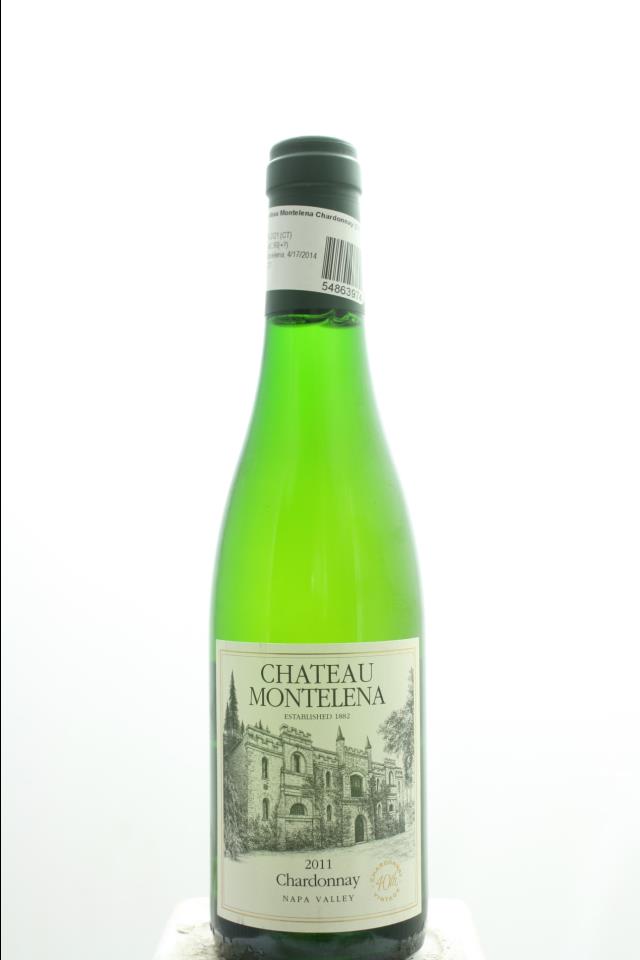 1 / 2
Lot 616
Estimate: $95
Inventory labels on capsules and lightly scuffed labels.
Sold:
This auction has ended. Bidding is closed.
Collection name
Reviews
93WA
"Scented of freshly squeezed lemons, lime leaves and orange blossoms with touches of struck match, crushed stones and peach kernels, the 2011 Chardonnay boasts incredible precision and depth, with a racy backbone cutting through the taut, medium-bodied palate, finishing long and steely. The iconic Gothic stone winery now known as Chateau Montelena was originally built by Alfred Tubbs in the 1880s. It was purchased by Jim and Judy Barrett in the early 1970s. The property came with around 100 acres of vines, but rather surprisingly, there was no Cabernet Sauvignon planted. At that time, it was believed that Calistoga was too warm to produce high quality Cabernet, and so the Estate vineyard was mainly planted to Zinfandel and Rhône varieties. In 1972 and 1974, Jim Barrett grubbed up a lot of the old vines and began planting Cabernet Sauvignon. Meanwhile, the Cabernets produced in 1974 and 1975 were prototypes, using purchased fruit from Sonoma, Alexander Valley and Napa Valley, until the Estate vineyard began to come online. 1973 was the first vintage that Jim’s son, Bo Barrett, helped with on the estate, and today he remains in charge as CEO and master winemaker. 'We used a lot more acid back then,' Bo Barrett commented, 'than we do now. I think you can still taste a bit of stems in these early wines too. It was around 1990 that we got a new destemmer.'"
Region
White
Country
Score
"Scented of freshly squeezed lemons, lime leaves and orange blossoms with touches of struck match, crushed stones and peach kernels, the 2011 Chardonnay boasts incredible precision and depth, with a racy backbone cutting through the taut, medium-bodied palate, finishing long and steely. The iconic Gothic stone winery now known as Chateau Montelena was originally built by Alfred Tubbs in the 1880s. It was purchased by Jim and Judy Barrett in the early 1970s. The property came with around 100 acres of vines, but rather surprisingly, there was no Cabernet Sauvignon planted. At that time, it was believed that Calistoga was too warm to produce high quality Cabernet, and so the Estate vineyard was mainly planted to Zinfandel and Rhône varieties. In 1972 and 1974, Jim Barrett grubbed up a lot of the old vines and began planting Cabernet Sauvignon. Meanwhile, the Cabernets produced in 1974 and 1975 were prototypes, using purchased fruit from Sonoma, Alexander Valley and Napa Valley, until the Estate vineyard began to come online. 1973 was the first vintage that Jim’s son, Bo Barrett, helped with on the estate, and today he remains in charge as CEO and master winemaker. 'We used a lot more acid back then,' Bo Barrett commented, 'than we do now. I think you can still taste a bit of stems in these early wines too. It was around 1990 that we got a new destemmer.'"
Have questions?
The fourth-largest wine producer in the world, led by California. American fine wine is defined by ripe, expressive fruit and a spirit of innovation, with Napa Valley Cabernet Sauvignon among the most sought-after wines globally.
California's most prestigious wine region, celebrated worldwide for opulent, structured Cabernet Sauvignon. Diverse soils and mountain-to-valley-floor sites yield wines of remarkable ripeness, power and longevity.
California's flagship appellation for opulent, structured Cabernet Sauvignon of ripe fruit, plush tannins and cellar-worthy depth.
The world's most versatile white grape, producing everything from steely Chablis to rich, oaked whites. Its neutrality makes it a mirror of terroir and winemaking, and the foundation of white Burgundy and Champagne.