Loading lot details…
The January 2019 Internet-Only Auction Part 2
Swipe left for previous · Swipe right for next
Lot 662
Estimate: $200
Sold:
This auction has ended. Bidding is closed.
Collection name
Reviews
MS
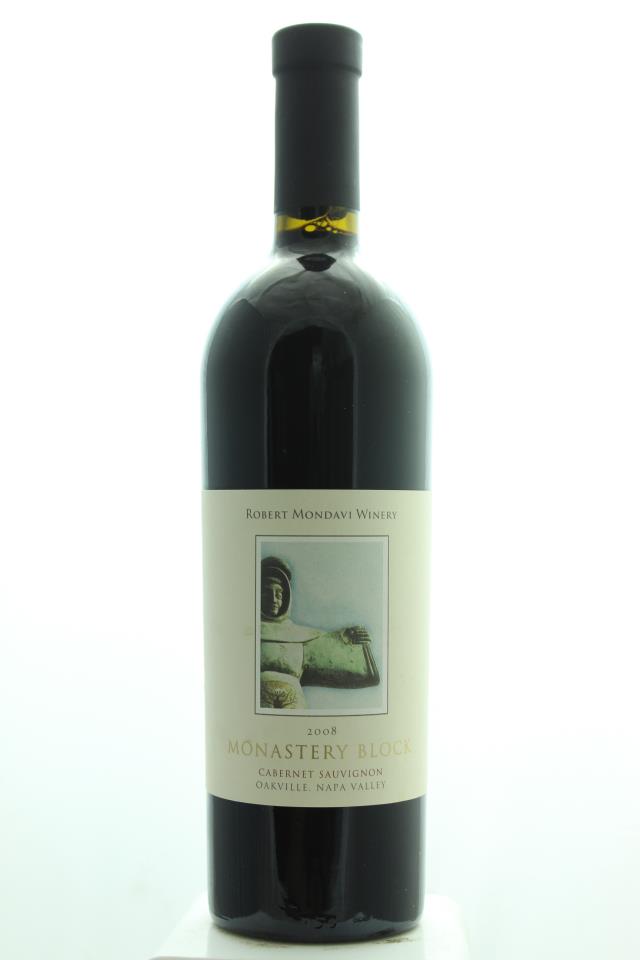
“Of course, there were two parcels of [Hamilton W.] Crabb’s To Kalon, measuring 110 acres in total, that [Martin] Stelling never managed to acquire. One was the USDA’s 20-acre Old Federal Vineyard; the other Mary Churchill sold to Beaulieu Vineyards in 1943. It was known as Beaulieu Vineyard #4 until 1993, when Andy Beckstoffer bought 89 of its 90 acres . . . . With the 2000 vintage, [Andy] Beckstoffer convinced one of his clients, Schrader Cellars, to label the wine as ‘Beckstoffer Original To Kalon Vineyard.’ Robert Mondavi Winery, which had secured trademark registrations for ‘To Kalon’ in 1988 and ‘To Kalon Vineyard’ in 1994, promptly sued Schrader upon the wine’s release in 2002 for infringement and sought an injunction on sales. Schrader filed a counterclaim, and Beckstoffer immediately responded with his own suit against the winery, claiming that it misled the public by exaggerating the original dimensions of the vineyard and by downplaying its historic significance. Beckstoffer even argued that I-Block, the source of Mondavi’s limited and legendary ‘To Kalon I-Block’ Fumé Blanc, was marketed deceptively—that it wasn’t part of the original To Kalon. The parties settled out of court the following year. While the exact terms were never made public, Beckstoffer won the right to allow his clients use of the name ‘To Kalon’ on their labels, subject to a maximum case cap . . . . From 2003 forward, ‘To Kalon Vineyard’ on a bottle of wine could have two very different implications: for Beckstoffer it is a vineyard designate and indication of geographic origin, subject to TTB rules on label language; for Mondavi it is trademark, theoretically free from TTB oversight. The vineyard name on a bottle from Beckstoffer’s plot signifies a minimum 95% of To Kalon Vineyard fruit. ‘To Kalon Vineyard’ appeared on Mondavi Reserve Cabernet for the first time in 2011—does it mean the same thing? . . . . In 1873, Crabb planted vineyards for George Yount’s grandson John Davis, a neighbor whose land pressed westward from Hermosa Vineyards into the Mayacamas Mountains, and Crabb began purchasing Davis’ fruit in 1879 to increase his own production. In 1881 Crabb bought a second parcel of farmland, comprising an adjacent 119 acres south of Walnut Road and north of the Oakville Grade Road, for a sum of $12,000 from Eliza Yount. For Andy Beckstoffer, this second purchase cemented the historical boundaries of To Kalon, and he offered this declaration in court: ‘My review of the official maps, property records, and Chain of Title Guarantees confirm that Crabb owned two parcels of land totaling approximately 524 acres. The first parcel was the approximate 359-acre To Kalon Vineyard (comprising the original 240-acre parcel and the 1881 119-acre acquisition), and the second parcel of land was the approximate 165-acre of land up in the hills west of Oakville’ It’s home to Harlan Estate today, but this southwestern parcel was not cultivated with vines during Crabb’s lifetime. Essentially, Beckstoffer argued the modern shape of To Kalon should only include land owned by Crabb, planted during his lifetime, and used for the production of To Kalon wines. With his 2003 declaration, Beckstoffer left no uncertainty: supported by deeds of sale, county maps from the time, and William Heintz’s 1980 historical report The Vineyards and Wine of H. W. Crabb, Oakville, CA. and his ‘To Kalon’ Label, the 359-acre To Kalon Vineyard stretched 0.7 miles west of the highway with the Oakville Grade as its southern border. But in Heintz’s report the historian marks the western border ‘more than one mile’ to the west of Highway 29, where the valley meets the hillsides. If true, Mondavi’s 1945 I-Block, 1973 Z-Block, and Monastery Block—arguably the winery’s best tracts of vineyard—would actually be within To Kalon’s boundaries, contrary to Beckstoffer’s assertion. Today these sections of vineyard, along with a small sliver of Opus One’s holdings and the parcels owned by the Detert and MacDonald families, all lie along the western side of Crabb’s 1868 and 1881 parcels. These were John Davis’ vineyards. Crabb planted the vines; Crabb purchased and used the fruit for To Kalon wine. Several years after the settlement, brothers Graeme and Alex MacDonald returned to their family’s 15-acre vineyard adjacent to the original 1868 Crabb parcel. In 2010, they began bottling a small amount of wine under the family name and meticulously digging through old records, deeds, newspapers, and other yellowed relics of the past. In a Napa County Reporter story dated January 25, 1873, the MacDonald brothers found proof that Crabb planted Davis’ first vineyards; winery sales receipts and an interview with Crabb’s winemaker Hans Hansen legitimized the claim that Crabb purchased Davis’ fruit for his wines. More importantly, they found an old deed of sale: in 1891 Crabb actually purchased the 650-acre Davis parcel and its 135 acres of vines. The modern I-Block, Z-Block, Monastery Block, Detert, MacDonald, Opus One - they were all incorporated into Crabb’s holdings in 1891. With the addition of this final parcel Crabb’s vineyard assumed its widest historical boundaries. From 1891 on To Kalon exceeded 359 acres; the records exonerating Mondavi’s claim of ‘To Kalon I-Block’ were there all along.”
Region
Red
Country
Have questions?
The fourth-largest wine producer in the world, led by California. American fine wine is defined by ripe, expressive fruit and a spirit of innovation, with Napa Valley Cabernet Sauvignon among the most sought-after wines globally.
California's most prestigious wine region, celebrated worldwide for opulent, structured Cabernet Sauvignon. Diverse soils and mountain-to-valley-floor sites yield wines of remarkable ripeness, power and longevity.
A prestigious Napa sub-AVA on the valley floor, home to iconic estates and celebrated for richly textured, powerful Cabernet Sauvignon.