
Loading lot details…
The July 2020 Auction: Part 5
Swipe left for previous · Swipe right for next
 1 / 2
Lot 1190
Estimate: $13
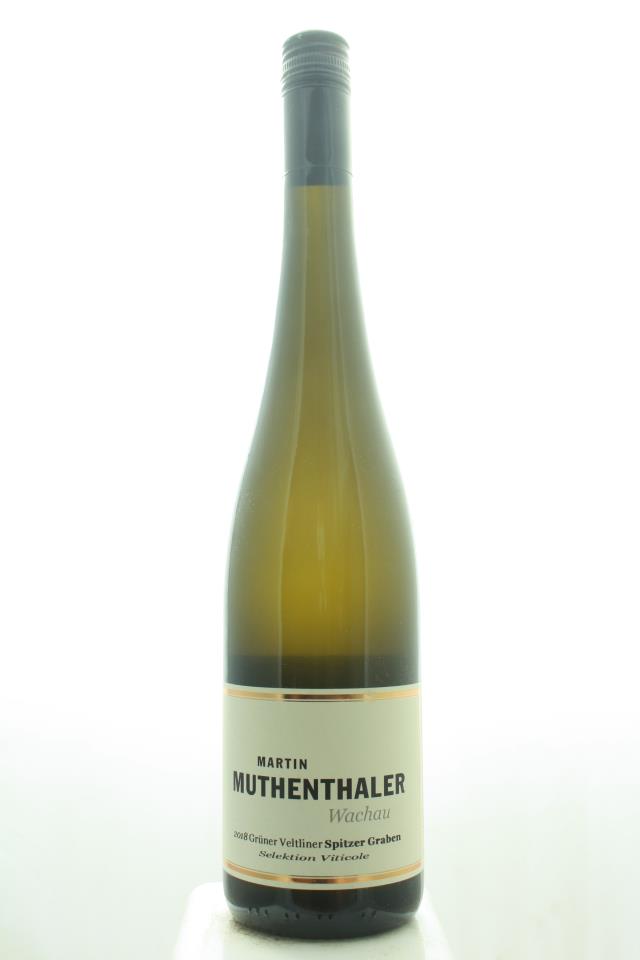
Very lightly scuffed label.
Sold:
This auction has ended. Bidding is closed.
Collection name
Reviews
90WA
"Coming from deeper, loamy soils, predominantly vinified in stainless steel and bottled after six months on the full lees in spring 2019, the 2018 Grüner Veltliner Spitzer Graben displays coolish, fresh and intense fruit with herbal and wet-stone aromas typical for this terroir. Complex, lush and lithe but textured and intense on the palate, this is a very elegant and balanced Veltliner with round but dry fruit and delicate mineral acidity. A gorgeous terroir wine. Tasted at the domain in September 2019 . . . . Producing grapes is a challenge here, and Martin Muthenthaler is one of the fearless heroes. The self-trained wine producer used to be a car mechanic and worked as a tractor driver for the Domäne Wachau in Dürnstein for many years. In 2006, he took over the wine tavern (Buschenschank) of his parents, who used to sell their wine grapes to the Domäne, and started his own project producing digestible and substantial yet neither big nor heavy nor primary fruity wines from the Spitzer Graben that represent the unique terroir. Together with his friend Peter Veyder-Malberg, Muthenthaler developed a new style for wines from the Wachau based on healthy fruits of unirrigated vines that are picked a day too early rather than too late and whose musts ferment spontaneously and are kept on the lees for up to a year longer, with a first addition of a little bit of sulfur only a month after the fermentation has been finished, if at all. To reduce the primary fruit flavors, all the wines are vinified in Austrian oak or acacia vats from 350 liters up to 900 liters, manufactured by Franz Stockinger. The resulting style focuses on purity, brightness, freshness, elegance and minerality. The wines don’t aim for high alcohol levels like the Smaragd category of the Vinea Wachau and can be great terroir wines also, with 12.5% alcohol. In fact, heat and high sugar levels are an issue also in the cooler Spitzer Graben. The steep vineyards and the many walls of the terraces create a pretty hot microclimate during the day. "Due to the stony terroirs and the drought, it’s almost impossible to plant new vines in our best vineyards today,“ says Muthenthaler, who farms a bit less than six hectares of vines. He has started to plant vines in northwest-facing slopes, where there used to be apricot trees, just to guarantee the cool-climate wine style for the future . . . . The 2018s are also from a extremely warm vintage but, like the 2017s, are very precise, fresh and promising. "We had summer temperatures until the end of September," says Muthenthaler, whereas the autumn of 2017 was perfectly cool. I find both vintages pretty similar, and whether one or the other is better for Veltliner or Riesling, we can discuss in a couple of years. For now, I'd opt for the 2018 Grüner Veltliners, which demonstrate that Veltliner can compete with Riesling, at least in the terroir of the Spitzer Graben."
Region
White
Country
Score
"Coming from deeper, loamy soils, predominantly vinified in stainless steel and bottled after six months on the full lees in spring 2019, the 2018 Grüner Veltliner Spitzer Graben displays coolish, fresh and intense fruit with herbal and wet-stone aromas typical for this terroir. Complex, lush and lithe but textured and intense on the palate, this is a very elegant and balanced Veltliner with round but dry fruit and delicate mineral acidity. A gorgeous terroir wine. Tasted at the domain in September 2019 . . . . Producing grapes is a challenge here, and Martin Muthenthaler is one of the fearless heroes. The self-trained wine producer used to be a car mechanic and worked as a tractor driver for the Domäne Wachau in Dürnstein for many years. In 2006, he took over the wine tavern (Buschenschank) of his parents, who used to sell their wine grapes to the Domäne, and started his own project producing digestible and substantial yet neither big nor heavy nor primary fruity wines from the Spitzer Graben that represent the unique terroir. Together with his friend Peter Veyder-Malberg, Muthenthaler developed a new style for wines from the Wachau based on healthy fruits of unirrigated vines that are picked a day too early rather than too late and whose musts ferment spontaneously and are kept on the lees for up to a year longer, with a first addition of a little bit of sulfur only a month after the fermentation has been finished, if at all. To reduce the primary fruit flavors, all the wines are vinified in Austrian oak or acacia vats from 350 liters up to 900 liters, manufactured by Franz Stockinger. The resulting style focuses on purity, brightness, freshness, elegance and minerality. The wines don’t aim for high alcohol levels like the Smaragd category of the Vinea Wachau and can be great terroir wines also, with 12.5% alcohol. In fact, heat and high sugar levels are an issue also in the cooler Spitzer Graben. The steep vineyards and the many walls of the terraces create a pretty hot microclimate during the day. "Due to the stony terroirs and the drought, it’s almost impossible to plant new vines in our best vineyards today,“ says Muthenthaler, who farms a bit less than six hectares of vines. He has started to plant vines in northwest-facing slopes, where there used to be apricot trees, just to guarantee the cool-climate wine style for the future . . . . The 2018s are also from a extremely warm vintage but, like the 2017s, are very precise, fresh and promising. "We had summer temperatures until the end of September," says Muthenthaler, whereas the autumn of 2017 was perfectly cool. I find both vintages pretty similar, and whether one or the other is better for Veltliner or Riesling, we can discuss in a couple of years. For now, I'd opt for the 2018 Grüner Veltliners, which demonstrate that Veltliner can compete with Riesling, at least in the terroir of the Spitzer Graben."
Have questions?