
Loading lot details…
The February 2021 Auction: Part 2
Swipe left for previous · Swipe right for next
 1 / 2
Lot 905
Estimate: $85
Sold:
This auction has ended. Bidding is closed.
Collection name
Reviews
97WA
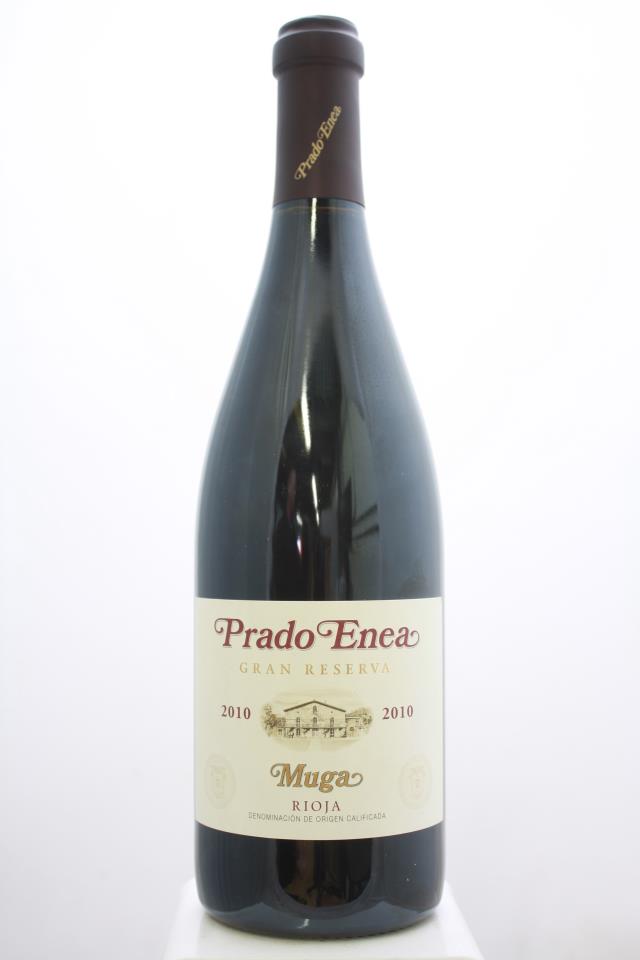
"I was really looking forward to the 2010 Prado Enea Gran Reserva, as I've seen a very good improvement in this cuvée in the last few vintages, and 2010 is one of the more-balanced vintages of recent times. This is the most classical among the wines in the portfolio, the one with the longer élevage, a little bit like the wines from yesteryear but with today's knowledge about vineyards and vinification/élevage. This has settled to a blend of approximately 70% Tempranillo, 20% Garnacha and the remaining 10% between Mazuelo and Graciano, from the cooler, higher-altitude vineyards, which means they only bottle it every two or three years. In recent years, 2007 and 2008 were not bottled. It ferments in small oak vats built by their own tonneliers, and they like to delay malolactic until the spring by opening the windows so the cold from outside comes into the winery. For the aging, each variety goes into separate barrels racked from newer to older barrels to complete some 36 months or three years. It has very healthy and balanced parameters, and that's what the wine feels like. It's still young. It's never a dark wine, more of a ruby or bright color, and it has a nose of youth, subtle and elegant. But the quality shows in the unbelievable elegance and harmony on the palate, where the tannins are very fine, the flavors are subtle but deep and the length is just phenomenal. This is only medium-bodied, with perfect ripeness and integrated acidity. This should have a very long life in bottle, especially as I had the chance to check the evolution of the 2004 next to this. 90,000 bottles were produced from 2010. The following vintages will be 2011, 2014 (a small bottling) and 2015. Responsibility for whites and rosés has been transferred to Isaac Muga, while his brother Jorge makes all the reds. I tasted all the available whites and rosés to see what's going on. There is a new top of the range rosé, Flor de Muga, and they are also working to create a new white with mostly Viura, Garnacha Blanca and Maturana Blanca, aiming perhaps for the 2018 harvest. We had a long and relaxed tasting, and they reached for some older vintages when we were discussing vintage similarities, so I can offer you some opinions about the evolution of some past wines."
Region
Red
Country
Score
"I was really looking forward to the 2010 Prado Enea Gran Reserva, as I've seen a very good improvement in this cuvée in the last few vintages, and 2010 is one of the more-balanced vintages of recent times. This is the most classical among the wines in the portfolio, the one with the longer élevage, a little bit like the wines from yesteryear but with today's knowledge about vineyards and vinification/élevage. This has settled to a blend of approximately 70% Tempranillo, 20% Garnacha and the remaining 10% between Mazuelo and Graciano, from the cooler, higher-altitude vineyards, which means they only bottle it every two or three years. In recent years, 2007 and 2008 were not bottled. It ferments in small oak vats built by their own tonneliers, and they like to delay malolactic until the spring by opening the windows so the cold from outside comes into the winery. For the aging, each variety goes into separate barrels racked from newer to older barrels to complete some 36 months or three years. It has very healthy and balanced parameters, and that's what the wine feels like. It's still young. It's never a dark wine, more of a ruby or bright color, and it has a nose of youth, subtle and elegant. But the quality shows in the unbelievable elegance and harmony on the palate, where the tannins are very fine, the flavors are subtle but deep and the length is just phenomenal. This is only medium-bodied, with perfect ripeness and integrated acidity. This should have a very long life in bottle, especially as I had the chance to check the evolution of the 2004 next to this. 90,000 bottles were produced from 2010. The following vintages will be 2011, 2014 (a small bottling) and 2015. Responsibility for whites and rosés has been transferred to Isaac Muga, while his brother Jorge makes all the reds. I tasted all the available whites and rosés to see what's going on. There is a new top of the range rosé, Flor de Muga, and they are also working to create a new white with mostly Viura, Garnacha Blanca and Maturana Blanca, aiming perhaps for the 2018 harvest. We had a long and relaxed tasting, and they reached for some older vintages when we were discussing vintage similarities, so I can offer you some opinions about the evolution of some past wines."
Have questions?
Spain has the largest area under vine of any country and a deep tradition of oak-aged reds. Tempranillo-based wines from Rioja and Ribera del Duero, alongside Priorat's Garnacha and Carinena, anchor its fine-wine reputation.
A warm-climate red giving generous, high-alcohol wines of red fruit and spice. It anchors southern Rhone blends and old-vine wines in Spain and Australia.
Spain's noble red grape, producing structured, savory wines of red fruit and leather that respond beautifully to oak aging in Rioja and Ribera del Duero.