
Loading lot details…
The December 2021 Auction: Part 5
Swipe left for previous · Swipe right for next
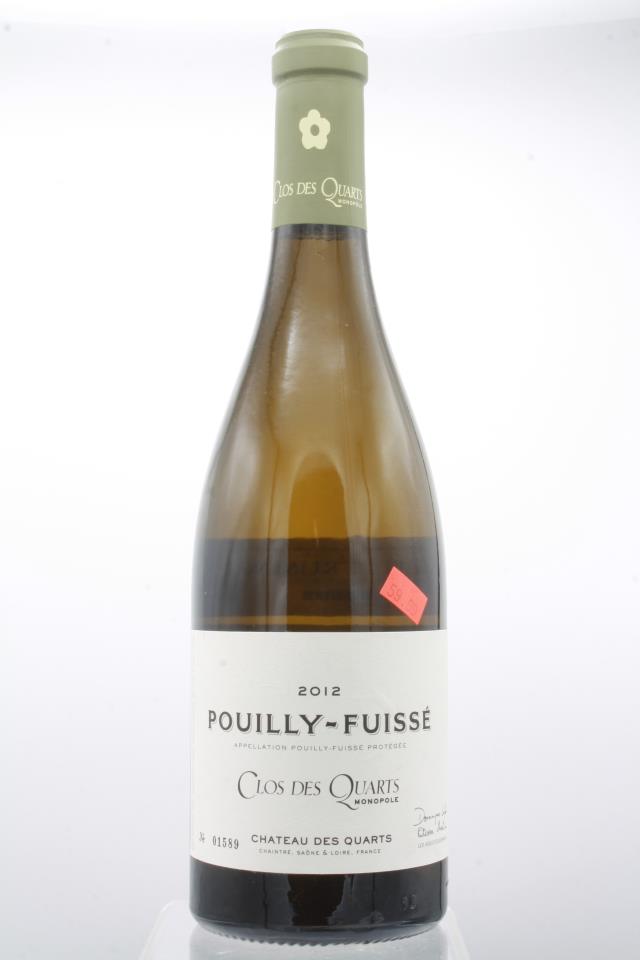 1 / 2
Lot 207
Estimate: $80
Sold:
This auction has ended. Bidding is closed.
Collection name
Reviews
92WA
"The 2012 Pouilly-Fuissé “Clos des Quarts” has a wonderful bouquet with ethereal floral notes: touches of white chocolate and almond, all with outstanding precision and mineralité. The palate is tense on the entry, very focused with layers of ripe citric fruit, a lot of minerality and a touch of orange zest on the tensile finish. This marks an impressive debut (in terms of control of the vineyard) but there is much much more to come. In Olivier Merlin we have one of the region’s most experienced and thoughtful vignerons, one whose wines are extremely well-priced. Same as last year, we met at his capacious winery, Olivier in his usual chatty and self-effacing mood. “I use 100% whole-cluster with no crushing,” Olivier told me when I asked him about his 2012s. “The pressing was strong but slow: 30 hours per cycle.” But the big news this year is the debut Pouilly-Fuissé “Clos des Quarts," a joint venture between Olivier and Dominique Lafon. I have included it here among Olivier’s portfolio, but it will be granted its own separate entry in the next report. I asked Olivier to give me a background on this exciting new project, resurrecting one of the region’s forgotten gems. “I have known this terroir since 2003,” he began. “It is a strange and fantastic story. This domaine is a jewel but completely forgotten. It’s an old domaine from eighteen hundred and…err...something. ‘Les Quarts’ meant the ‘best part,' the land of the seigneur [what you might translate as ‘squire’.] Before 2003, there was a vigneron that rented the vineyard. He was not interested in wine and all the grapes were sold to the co-operative in Chaintré. They never made a single cuvée with this vineyard. In 2002, the vigneron wanted to change the system of renting from métayage to fermage, but the owner refused. It went to court and they found in favor of the vigneron who wanted to stop selling the grapes to the co-op. So he had a lot of grapes from the 2003 vintage. When I saw the property and its very old vines (one-third were planted back in 1917) I told him: ‘Wait a minute. Is it possible to buy them all?’ So in 2003 I bought the entire production and I started to put the single-vineyard on the label, which I did for ten years. When it came up for sale I wanted to buy it, but because there was the château as well as the 4.5-hectares clos, I had to borrow the money and join with Dominique. In 2013, we changed a lot of things - not the style of vinification but in terms of the vineyard. We do not use herbicides and we have stop ploughing.” Given the age of vines, terroir and the talent of the enthusiastic winemakers, it would not surprise me to find Château des Quarts becoming one of the most illustrious in the Mâconnais."
Region
White
Country
Score
"The 2012 Pouilly-Fuissé “Clos des Quarts” has a wonderful bouquet with ethereal floral notes: touches of white chocolate and almond, all with outstanding precision and mineralité. The palate is tense on the entry, very focused with layers of ripe citric fruit, a lot of minerality and a touch of orange zest on the tensile finish. This marks an impressive debut (in terms of control of the vineyard) but there is much much more to come. In Olivier Merlin we have one of the region’s most experienced and thoughtful vignerons, one whose wines are extremely well-priced. Same as last year, we met at his capacious winery, Olivier in his usual chatty and self-effacing mood. “I use 100% whole-cluster with no crushing,” Olivier told me when I asked him about his 2012s. “The pressing was strong but slow: 30 hours per cycle.” But the big news this year is the debut Pouilly-Fuissé “Clos des Quarts," a joint venture between Olivier and Dominique Lafon. I have included it here among Olivier’s portfolio, but it will be granted its own separate entry in the next report. I asked Olivier to give me a background on this exciting new project, resurrecting one of the region’s forgotten gems. “I have known this terroir since 2003,” he began. “It is a strange and fantastic story. This domaine is a jewel but completely forgotten. It’s an old domaine from eighteen hundred and…err...something. ‘Les Quarts’ meant the ‘best part,' the land of the seigneur [what you might translate as ‘squire’.] Before 2003, there was a vigneron that rented the vineyard. He was not interested in wine and all the grapes were sold to the co-operative in Chaintré. They never made a single cuvée with this vineyard. In 2002, the vigneron wanted to change the system of renting from métayage to fermage, but the owner refused. It went to court and they found in favor of the vigneron who wanted to stop selling the grapes to the co-op. So he had a lot of grapes from the 2003 vintage. When I saw the property and its very old vines (one-third were planted back in 1917) I told him: ‘Wait a minute. Is it possible to buy them all?’ So in 2003 I bought the entire production and I started to put the single-vineyard on the label, which I did for ten years. When it came up for sale I wanted to buy it, but because there was the château as well as the 4.5-hectares clos, I had to borrow the money and join with Dominique. In 2013, we changed a lot of things - not the style of vinification but in terms of the vineyard. We do not use herbicides and we have stop ploughing.” Given the age of vines, terroir and the talent of the enthusiastic winemakers, it would not surprise me to find Château des Quarts becoming one of the most illustrious in the Mâconnais."
Have questions?
The world's most influential fine-wine producer and the benchmark for Bordeaux, Burgundy, Champagne and the Rhone. Its appellation (AOC) system codifies geography, grape and method, and its wines set the global standard for age-worthiness and terroir expression.
Produces the world's most revered Pinot Noir and Chardonnay from a mosaic of tiny, terroir-defined climats. Its hierarchy of village, Premier Cru and Grand Cru vineyards makes site the ultimate expression of quality.
The world's most versatile white grape, producing everything from steely Chablis to rich, oaked whites. Its neutrality makes it a mirror of terroir and winemaking, and the foundation of white Burgundy and Champagne.