
Loading lot details…
The March 2022 Auction: Part 5
Swipe left for previous · Swipe right for next
 1 / 2
Lot 826
Estimate: $180
Sold:
This auction has ended. Bidding is closed.
Collection name
Reviews
97WA
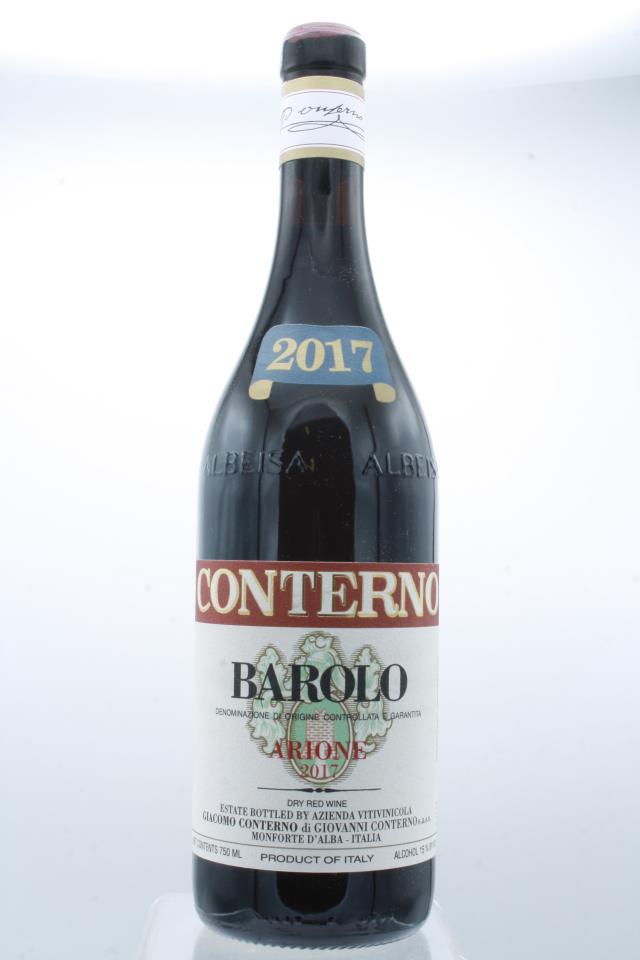
"The Giacomo Conterno 2017 Barolo Arione is my favorite in a mini vertical from this cru site in Serralunga d'Alba. I prefer the 2017 to the classic 2016 and the wine's inaugural vintage, the 2015. What this vintage has is an ample and generous sense of fullness and stature. These results are impressive, and even imposing to an extent. This is a statement wine that proudly submits multiple layers of black fruit, blackcurrant, cast iron, earth, licorice root and cola. The supportive tannins are well played against the wine's rich texture, natural structure and fruit concentration. The power of a warm vintage and the muscle power of Arione overlap in this special bottle and will carry this wine over extended aging. We know Roberto Conterno of the Giacomo Conterno estate as one of Italy’s most talented Barolisti, a taciturn genius in the vineyard and cellar who is capable of casting out the inner soul from the Nebbiolo grape and trapping it for near-eternal safekeeping in a glass bottle. But the Roberto Conterno I met this summer had reinvented himself during the doldrums of lockdown, moving toward increasingly varied pursuits. Thanks to this total transformation, his many new identities today also make him an architect, a restaurateur, a stemware designer and the inventor of a futuristic army of robots on tank treads that will be dispatched at random throughout the Italian countryside and beyond. (Sorry folks, on this last point, I have been sworn to absolute secrecy, but I promise to say more when I can). As I discovered this past July, there is indeed a lot of news to report from Piedmont. I visited both of Roberto’s estates, his new winery in Gattinara (Alto Piemonte) and his historic cellars in Monforte d’Alba (Barolo), to taste the 23 wines reviewed in this report. What I thought would be a quick tour became instead an epic foray into Mondo Conterno. I left Nice, France, in early morning and drove past the flooded rice patties of Arborio to the beautiful town of Gattinara, which sits south of the Italian Alps and the Lake District west of the Sesia River. Roberto came to greet me and told me that just 24 hours earlier the area had suffered from a terrible summer hailstorm. He was still assessing damage to his Nebbiolo vines planted a short distance north of the winery on the nearby hillsides. Roberto purchased the historic Nervi winery in 2018. (For more info on this acquisition, you can read my May 2018 article called ‘Italy, Piedmont: The Nebbiolo Whisperer – Roberto Conterno Buys Gattinara’s Nervi.’) By buying the estate, with its 27 hectares of vines and a winery in the city center of Gattinara (with roots spanning back to the early 1900s), Roberto sent the ultimate vote of confidence in Nebbiolo-based wines made in the often-overlooked appellation of Gattinara. The man credited with making some of Barolo’s greatest wines, and arguably its most collectable icon wine, Monfortino, had unexpectedly set up shop in Gattinara. It was a move driven purely by instinct and passion. His first step was to design and construct a new, state-of-the-art winery. No expense was spared, and Roberto reproduced the breakthrough technology we can admire today at his home-base winery in Monforte d’Alba in Barolo. In addition to the modern fermentation area and aging cellars, some of the older cement tanks and facilities left over from the original Nervi winery were refurbished and kept in place. Understanding that wine might not be enough to draw visitors to this undiscovered corner of Piedmont, Roberto converted the front offices of the old Nervi winery into a restaurant called Cucine Nervi. It serves regional dishes with a contemporary twist. A smooth wooden counter made with imported kauri wood from New Zealand surrounds an open kitchen where you can watch the talented chef Alberto Quadrio and his team at work. The restaurant wine list of course offers an enviable collection of Conterno Neri and Giacomo Conterno recent releases and back vintages. Roberto had prepared a beautiful tasting for me in the glass-enclosed visitors’ room with views of the barrel fermentation area below. From the Conterno Nervi portfolio, I tasted the 2018, 2017 and 2016 vintages of his Gattinara, plus the 2018 and 2016 vintages of his two single-vineyard wines, Molsino and Valferana. These wines were not made in 2017, and fruit from these sites went into the classic Gattinara instead. I also tasted the Nebbiolo-based rosé as well as the rosé metodo classico sparkling wine. ‘Gattinara beats Barolo three to one in the 2018 vintage,’ he tells me. ‘Nebbiolo is crazy sensitive to place, and the 2018 vintage gave beautiful tannic structure here, making for complete wines.’ Following his presentation from Conterno Nervi, Roberto poured wines from his Barolo brand, Giacomo Conterno. I had previewed many of these wines over the past years during my annual barrel tastings, but this was my first opportunity to taste the finished products. The lineup included the 2019 Barbera Vigna Cerretta and the 2019 and 2018 vintages of Barbera d’Alba Vigna Francia. In terms of Barolo, we sampled the 2017 and 2016 vintages of Barolo Cerretta, Barolo Arione and Barolo Francia. To conclude, he poured the 2014 and the 2015 Barolo Riserva Monfortino. Monfortino was not made in 2016 or 2017, and he hadn’t yet decided if he will make the wine in 2018. ‘Barolo beats Gattinara in 2019; and in 2020, the two regions are about the same,’ he says. ‘I love 2019 in Barolo. The season saw two full months of beautiful weather before harvest. The 2019 vintage made long-term wines with extra concentration and structure. The 2020 vintage has more obvious fruit and less structure compared to 2019.’ Roberto Conterno often takes conventional wisdom regarding a vintage and turns it on its head. He showed extreme confidence in the 2014 vintage, calling it ‘the vintage of the century’; meanwhile, it was largely panned by his peers because of summer rains and below average temperatures. That counterintuitive approach, which is part mischievous and part moxie, had him cheering for 2015 over the widely applauded 2016 vintage. Indeed, he had originally made one barrel of a possible 2016 Monfortino, but that wine ultimately went to his Barolo Francia instead. The message delivered loud and clear this summer is that Roberto Conterno is especially excited about his 2019 Barolo wines now in barrel. As a side gig, Roberto Conterno designs stemware. In 2017, he introduced his Sensory glass (which I use daily for all my professional tastings of reds and whites) with its extra wide balloon, soft tulip curve and short stem for better stability. This summer, I tasted sparkling wine from his newest glass, Symphony, introduced in 2021."
Region
Red
Country
Score
"The Giacomo Conterno 2017 Barolo Arione is my favorite in a mini vertical from this cru site in Serralunga d'Alba. I prefer the 2017 to the classic 2016 and the wine's inaugural vintage, the 2015. What this vintage has is an ample and generous sense of fullness and stature. These results are impressive, and even imposing to an extent. This is a statement wine that proudly submits multiple layers of black fruit, blackcurrant, cast iron, earth, licorice root and cola. The supportive tannins are well played against the wine's rich texture, natural structure and fruit concentration. The power of a warm vintage and the muscle power of Arione overlap in this special bottle and will carry this wine over extended aging. We know Roberto Conterno of the Giacomo Conterno estate as one of Italy’s most talented Barolisti, a taciturn genius in the vineyard and cellar who is capable of casting out the inner soul from the Nebbiolo grape and trapping it for near-eternal safekeeping in a glass bottle. But the Roberto Conterno I met this summer had reinvented himself during the doldrums of lockdown, moving toward increasingly varied pursuits. Thanks to this total transformation, his many new identities today also make him an architect, a restaurateur, a stemware designer and the inventor of a futuristic army of robots on tank treads that will be dispatched at random throughout the Italian countryside and beyond. (Sorry folks, on this last point, I have been sworn to absolute secrecy, but I promise to say more when I can). As I discovered this past July, there is indeed a lot of news to report from Piedmont. I visited both of Roberto’s estates, his new winery in Gattinara (Alto Piemonte) and his historic cellars in Monforte d’Alba (Barolo), to taste the 23 wines reviewed in this report. What I thought would be a quick tour became instead an epic foray into Mondo Conterno. I left Nice, France, in early morning and drove past the flooded rice patties of Arborio to the beautiful town of Gattinara, which sits south of the Italian Alps and the Lake District west of the Sesia River. Roberto came to greet me and told me that just 24 hours earlier the area had suffered from a terrible summer hailstorm. He was still assessing damage to his Nebbiolo vines planted a short distance north of the winery on the nearby hillsides. Roberto purchased the historic Nervi winery in 2018. (For more info on this acquisition, you can read my May 2018 article called ‘Italy, Piedmont: The Nebbiolo Whisperer – Roberto Conterno Buys Gattinara’s Nervi.’) By buying the estate, with its 27 hectares of vines and a winery in the city center of Gattinara (with roots spanning back to the early 1900s), Roberto sent the ultimate vote of confidence in Nebbiolo-based wines made in the often-overlooked appellation of Gattinara. The man credited with making some of Barolo’s greatest wines, and arguably its most collectable icon wine, Monfortino, had unexpectedly set up shop in Gattinara. It was a move driven purely by instinct and passion. His first step was to design and construct a new, state-of-the-art winery. No expense was spared, and Roberto reproduced the breakthrough technology we can admire today at his home-base winery in Monforte d’Alba in Barolo. In addition to the modern fermentation area and aging cellars, some of the older cement tanks and facilities left over from the original Nervi winery were refurbished and kept in place. Understanding that wine might not be enough to draw visitors to this undiscovered corner of Piedmont, Roberto converted the front offices of the old Nervi winery into a restaurant called Cucine Nervi. It serves regional dishes with a contemporary twist. A smooth wooden counter made with imported kauri wood from New Zealand surrounds an open kitchen where you can watch the talented chef Alberto Quadrio and his team at work. The restaurant wine list of course offers an enviable collection of Conterno Neri and Giacomo Conterno recent releases and back vintages. Roberto had prepared a beautiful tasting for me in the glass-enclosed visitors’ room with views of the barrel fermentation area below. From the Conterno Nervi portfolio, I tasted the 2018, 2017 and 2016 vintages of his Gattinara, plus the 2018 and 2016 vintages of his two single-vineyard wines, Molsino and Valferana. These wines were not made in 2017, and fruit from these sites went into the classic Gattinara instead. I also tasted the Nebbiolo-based rosé as well as the rosé metodo classico sparkling wine. ‘Gattinara beats Barolo three to one in the 2018 vintage,’ he tells me. ‘Nebbiolo is crazy sensitive to place, and the 2018 vintage gave beautiful tannic structure here, making for complete wines.’ Following his presentation from Conterno Nervi, Roberto poured wines from his Barolo brand, Giacomo Conterno. I had previewed many of these wines over the past years during my annual barrel tastings, but this was my first opportunity to taste the finished products. The lineup included the 2019 Barbera Vigna Cerretta and the 2019 and 2018 vintages of Barbera d’Alba Vigna Francia. In terms of Barolo, we sampled the 2017 and 2016 vintages of Barolo Cerretta, Barolo Arione and Barolo Francia. To conclude, he poured the 2014 and the 2015 Barolo Riserva Monfortino. Monfortino was not made in 2016 or 2017, and he hadn’t yet decided if he will make the wine in 2018. ‘Barolo beats Gattinara in 2019; and in 2020, the two regions are about the same,’ he says. ‘I love 2019 in Barolo. The season saw two full months of beautiful weather before harvest. The 2019 vintage made long-term wines with extra concentration and structure. The 2020 vintage has more obvious fruit and less structure compared to 2019.’ Roberto Conterno often takes conventional wisdom regarding a vintage and turns it on its head. He showed extreme confidence in the 2014 vintage, calling it ‘the vintage of the century’; meanwhile, it was largely panned by his peers because of summer rains and below average temperatures. That counterintuitive approach, which is part mischievous and part moxie, had him cheering for 2015 over the widely applauded 2016 vintage. Indeed, he had originally made one barrel of a possible 2016 Monfortino, but that wine ultimately went to his Barolo Francia instead. The message delivered loud and clear this summer is that Roberto Conterno is especially excited about his 2019 Barolo wines now in barrel. As a side gig, Roberto Conterno designs stemware. In 2017, he introduced his Sensory glass (which I use daily for all my professional tastings of reds and whites) with its extra wide balloon, soft tulip curve and short stem for better stability. This summer, I tasted sparkling wine from his newest glass, Symphony, introduced in 2021."
Have questions?
Italy grows more indigenous grape varieties than any other country and produces wine in all 20 of its regions. From Piedmont's Nebbiolo to Tuscany's Sangiovese, its finest wines pair structure and bright acidity with a strong sense of place.
In Italy's northwest, Piedmont is home to Nebbiolo, the grape behind the powerful, perfumed and long-lived reds of Barolo and Barbaresco. Fog-shrouded hills and calcareous soils define its greatest wines.
The 'King of Wines,' a powerful, tannic and perfumed Nebbiolo from Piedmont's Langhe hills, celebrated for tar-and-roses aromatics and extraordinary aging potential.
Produces pale but powerfully tannic and perfumed reds with tar, rose and cherry notes. The grape behind Barolo and Barbaresco, it is among the most age-worthy in the world.