
Loading lot details…
The July 2022 Auction: Part 3
Swipe left for previous · Swipe right for next
 1 / 2
Lot 157
Estimate: $400
Sold:
This auction has ended. Bidding is closed.
Collection name
Reviews
95-97NM
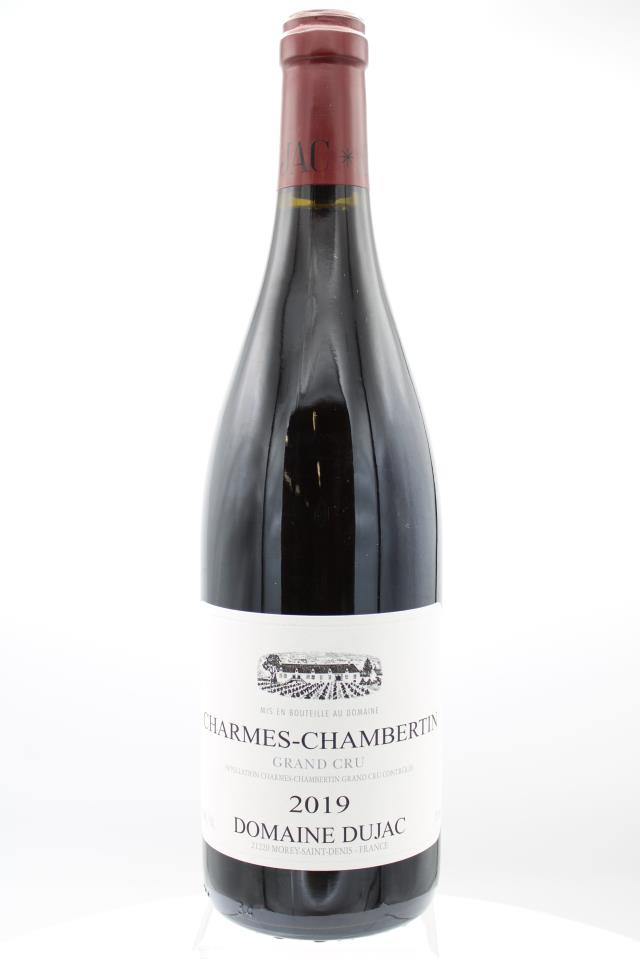
“The 2019 Charmes-Chambertin Grand Cru has an airy and generous bouquet with lifted black fruit, hoisin and light roasted chestnut aromas, all well defined. The palate is medium-bodied with fine tannins, a beautiful line of acidity, svelte and harmonious with a slightly grainy-textured finish. I adore the discrete crescendo in this Grand Cru and the unimposing but long aftertaste. ‘It’s been growing in stature over the last 10 to 15 years,’ remarked Alex Seysses. Proof of that is evident by tasting this superb Charmes-Chambertin. There is a MASSIVE hole in Morey-Saint-Denis. Either somebody is attempting to tunnel to the centre of the Earth or somebody is building a new cellar. In this case, it is the latter, since the Seysses family are finally expanding, building a new facility that will hopefully be inaugurated in 2022. ‘The walls will be made of hay,’ Jeremy Seysses informs me just before tasting kicked-off. Apparently, it will have eco-friendly features such as a wooden structure and the ability to recycle all its CO2 emissions. Obviously, the depth of the aforementioned hole indicates that it will be a gravity-fed winery. Seysses also mentioned how it will afford them more temperature control. Warmer conditions at harvests mean that the fruit itself needs cooling to retard and prolong the alcoholic fermentation. I tasted with Jeremy’s brother, Alec. ‘It was a tiring growing season for vineyards,’ he told me. ‘I don’t place too much stock in the rain just before harvest and how it changed the fruit, but I think the vineyards that were in better shape and maybe organic, reacted better to the water. We are in that vein of warming vintages since 2014. It’s a blessing. Previous generations dreamed of vintages like this. The négoce wines were picked towards the end of the harvest that finished on 19 September. The picking in 2018 was more spread out - we felt we had to get everything in efficiently as soon as possible. The yields in 2019 were reasonably average, but nothing catastrophic, maybe 10% less than a normal vintage whereas in 2020 it is up and down depending upon vineyard. We used 85% to 90% whole clusters, négoce a little below that figure, especially on the Gevrey side. We have toned down the new oak in recent years, for example, the Grand Crus were raised in 70% new oak instead of 100%.’ The whites are racked and in tank. The négoce wines have not been racked and will soon go straight to tank to be bottled.’ What can I say? I thought this was a stupendous, at times thrilling set of 2019s from Dujac, particularly in the Vosne-Romanée and Morey-Saint-Denis appellations. The Clos de la Roche is spellbinding, the Malconsorts spine-tingling and the Romanée-Saint-Vivant so sublime I wanted to elope with it. Whereas I felt some producers slightly misjudged the proportion of stem addition, here I found the stems neatly assimilated and never transgressed onto terroir expression or purity of fruit. Then again, Jacques Seysses was one of the early proponents using whole clusters and is still around to give sage advice.”
Region
Red
Country
Score
“The 2019 Charmes-Chambertin Grand Cru has an airy and generous bouquet with lifted black fruit, hoisin and light roasted chestnut aromas, all well defined. The palate is medium-bodied with fine tannins, a beautiful line of acidity, svelte and harmonious with a slightly grainy-textured finish. I adore the discrete crescendo in this Grand Cru and the unimposing but long aftertaste. ‘It’s been growing in stature over the last 10 to 15 years,’ remarked Alex Seysses. Proof of that is evident by tasting this superb Charmes-Chambertin. There is a MASSIVE hole in Morey-Saint-Denis. Either somebody is attempting to tunnel to the centre of the Earth or somebody is building a new cellar. In this case, it is the latter, since the Seysses family are finally expanding, building a new facility that will hopefully be inaugurated in 2022. ‘The walls will be made of hay,’ Jeremy Seysses informs me just before tasting kicked-off. Apparently, it will have eco-friendly features such as a wooden structure and the ability to recycle all its CO2 emissions. Obviously, the depth of the aforementioned hole indicates that it will be a gravity-fed winery. Seysses also mentioned how it will afford them more temperature control. Warmer conditions at harvests mean that the fruit itself needs cooling to retard and prolong the alcoholic fermentation. I tasted with Jeremy’s brother, Alec. ‘It was a tiring growing season for vineyards,’ he told me. ‘I don’t place too much stock in the rain just before harvest and how it changed the fruit, but I think the vineyards that were in better shape and maybe organic, reacted better to the water. We are in that vein of warming vintages since 2014. It’s a blessing. Previous generations dreamed of vintages like this. The négoce wines were picked towards the end of the harvest that finished on 19 September. The picking in 2018 was more spread out - we felt we had to get everything in efficiently as soon as possible. The yields in 2019 were reasonably average, but nothing catastrophic, maybe 10% less than a normal vintage whereas in 2020 it is up and down depending upon vineyard. We used 85% to 90% whole clusters, négoce a little below that figure, especially on the Gevrey side. We have toned down the new oak in recent years, for example, the Grand Crus were raised in 70% new oak instead of 100%.’ The whites are racked and in tank. The négoce wines have not been racked and will soon go straight to tank to be bottled.’ What can I say? I thought this was a stupendous, at times thrilling set of 2019s from Dujac, particularly in the Vosne-Romanée and Morey-Saint-Denis appellations. The Clos de la Roche is spellbinding, the Malconsorts spine-tingling and the Romanée-Saint-Vivant so sublime I wanted to elope with it. Whereas I felt some producers slightly misjudged the proportion of stem addition, here I found the stems neatly assimilated and never transgressed onto terroir expression or purity of fruit. Then again, Jacques Seysses was one of the early proponents using whole clusters and is still around to give sage advice.”
Have questions?
The world's most influential fine-wine producer and the benchmark for Bordeaux, Burgundy, Champagne and the Rhone. Its appellation (AOC) system codifies geography, grape and method, and its wines set the global standard for age-worthiness and terroir expression.
Produces the world's most revered Pinot Noir and Chardonnay from a mosaic of tiny, terroir-defined climats. Its hierarchy of village, Premier Cru and Grand Cru vineyards makes site the ultimate expression of quality.
The Cote de Nuits' largest Grand Cru commune, producing powerful, structured and deeply flavored Pinot Noir built for long aging.
2019 in Burgundy combined spring frost and summer drought to cut yields, producing concentrated yet balanced wines; the reds are ripe and structured with retained freshness, making an excellent, ageworthy vintage in both colors.
A thin-skinned, terroir-sensitive red producing perfumed, silky and elegant wines of red-berry fruit and earthy complexity. It reaches its apogee in Burgundy.