
Loading lot details…
The August 2022 Auction: Part 1
Swipe left for previous · Swipe right for next
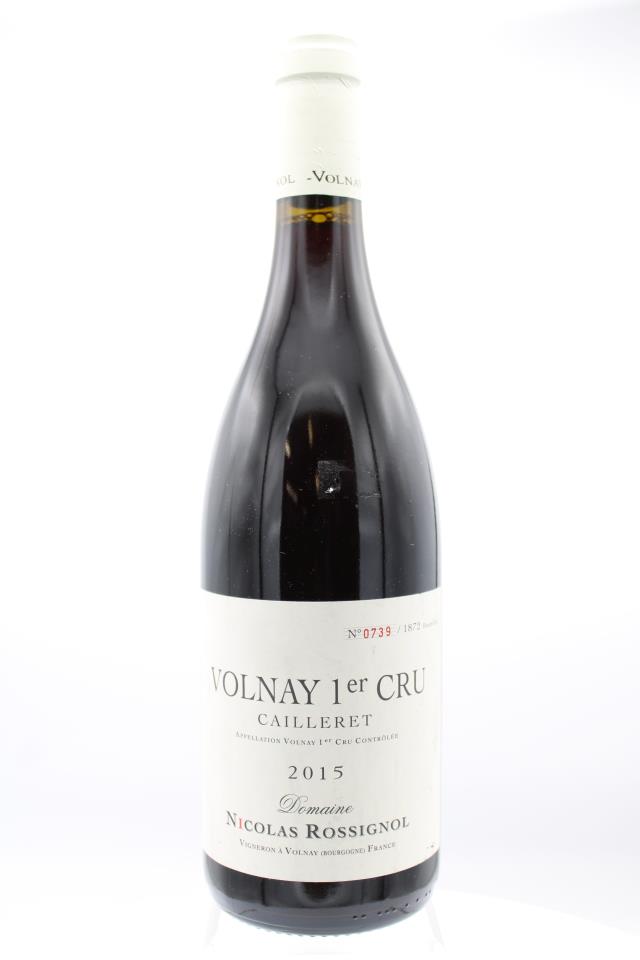 1 / 2
Lot 296
Estimate: $90
Lightly scuffed label.
Sold:
This auction has ended. Bidding is closed.
Collection name
Reviews
94ST
"Healthy medium-deep red. Knockout soil-inflected aromas of red cherry, raspberry, dried flowers, spices and underbrush. Wonderfully refined and energetic on the palate, with its fresh, sharply delineated red fruit and earth flavors boasting terrific inner-mouth tension and class--not to mention delicacy--for the vintage. Not as thick as some of these '16s, this still-tight beauty opens out on the back end like a peacock's tail, leaving the salivary glands humming. 'Ten years will be just the beginning of the game' for this wine, offered Rossignol. Nicolas Rossignol was a happy camper when I visited him in January at his spanking-new winery in an industrial park on the south side of Beaune. He had recently vinified his second harvest (2017) at the new facility and for the first time in several years had a full crop of grapes. In 2016, however, he lost 85% of his normal crop and is missing several cuvées. He harvested beginning on September 24 with grape sugars between 12.8% and 13.6% (he did not use any fruit from second-generation buds) and did not chaptalize. Nor did he purchase any new barrels for this tiny crop. The wines were racked into tanks in December and Rossignol planned to bottle them in February. Rossignol does not carry out a pre-fermentation cold soak, and in 2016 he did a maximum of three or four pigeages for each wine; in the old days, he reminded me, it was three per day. “You can really feel the terroirs in 2016,” he said. Rossignol bottled his ‘15s a bit later—between March and June of 2017. “It was a perfect, stress-free growing season from beginning to end,” he told me. His only regret was that he had to move his ‘15s from his previous cellar to his new one in November and December of ’16. Still, Rossignol noted that he was surprised by the density of the wines at the end and believes that they will give great pleasure, “like the ‘47s,” but will need long aging. He noted that the ‘16s will be better for the next five or six years but the ‘15s will be superior in the long run. "Slowly but surely, the terroir will eat the vintage character,” he offered. He also believes that his ‘15s are more stable than his ‘16s, as their volatile acidity levels are lower, despite the fact that he didn’t add sulfur during élevage. And his ‘15s went into bottle with pH between 3.45 and 3.55, vs. 3.55 to 3.7 for the ’16. On the other hand, he also believes that ‘15s in many other cellars are frequently too ripe or too heavily extracted, and he’s much less confident about the aging potential of these wines. During the course of my tasting, Rossignol took some shots at “natural wines,” including some made by friends of his. “Wines need utterly clean, neutral conditions,” he maintained. “Too many natural wines are killed by brettanomyces and end up tasting the same.” Rossignol designed his 15,000-square-foot winery to allow him to work with minimal sulfur without worrying about bacterial spoilage. The exterior of the winery consists of two layers of poured concrete around an iron core, with multiple sections attached “like lego blocks.” A thick layer of earth and grass on top serves as an insulater. The barrel cellar, which is situated between an air-conditioned bottle storage space and the fermentation room, is always cool, and the gravel-and-earth floor maintains high humidity. As an added bonus, Rossignol enjoys a spectacular view of the côtes on clear days. Rossignol owns 17 hectares of vines and rents others, including vineyards adjacent to his that are owned by his uncle. He has cleaned up and repruned these latter vineyards, reduced yields and eliminated the use of chemical herbicides, and he will replant 1.8 hectares this year. This is a sizable operation and the wines are better than ever."
Region
Red
Country
Score
"Healthy medium-deep red. Knockout soil-inflected aromas of red cherry, raspberry, dried flowers, spices and underbrush. Wonderfully refined and energetic on the palate, with its fresh, sharply delineated red fruit and earth flavors boasting terrific inner-mouth tension and class--not to mention delicacy--for the vintage. Not as thick as some of these '16s, this still-tight beauty opens out on the back end like a peacock's tail, leaving the salivary glands humming. 'Ten years will be just the beginning of the game' for this wine, offered Rossignol. Nicolas Rossignol was a happy camper when I visited him in January at his spanking-new winery in an industrial park on the south side of Beaune. He had recently vinified his second harvest (2017) at the new facility and for the first time in several years had a full crop of grapes. In 2016, however, he lost 85% of his normal crop and is missing several cuvées. He harvested beginning on September 24 with grape sugars between 12.8% and 13.6% (he did not use any fruit from second-generation buds) and did not chaptalize. Nor did he purchase any new barrels for this tiny crop. The wines were racked into tanks in December and Rossignol planned to bottle them in February. Rossignol does not carry out a pre-fermentation cold soak, and in 2016 he did a maximum of three or four pigeages for each wine; in the old days, he reminded me, it was three per day. “You can really feel the terroirs in 2016,” he said. Rossignol bottled his ‘15s a bit later—between March and June of 2017. “It was a perfect, stress-free growing season from beginning to end,” he told me. His only regret was that he had to move his ‘15s from his previous cellar to his new one in November and December of ’16. Still, Rossignol noted that he was surprised by the density of the wines at the end and believes that they will give great pleasure, “like the ‘47s,” but will need long aging. He noted that the ‘16s will be better for the next five or six years but the ‘15s will be superior in the long run. "Slowly but surely, the terroir will eat the vintage character,” he offered. He also believes that his ‘15s are more stable than his ‘16s, as their volatile acidity levels are lower, despite the fact that he didn’t add sulfur during élevage. And his ‘15s went into bottle with pH between 3.45 and 3.55, vs. 3.55 to 3.7 for the ’16. On the other hand, he also believes that ‘15s in many other cellars are frequently too ripe or too heavily extracted, and he’s much less confident about the aging potential of these wines. During the course of my tasting, Rossignol took some shots at “natural wines,” including some made by friends of his. “Wines need utterly clean, neutral conditions,” he maintained. “Too many natural wines are killed by brettanomyces and end up tasting the same.” Rossignol designed his 15,000-square-foot winery to allow him to work with minimal sulfur without worrying about bacterial spoilage. The exterior of the winery consists of two layers of poured concrete around an iron core, with multiple sections attached “like lego blocks.” A thick layer of earth and grass on top serves as an insulater. The barrel cellar, which is situated between an air-conditioned bottle storage space and the fermentation room, is always cool, and the gravel-and-earth floor maintains high humidity. As an added bonus, Rossignol enjoys a spectacular view of the côtes on clear days. Rossignol owns 17 hectares of vines and rents others, including vineyards adjacent to his that are owned by his uncle. He has cleaned up and repruned these latter vineyards, reduced yields and eliminated the use of chemical herbicides, and he will replant 1.8 hectares this year. This is a sizable operation and the wines are better than ever."
Have questions?
The world's most influential fine-wine producer and the benchmark for Bordeaux, Burgundy, Champagne and the Rhone. Its appellation (AOC) system codifies geography, grape and method, and its wines set the global standard for age-worthiness and terroir expression.
Produces the world's most revered Pinot Noir and Chardonnay from a mosaic of tiny, terroir-defined climats. Its hierarchy of village, Premier Cru and Grand Cru vineyards makes site the ultimate expression of quality.
Volnay is a village AOC in Burgundy's Cote de Beaune with esteemed Premier Crus, producing elegant, perfumed and silky Pinot Noir reds prized for their finesse, delicacy and floral red-fruit character.
2015 in Burgundy was warm and dry, yielding concentrated, powerful and opulent reds with ripe tannins from low yields; the whites are richer and generous, though some show comparatively lower acidity.
A thin-skinned, terroir-sensitive red producing perfumed, silky and elegant wines of red-berry fruit and earthy complexity. It reaches its apogee in Burgundy.