
Loading lot details…
The September 2022 Auction: Part 1
Swipe left for previous · Swipe right for next
 1 / 2
Lot 100
Estimate: $5,000
OWC, banded prior to SWA inspection.
Sold:
This auction has ended. Bidding is closed.
Collection name
Reviews
100WA
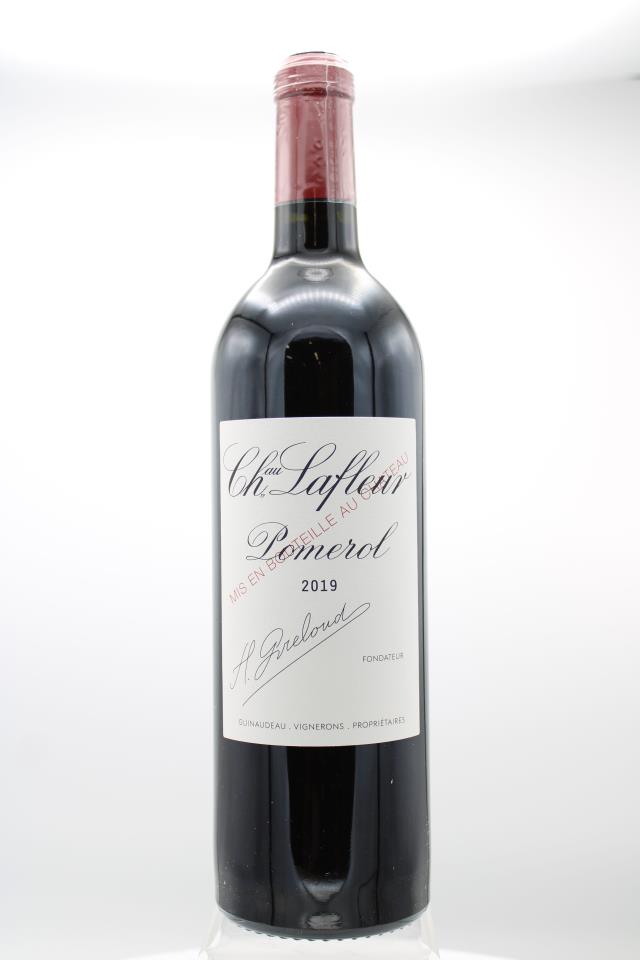
"The 2019 Lafleur is an utterly profound young wine that unwinds in the glass with aromas of rose petals, raspberries and sweet spices mingled with notions of blood orange, violets and fresh tobacco that are hauntingly reminiscent of this estate's great 1982. Full-bodied, deep and seamless, it's layered and multidimensional, with a concentrated core of vibrant fruit, lively acids and ripe, powdery tannins, concluding with a long, searingly intense finish. This magical Lafleur is unquestionably one of the wines of the vintage. Where to begin when singing the praises of Château Lafleur and its stewards, the Guinaudeau family? At this address, rare seriousness and attention to detail, informed by a deep engagement with Bordeaux's past and present, meets a superb terroir, planted almost entirely with old massal selections of Cabernet Franc and Merlot, which has never seen pesticides or herbicides. The result, somewhat predictably, is one of Bordeaux's very greatest wines; but also, given its Cabernet preponderance and soils richer in gravel than in clay, a rather anomalous Pomerol. But that's a teleological narrative: Lafleur is what it is today as much by accident as by design, for its former proprietors, the Robin sisters, simply didn't change anything between the death of their father in 1947 and 1985, when Jacques Guinaudeau took the reins. After the famous 1956 frosts, when much of Bordeaux was replanted (often at lower densities and with inferior vine genetics, emphasizing Merlot at the expense of less productive cépages), the Robins did nothing; they only adopted tractors when oxen became unobtainable; and by 1985, some 30% of the vineyard's vines were dead, and those that remained were contorted by maladroit pruning. The upside to this more or less benevolent neglect was (besides wines of extraordinary concentration and intensity) an unspoiled genetic patrimony and living soils. What was missing was consistency. Jacques Guinaudeau changed that. He replanted missing vines, but found that they didn't taste like Lafleur, so embarked upon a massal selection program to preserve Lafleur's unique vine genetics. And determined to no longer submit to the ups-and-downs of good and bad vintages, he introduced (in 1987) what was initially a second wine, Les Pensées de Lafleur, which became, by 1999, a wine in its own right. Ever since, Lafleur derives from the two gravel "banks" that are diagonally bisected by an old watercourse, which is the source of Les Pensées. The soils in this old watercourse are richer in clay and more humid (a permanent cover crop distinguishes these rows from the rest of Lafleur), and they deliver a wine that's much more typical of Pomerol than Lafleur itself, a wine that transcends appellations. There's so much more to say, but that will have to wait for a future profile. In the meantime, it may suffice to say that Lafleur's 2019 is one of the wines of the vintage—and to add that, when smelling it for the first time, I was transported back to the first time that I tasted, as a student, the estate's magical 1982."
Region
Red
Country
Score
"The 2019 Lafleur is an utterly profound young wine that unwinds in the glass with aromas of rose petals, raspberries and sweet spices mingled with notions of blood orange, violets and fresh tobacco that are hauntingly reminiscent of this estate's great 1982. Full-bodied, deep and seamless, it's layered and multidimensional, with a concentrated core of vibrant fruit, lively acids and ripe, powdery tannins, concluding with a long, searingly intense finish. This magical Lafleur is unquestionably one of the wines of the vintage. Where to begin when singing the praises of Château Lafleur and its stewards, the Guinaudeau family? At this address, rare seriousness and attention to detail, informed by a deep engagement with Bordeaux's past and present, meets a superb terroir, planted almost entirely with old massal selections of Cabernet Franc and Merlot, which has never seen pesticides or herbicides. The result, somewhat predictably, is one of Bordeaux's very greatest wines; but also, given its Cabernet preponderance and soils richer in gravel than in clay, a rather anomalous Pomerol. But that's a teleological narrative: Lafleur is what it is today as much by accident as by design, for its former proprietors, the Robin sisters, simply didn't change anything between the death of their father in 1947 and 1985, when Jacques Guinaudeau took the reins. After the famous 1956 frosts, when much of Bordeaux was replanted (often at lower densities and with inferior vine genetics, emphasizing Merlot at the expense of less productive cépages), the Robins did nothing; they only adopted tractors when oxen became unobtainable; and by 1985, some 30% of the vineyard's vines were dead, and those that remained were contorted by maladroit pruning. The upside to this more or less benevolent neglect was (besides wines of extraordinary concentration and intensity) an unspoiled genetic patrimony and living soils. What was missing was consistency. Jacques Guinaudeau changed that. He replanted missing vines, but found that they didn't taste like Lafleur, so embarked upon a massal selection program to preserve Lafleur's unique vine genetics. And determined to no longer submit to the ups-and-downs of good and bad vintages, he introduced (in 1987) what was initially a second wine, Les Pensées de Lafleur, which became, by 1999, a wine in its own right. Ever since, Lafleur derives from the two gravel "banks" that are diagonally bisected by an old watercourse, which is the source of Les Pensées. The soils in this old watercourse are richer in clay and more humid (a permanent cover crop distinguishes these rows from the rest of Lafleur), and they deliver a wine that's much more typical of Pomerol than Lafleur itself, a wine that transcends appellations. There's so much more to say, but that will have to wait for a future profile. In the meantime, it may suffice to say that Lafleur's 2019 is one of the wines of the vintage—and to add that, when smelling it for the first time, I was transported back to the first time that I tasted, as a student, the estate's magical 1982."
Have questions?
The world's most influential fine-wine producer and the benchmark for Bordeaux, Burgundy, Champagne and the Rhone. Its appellation (AOC) system codifies geography, grape and method, and its wines set the global standard for age-worthiness and terroir expression.
The world's largest fine-wine region, built around blends of Cabernet Sauvignon and Merlot. Divided by the Gironde estuary into the structured Left Bank and the plush, Merlot-led Right Bank, it is the historic benchmark for age-worthy claret and sweet Sauternes.
A tiny, prestigious Right Bank appellation famed for opulent, velvety Merlot-based wines. Iron-rich clay soils yield some of the world's most coveted and concentrated reds.
2019 in Bordeaux was a warm, balanced vintage that retained freshness despite summer heat spikes; the wines are ripe yet classically proportioned, with silky tannins, aromatic lift, strong value and fine aging potential.
Produces plush, supple, fruit-forward reds with plum and chocolate notes. Softer and earlier-maturing than Cabernet, it adds flesh and roundness to blends and stars in Right Bank Bordeaux.