
Loading lot details…
The September 2022 Auction: Part 2
Swipe left for previous · Swipe right for next
 1 / 2
Lot 296
Estimate: $180
2 very lightly wrinkled capsules, very lightly wrinkled vintage neck tags.
Sold:
This auction has ended. Bidding is closed.
Collection name
Reviews
96WA
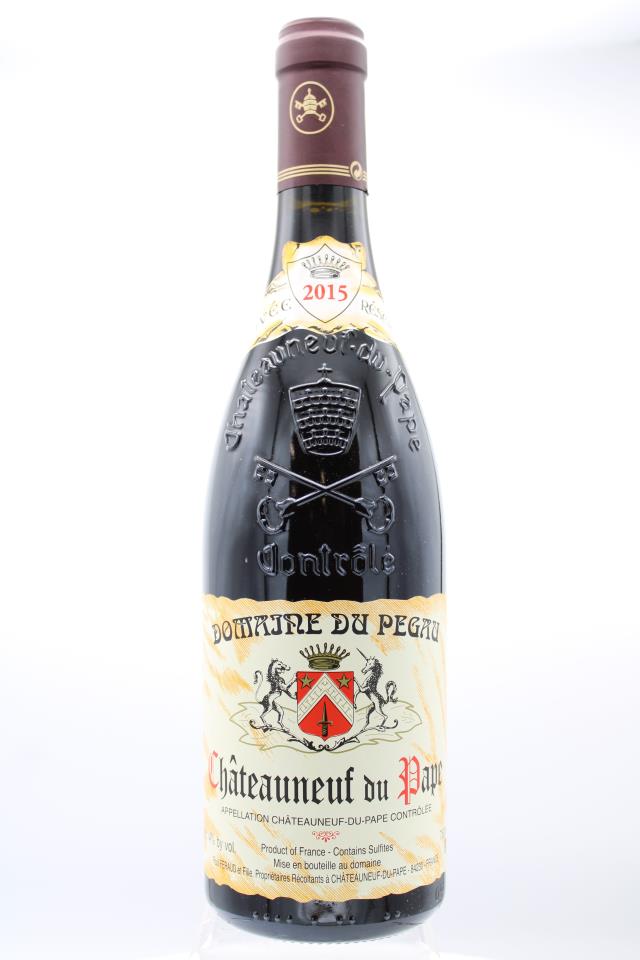
"Now that it has been in bottle a while, the 2015 Chateauneuf du Pape Cuvee Reservee is looking even better than I projected based on last year's prebottling sample. It's all violets, cherries, subtle allspice and clove and traditional garrigue notes of lavender and thyme. Full-bodied and rich, it's crazy complex, adding hints of tar and black olives on the long, silky finish. It should evolve beautifully over the next two decades. At Pegau, Laurence Féraud greeted me with her seemingly permanent level-headed good nature. Every time I see her, she tells me how overwhelmed she is with work, and I marvel at her composure. These hot, early vintages must be tough on the estate in some ways, as the property doesn't have proper temperature controls for the reds. Still, they're extremely successful, so maybe technology is seriously overrated? After all, the 2016 Cuvée da Capo was vinified outdoors because the cellar was full. Féraud continues to believe in using whole clusters and longer-than-average élevage for her wines, and as she keeps the Cuvée Réservée in foudre for two summers, it's fascinating to see how the wines evolve, seeming to gain weight while at the same time smoothing out during their maturation. Féraud said she feels the 2015, 2016 and 2017 are all very different, but, she says, "I like the vintage differences. You work all year, you don't want the wines to all taste the same." For the first time, there are back-to-back vintages of the Cuvée da Capo (2015 and 2016), which means there will be a Cuvée Laurence in 2017. Recent releases of the Laurence, which spends four years in foudre, include the 2012 and 2013, both reviewed in this issue. Don't overlook the white wines, or the Côtes du Rhône bottlings under the Château Pegau label (reviewed separately)."
Region
Red
Country
Score
"Now that it has been in bottle a while, the 2015 Chateauneuf du Pape Cuvee Reservee is looking even better than I projected based on last year's prebottling sample. It's all violets, cherries, subtle allspice and clove and traditional garrigue notes of lavender and thyme. Full-bodied and rich, it's crazy complex, adding hints of tar and black olives on the long, silky finish. It should evolve beautifully over the next two decades. At Pegau, Laurence Féraud greeted me with her seemingly permanent level-headed good nature. Every time I see her, she tells me how overwhelmed she is with work, and I marvel at her composure. These hot, early vintages must be tough on the estate in some ways, as the property doesn't have proper temperature controls for the reds. Still, they're extremely successful, so maybe technology is seriously overrated? After all, the 2016 Cuvée da Capo was vinified outdoors because the cellar was full. Féraud continues to believe in using whole clusters and longer-than-average élevage for her wines, and as she keeps the Cuvée Réservée in foudre for two summers, it's fascinating to see how the wines evolve, seeming to gain weight while at the same time smoothing out during their maturation. Féraud said she feels the 2015, 2016 and 2017 are all very different, but, she says, "I like the vintage differences. You work all year, you don't want the wines to all taste the same." For the first time, there are back-to-back vintages of the Cuvée da Capo (2015 and 2016), which means there will be a Cuvée Laurence in 2017. Recent releases of the Laurence, which spends four years in foudre, include the 2012 and 2013, both reviewed in this issue. Don't overlook the white wines, or the Côtes du Rhône bottlings under the Château Pegau label (reviewed separately)."
Have questions?
The world's most influential fine-wine producer and the benchmark for Bordeaux, Burgundy, Champagne and the Rhone. Its appellation (AOC) system codifies geography, grape and method, and its wines set the global standard for age-worthiness and terroir expression.
Spans the Syrah-driven northern crus of Cote-Rotie and Hermitage and the Grenache-based blends of the warmer south, led by Chateauneuf-du-Pape. Its wines are known for power, spice and warmth.
The southern Rhone's most famous appellation, blending Grenache with Syrah, Mourvedre and more into rich, warming, spice-laden reds from galet-strewn soils.
A warm-climate red giving generous, high-alcohol wines of red fruit and spice. It anchors southern Rhone blends and old-vine wines in Spain and Australia.
A late-ripening red lending structure, dark fruit and gamey, meaty complexity to southern Rhone and Mediterranean blends.
Syrah (Shiraz) produces dark, powerful reds with black fruit, pepper and smoked-meat notes. It yields elegant, perfumed wines in the northern Rhone and bold, rich styles in Australia.