
Loading lot details…
The November 2022 Auction: Part 1
Swipe left for previous · Swipe right for next
 1 / 2
Lot 2061
Estimate: $150
Sold:
This auction has ended. Bidding is closed.
Collection name
Reviews
95WA
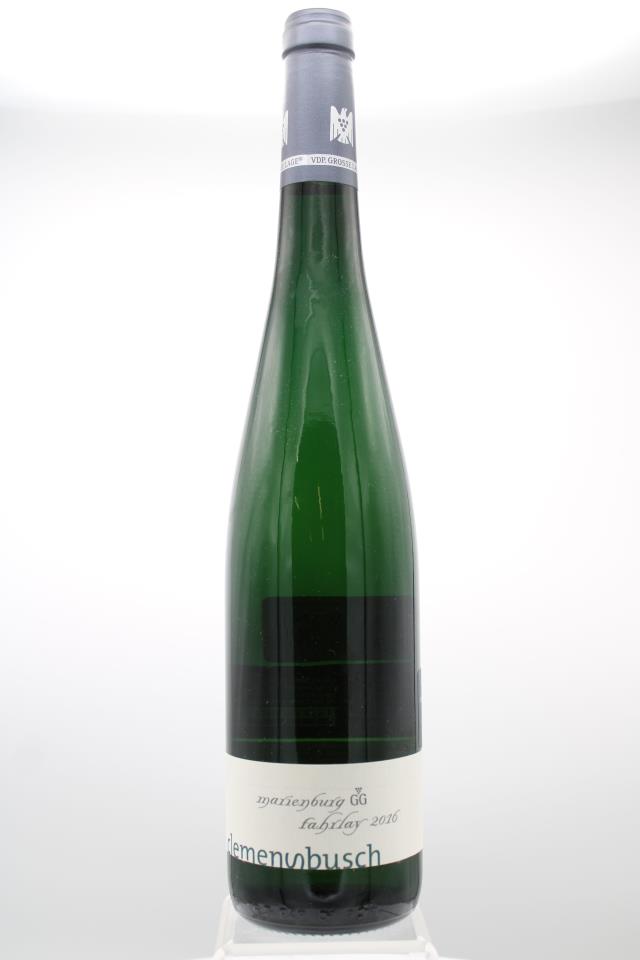
"Picked at about 96° Oechsle along with the "Vom blauen Schiefer," which is sourced in the same plot, the 2016 Pündericher Marienburg Riesling GG "Fahrlay" is ripe and intense on the nose, intermixing herbal and slatey aromas with super ripe and concentrated Riesling notes. On the palate, this is a full-bodied, rich and mouth-filling Riesling with power, salt, grip, great tension and firm tannins. This has finely grained minerality and ripe, concentrated fruit. It's almost too opulent, but the mineral structure provides vibrating vitality and tension. The 2016 is far too young to drink today, but its aging potential should be huge. The acidity is fine and lively, but it is the overall structure and minerality that give this elegant and concentrated Riesling its expressive length. Tasted February 2018. Clemens Busch showed me a beautiful collection of 2016s. The wines are rather lean, elegant and very charming and are provided with ripe, lush fruit. The alcohol level of the wines is moderate, ranging between 10.5% and 12% (dry), whereas the acidity is always ripe and well buffered by higher pH levels, also caused malolactic fermentation during the alcoholic fermentation (in contrast to 2015 where malo didn't occur). Most of the 2016s are already accessible, but they are mineral as well and can (or, better yet, should) be kept for years. Bud break was early in 2016, and from March to mid-May, the weather was pretty dry, with a bit of frost in April, remembers Clemens. "The peronospora problems in the early summer required good leaf management and protecting contact sprays every five to seven days." However, due to two terribly hot days in later August, the biggest problem of 2016 was sunburn in the parcels that suffered from frost and peronospora, says Clemens. The leaves were reduced here, and the grapes lacked the natural protection they need on sunny days. Busch started harvesting pretty late, on October 11th, and didn't stop before the third week of November. Although the grapes looked riper than in 2015, the alcohol levels are lower. Botrytis, however, did't occur, so 2016 was an excellent vintage for the fruity Kabinett and Spätlese category (which don't play a really important role here). But 2016 was probably the greatest vintage so far for Busch's dry Grosses Gewächs Rieslings. These a very clear, elegant and well balanced yet highly expressive. In the end, Clemens was surprised that he harvested "a normal quantity after the freak weather of 2016," which summed up to 45 hectoliters per hectare on average. The musts fermented rather slow, for seven to eight months, and the long lees aging probably gave Busch's 2016s a certain X-factor that makes them outstanding Rieslings. They were bottled at the end of September 2017, except for the Reserves of Fahrlay and Rothenpfad, which were still on the lees in February 2018."
Region
White
Country
Score
"Picked at about 96° Oechsle along with the "Vom blauen Schiefer," which is sourced in the same plot, the 2016 Pündericher Marienburg Riesling GG "Fahrlay" is ripe and intense on the nose, intermixing herbal and slatey aromas with super ripe and concentrated Riesling notes. On the palate, this is a full-bodied, rich and mouth-filling Riesling with power, salt, grip, great tension and firm tannins. This has finely grained minerality and ripe, concentrated fruit. It's almost too opulent, but the mineral structure provides vibrating vitality and tension. The 2016 is far too young to drink today, but its aging potential should be huge. The acidity is fine and lively, but it is the overall structure and minerality that give this elegant and concentrated Riesling its expressive length. Tasted February 2018. Clemens Busch showed me a beautiful collection of 2016s. The wines are rather lean, elegant and very charming and are provided with ripe, lush fruit. The alcohol level of the wines is moderate, ranging between 10.5% and 12% (dry), whereas the acidity is always ripe and well buffered by higher pH levels, also caused malolactic fermentation during the alcoholic fermentation (in contrast to 2015 where malo didn't occur). Most of the 2016s are already accessible, but they are mineral as well and can (or, better yet, should) be kept for years. Bud break was early in 2016, and from March to mid-May, the weather was pretty dry, with a bit of frost in April, remembers Clemens. "The peronospora problems in the early summer required good leaf management and protecting contact sprays every five to seven days." However, due to two terribly hot days in later August, the biggest problem of 2016 was sunburn in the parcels that suffered from frost and peronospora, says Clemens. The leaves were reduced here, and the grapes lacked the natural protection they need on sunny days. Busch started harvesting pretty late, on October 11th, and didn't stop before the third week of November. Although the grapes looked riper than in 2015, the alcohol levels are lower. Botrytis, however, did't occur, so 2016 was an excellent vintage for the fruity Kabinett and Spätlese category (which don't play a really important role here). But 2016 was probably the greatest vintage so far for Busch's dry Grosses Gewächs Rieslings. These a very clear, elegant and well balanced yet highly expressive. In the end, Clemens was surprised that he harvested "a normal quantity after the freak weather of 2016," which summed up to 45 hectoliters per hectare on average. The musts fermented rather slow, for seven to eight months, and the long lees aging probably gave Busch's 2016s a certain X-factor that makes them outstanding Rieslings. They were bottled at the end of September 2017, except for the Reserves of Fahrlay and Rothenpfad, which were still on the lees in February 2018."
Have questions?
The spiritual home of Riesling, producing wines of piercing acidity, precision and longevity across a spectrum from bone-dry to lusciously sweet. Cool, steep-sloped vineyards along the Mosel and Rhine yield some of the world's most delicate, long-lived whites.
Germany's most celebrated Riesling region, its steep slate slopes above the river yielding featherlight, low-alcohol wines of electric acidity, delicacy and extraordinary longevity.
The appellation for Germany's most celebrated Riesling, its steep slate slopes yielding light, low-alcohol wines of electric acidity and extraordinary longevity.
A highly aromatic white of piercing acidity and transparency to terroir, ranging from bone-dry to lusciously sweet. It ages remarkably and is the noble grape of Germany and Alsace.