
Loading lot details…
The March 2023 Auction: Part 1
Swipe left for previous · Swipe right for next
 1 / 2
Lot 2366
Estimate: $90
1 Very lightly scuffed label.
This auction has ended. Bidding is closed.
Collection name
Reviews
90AG
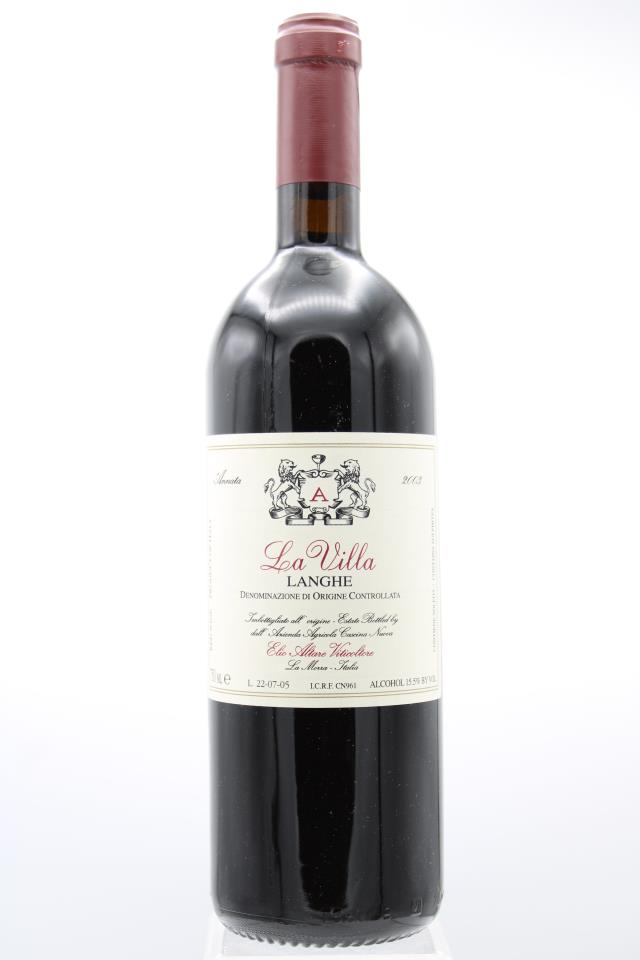
"2003 Langhe La Villa—Dark ruby. The 2003 La Villa, blend of equal parts Nebbiolo and Barbera, is a study in contrasts, given that the vintage produced such different results for the two varietals. The wine shows plenty of the attractive plummy dark fruit, licorice and tar notes of barrel-aged Barbera . . . . The approach to winemaking here remains very pure and unadulterated. Altare tends to his vines like a garden, which is in fact another of his passions. There are no artificial fertilizers of any kind used. 'I personally work all of my vineyards so in the interest of my own health, why would I use anything that is unnatural on my plants,' asks Altare rhetorically. Altare was one of the first proponents of low yields in these parts and he remains a fervent believer in that approach. In a simple, functional cellar, Altare’s approach is similarly stripped down to the bare essentials. Fermentations here are measured in hours rather than days. Altare opts for a 3-4 day fermentation in rotary fermenters after which the wines do their malos and finish their aging in barriques of various ages. Altare believes in manipulating the wines as little as possible. Racking is kept to a minimum as he believes that each time wines are moved they lose aroma and flavors, and bottling is done without the aid of fining and/or filtration. Elio Altare’s Barolos remain among the most profound expressions of Nebbiolo and La Morra terroir."
Region
Red
Country
Score
"2003 Langhe La Villa—Dark ruby. The 2003 La Villa, blend of equal parts Nebbiolo and Barbera, is a study in contrasts, given that the vintage produced such different results for the two varietals. The wine shows plenty of the attractive plummy dark fruit, licorice and tar notes of barrel-aged Barbera . . . . The approach to winemaking here remains very pure and unadulterated. Altare tends to his vines like a garden, which is in fact another of his passions. There are no artificial fertilizers of any kind used. 'I personally work all of my vineyards so in the interest of my own health, why would I use anything that is unnatural on my plants,' asks Altare rhetorically. Altare was one of the first proponents of low yields in these parts and he remains a fervent believer in that approach. In a simple, functional cellar, Altare’s approach is similarly stripped down to the bare essentials. Fermentations here are measured in hours rather than days. Altare opts for a 3-4 day fermentation in rotary fermenters after which the wines do their malos and finish their aging in barriques of various ages. Altare believes in manipulating the wines as little as possible. Racking is kept to a minimum as he believes that each time wines are moved they lose aroma and flavors, and bottling is done without the aid of fining and/or filtration. Elio Altare’s Barolos remain among the most profound expressions of Nebbiolo and La Morra terroir."
Have questions?
Italy grows more indigenous grape varieties than any other country and produces wine in all 20 of its regions. From Piedmont's Nebbiolo to Tuscany's Sangiovese, its finest wines pair structure and bright acidity with a strong sense of place.
In Italy's northwest, Piedmont is home to Nebbiolo, the grape behind the powerful, perfumed and long-lived reds of Barolo and Barbaresco. Fog-shrouded hills and calcareous soils define its greatest wines.
Produces pale but powerfully tannic and perfumed reds with tar, rose and cherry notes. The grape behind Barolo and Barbaresco, it is among the most age-worthy in the world.