
Loading lot details…
The May 2023 Auction: Part 2
Swipe left for previous · Swipe right for next
 1 / 2
Lot 1770
Estimate: $1,100
Sold:
This auction has ended. Bidding is closed.
Collection name
Reviews
98+WA
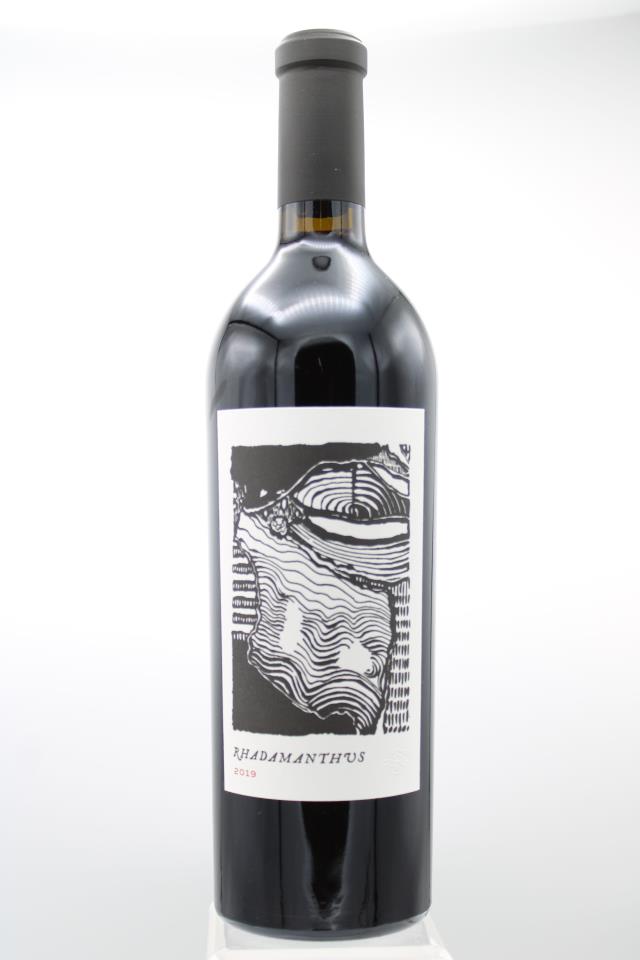
"Sourced from the old Reverie Vineyard on Diamond Mountain planted by Norm Kiken, the 2019 Rhadamanthus is roughly 80% Cabernet Sauvignon, 17% Cabernet Franc and 3% Petit Verdot, co-fermented when possible, depending on what is ripe at each pick. Incredibly dark and concentrated, it delivers huge cassis fruit, accented and made savory through the addition of some sage and bay nuances. It's full-bodied, rich and velvety, with maybe just the barest hint of warmth. Long and softly tannic on the finish, with hints of licorice, this is a superb effort that may threaten triple digits in another decade. Winemaker Nigel Kinsman earned a music degree, playing double bass in classical music. Naturally, this led to a job in an Adelaide wine shop, which he followed up by going back to school to learn winemaking. Kinsman worked at Nepenthe in the Adelaide Hills with Peter Leske while taking classes, then did brief turns at Mount Langhi Ghiran, with Trevor Mast, and Cullen Wines, in Margaret River. After spending a couple of years in Italy, he started to work with Bart and Daphne Araujo at their Eisele Vineyard in 2010. Since the sale of that venture, Kinsman has been consulting, and with his wife, Shae, started Kinsman Eades in 2016, working with two vineyards. Kinsman described his winemaking as ‘very traditional,’ referencing harvesting by hand and a 16-foot-long sorting table. That's followed by destemming and optical sorting, then partial crushing into tank. ‘We 'pop' about 50% of the berries,’ said Kinsman. There's typically five days of cold soak followed by relatively modest fermentation temperatures of 80 to 88 degrees—’Always under 90 degrees,’ he said. ‘I find that you start to lose those delicate floral aromatics at high temperatures.’ He'll pump over as much as three times per day and do a couple of rack and returns ‘when possible,’ with an average total time on skins of around 27 days. For 2019, the lineup includes the three wines reviewed here—Anjea, from Sleeping Lady Vineyard, La Voleuse du Chagrin, from a vineyard next to Eisele, and Rhadamanthus, from the old Reverie Vineyard on Diamond Mountain. ‘I love 2019,’ said Kinsman. ‘I don't feel it's as flashy as 2018, but across the board, my wines are a bit more structured. The two years are just wonderful.’ In 2020, Kinsman either refused the grapes for smoke taint or made the wine and bulked it out, so with none of those wines to try, I sampled a few barrel samples of Kinsman's 2021s, all of which show promise. ‘What a dream vintage,’ said Kinsman. ‘Maybe not a typical, full-bodied vintage, but a really pretty vintage.’ Fans of La Voleuse du Chagrin should note that there's no 2021, because the yields were simply too low. Those vines have subsequently been pulled up and will be replanted, so it will be a few more years until that bottling can make a return. But Kinsman added Vine Hill Ranch to the lineup starting in 2020 (rejected for smoke taint), and the 2021 shows excellent potential."
Region
Red
Country
Score
"Sourced from the old Reverie Vineyard on Diamond Mountain planted by Norm Kiken, the 2019 Rhadamanthus is roughly 80% Cabernet Sauvignon, 17% Cabernet Franc and 3% Petit Verdot, co-fermented when possible, depending on what is ripe at each pick. Incredibly dark and concentrated, it delivers huge cassis fruit, accented and made savory through the addition of some sage and bay nuances. It's full-bodied, rich and velvety, with maybe just the barest hint of warmth. Long and softly tannic on the finish, with hints of licorice, this is a superb effort that may threaten triple digits in another decade. Winemaker Nigel Kinsman earned a music degree, playing double bass in classical music. Naturally, this led to a job in an Adelaide wine shop, which he followed up by going back to school to learn winemaking. Kinsman worked at Nepenthe in the Adelaide Hills with Peter Leske while taking classes, then did brief turns at Mount Langhi Ghiran, with Trevor Mast, and Cullen Wines, in Margaret River. After spending a couple of years in Italy, he started to work with Bart and Daphne Araujo at their Eisele Vineyard in 2010. Since the sale of that venture, Kinsman has been consulting, and with his wife, Shae, started Kinsman Eades in 2016, working with two vineyards. Kinsman described his winemaking as ‘very traditional,’ referencing harvesting by hand and a 16-foot-long sorting table. That's followed by destemming and optical sorting, then partial crushing into tank. ‘We 'pop' about 50% of the berries,’ said Kinsman. There's typically five days of cold soak followed by relatively modest fermentation temperatures of 80 to 88 degrees—’Always under 90 degrees,’ he said. ‘I find that you start to lose those delicate floral aromatics at high temperatures.’ He'll pump over as much as three times per day and do a couple of rack and returns ‘when possible,’ with an average total time on skins of around 27 days. For 2019, the lineup includes the three wines reviewed here—Anjea, from Sleeping Lady Vineyard, La Voleuse du Chagrin, from a vineyard next to Eisele, and Rhadamanthus, from the old Reverie Vineyard on Diamond Mountain. ‘I love 2019,’ said Kinsman. ‘I don't feel it's as flashy as 2018, but across the board, my wines are a bit more structured. The two years are just wonderful.’ In 2020, Kinsman either refused the grapes for smoke taint or made the wine and bulked it out, so with none of those wines to try, I sampled a few barrel samples of Kinsman's 2021s, all of which show promise. ‘What a dream vintage,’ said Kinsman. ‘Maybe not a typical, full-bodied vintage, but a really pretty vintage.’ Fans of La Voleuse du Chagrin should note that there's no 2021, because the yields were simply too low. Those vines have subsequently been pulled up and will be replanted, so it will be a few more years until that bottling can make a return. But Kinsman added Vine Hill Ranch to the lineup starting in 2020 (rejected for smoke taint), and the 2021 shows excellent potential."
Have questions?
The fourth-largest wine producer in the world, led by California. American fine wine is defined by ripe, expressive fruit and a spirit of innovation, with Napa Valley Cabernet Sauvignon among the most sought-after wines globally.
The world's most planted premium red grape, yielding deeply colored, tannic and structured wines with cassis, cedar and graphite notes. Firm tannins and acidity make it exceptionally age-worthy, whether as a varietal or the backbone of a Bordeaux blend.