
Loading lot details…
The July 2023 Auction: Part 3
Swipe left for previous · Swipe right for next
 1 / 2
Lot 530
Estimate: $700
2 Lightly scuffed labels.
Sold:
This auction has ended. Bidding is closed.
Collection name
Reviews
98-100WA
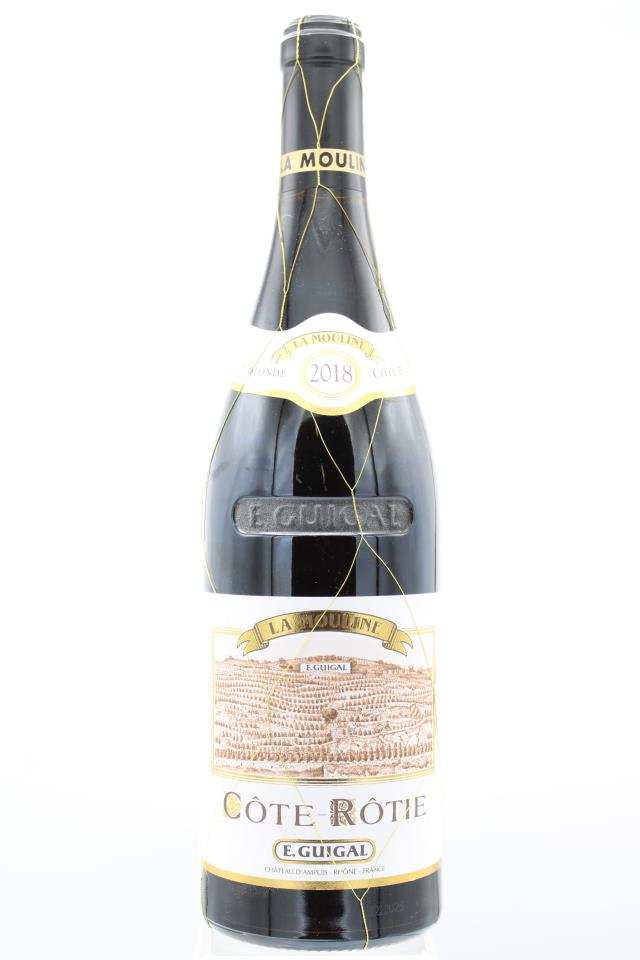
"The 2018 Cote Rotie La Mouline is immensely seductive, offering up enticing notes of floral potpourri and red berries on the nose. Those strawberries and raspberries persist onto the full-bodied palate and through the long, lush finish, buoyed by supple, creamy-textured tannins. This is the most complete, compelling vintage of La Mouline I've tasted. Tasting at Guigal is always one of the highlights of my Northern Rhône trip. Because of the family's breadth of production and hallmark long élevage, it provides a chance to look at several vintages together, along with commentary from the knowledgeable patriarch, Marcel Guigal. This year, I was joined by Marcel, his son Philippe and Jacques Desvernois, hired away from Jaboulet in the summer of 2018, for a five-hour marathon in the chilly cellar beneath the company's headquarters in Ampuis. Despite the cool temperatures, there were smiles all around at the quality of the samples on the table. ‘Global warming has been fabulous for the Northern Rhône,’ said Marcel at one point. It would be easy to overlook some of the lesser wines in the cellar and zoom straight to the single-vineyard Côte Rôties, but for readers on a budget, the company has plenty of good wine to offer, starting with the mammoth quantities produced of the basic Côtes du Rhône (4.5 million bottles of the 2016 rouge). From the north, the closest equivalent is the Crozes-Hermitage, but I favor the Saint-Joseph in most vintages for its more granitic expression of Syrah. The whites here (outside of Condrieu, where they are the largest producer) are often overlooked, but I believe the quality is improving. Philippe Guigal said they worked the lees of the whites sparingly in 2018 to avoid any heaviness. While the focus of my visit is on the north, Guigal produces several wines from the Southern Rhône, which were included in the tasting. Indeed, for a négociant, Guigal does a terrific job maintaining consistency in their Southern Rhône bottlings. Interestingly, although they now own a large property in Châteauneuf-du-Pape (Château de Nalys), sourcing for the négociant CdP remains completely separate. ‘We have two hemispheres in our brains,’ said Philippe. ‘Guigal and Nalys.’ The latest Nalys wines were reviewed previously, as part of my Châteauneuf-du-Pape coverage. It was the start of the last full day of my 2021 Rhône trip when I pulled into the parking lot at Guigal around 9:30 a.m. Reminder: Always dress warmly when tasting at Guigal, because the cellars are a few degrees cooler than average! The cool temperatures help inhibit the growth of any spoilage organisms during the extended élevage these wines receive. While the stars of the cellars are the single-vineyard wines from Côte-Rôtie, the Guigal family takes pride in all of the wines they produce, and one reliable indicator of the quality of a Southern Rhône vintage is the quality and volume produced of the négoce Côtes du Rhône, which is typically around 50% Syrah, 40% Grenache and 10% Mourvèdre. The 2018 is charming and fruit-forward, while the 2019 looks to be slightly more concentrated. The family's relationships in Gigondas go back before the elevation of that appellation to cru status in 1971, so that is another reliable southern offering from the négociant side of the business. In the Northern Rhône, the large-scale bottlings from Condrieu and Côte-Rôtie are consistent performers and widely distributed. As they will be many consumers' introduction to these appellations, it's important they remain of high quality, vintage after vintage. The so-called La Las really require no introduction, except to mention that a new La La is being contemplated—a steep, two-hectare parcel within the Fongeant lieu-dit was vinified separately in 2019 and 2020. I was able to taste some impressive barrel samples, but as those wines will not be bottled separately, I've not scored them or added them to the database. Philippe Guigal was hopeful that the new wine—tentatively named La Renarde—would be ready to make a formal debut beginning with the 2022 vintage. Value-oriented consumers who still want a taste of Northern Rhône Syrah will want to focus on the family's négoce bottlings from Crozes-Hermitage and Saint-Joseph. While the Crozes is normally a fruit-forward, easy-drinking wine, the 2019 version boasts a bit more concentration than usual, while the 2018 and 2019 St-Joes both deliver ripe fruit and hints of granitic austerity. The Lieu-Dit Saint-Joseph and Vignes de l'Hospice bottlings ratchet up the intensity of both oak and terroir, but prices for those are rising rapidly, as consumers have caught on to the value they represent. As a side note, my tastings at Guigal's cellars in Ampuis included wines from the family's estate in Châteauneuf-du-Pape, Château de Nalys, but I've chosen to include those reviews in my Southern Rhône coverage, slated to appear in the next few weeks."
Region
Red
Country
Score
"The 2018 Cote Rotie La Mouline is immensely seductive, offering up enticing notes of floral potpourri and red berries on the nose. Those strawberries and raspberries persist onto the full-bodied palate and through the long, lush finish, buoyed by supple, creamy-textured tannins. This is the most complete, compelling vintage of La Mouline I've tasted. Tasting at Guigal is always one of the highlights of my Northern Rhône trip. Because of the family's breadth of production and hallmark long élevage, it provides a chance to look at several vintages together, along with commentary from the knowledgeable patriarch, Marcel Guigal. This year, I was joined by Marcel, his son Philippe and Jacques Desvernois, hired away from Jaboulet in the summer of 2018, for a five-hour marathon in the chilly cellar beneath the company's headquarters in Ampuis. Despite the cool temperatures, there were smiles all around at the quality of the samples on the table. ‘Global warming has been fabulous for the Northern Rhône,’ said Marcel at one point. It would be easy to overlook some of the lesser wines in the cellar and zoom straight to the single-vineyard Côte Rôties, but for readers on a budget, the company has plenty of good wine to offer, starting with the mammoth quantities produced of the basic Côtes du Rhône (4.5 million bottles of the 2016 rouge). From the north, the closest equivalent is the Crozes-Hermitage, but I favor the Saint-Joseph in most vintages for its more granitic expression of Syrah. The whites here (outside of Condrieu, where they are the largest producer) are often overlooked, but I believe the quality is improving. Philippe Guigal said they worked the lees of the whites sparingly in 2018 to avoid any heaviness. While the focus of my visit is on the north, Guigal produces several wines from the Southern Rhône, which were included in the tasting. Indeed, for a négociant, Guigal does a terrific job maintaining consistency in their Southern Rhône bottlings. Interestingly, although they now own a large property in Châteauneuf-du-Pape (Château de Nalys), sourcing for the négociant CdP remains completely separate. ‘We have two hemispheres in our brains,’ said Philippe. ‘Guigal and Nalys.’ The latest Nalys wines were reviewed previously, as part of my Châteauneuf-du-Pape coverage. It was the start of the last full day of my 2021 Rhône trip when I pulled into the parking lot at Guigal around 9:30 a.m. Reminder: Always dress warmly when tasting at Guigal, because the cellars are a few degrees cooler than average! The cool temperatures help inhibit the growth of any spoilage organisms during the extended élevage these wines receive. While the stars of the cellars are the single-vineyard wines from Côte-Rôtie, the Guigal family takes pride in all of the wines they produce, and one reliable indicator of the quality of a Southern Rhône vintage is the quality and volume produced of the négoce Côtes du Rhône, which is typically around 50% Syrah, 40% Grenache and 10% Mourvèdre. The 2018 is charming and fruit-forward, while the 2019 looks to be slightly more concentrated. The family's relationships in Gigondas go back before the elevation of that appellation to cru status in 1971, so that is another reliable southern offering from the négociant side of the business. In the Northern Rhône, the large-scale bottlings from Condrieu and Côte-Rôtie are consistent performers and widely distributed. As they will be many consumers' introduction to these appellations, it's important they remain of high quality, vintage after vintage. The so-called La Las really require no introduction, except to mention that a new La La is being contemplated—a steep, two-hectare parcel within the Fongeant lieu-dit was vinified separately in 2019 and 2020. I was able to taste some impressive barrel samples, but as those wines will not be bottled separately, I've not scored them or added them to the database. Philippe Guigal was hopeful that the new wine—tentatively named La Renarde—would be ready to make a formal debut beginning with the 2022 vintage. Value-oriented consumers who still want a taste of Northern Rhône Syrah will want to focus on the family's négoce bottlings from Crozes-Hermitage and Saint-Joseph. While the Crozes is normally a fruit-forward, easy-drinking wine, the 2019 version boasts a bit more concentration than usual, while the 2018 and 2019 St-Joes both deliver ripe fruit and hints of granitic austerity. The Lieu-Dit Saint-Joseph and Vignes de l'Hospice bottlings ratchet up the intensity of both oak and terroir, but prices for those are rising rapidly, as consumers have caught on to the value they represent. As a side note, my tastings at Guigal's cellars in Ampuis included wines from the family's estate in Châteauneuf-du-Pape, Château de Nalys, but I've chosen to include those reviews in my Southern Rhône coverage, slated to appear in the next few weeks."
Have questions?
The world's most influential fine-wine producer and the benchmark for Bordeaux, Burgundy, Champagne and the Rhone. Its appellation (AOC) system codifies geography, grape and method, and its wines set the global standard for age-worthiness and terroir expression.
Spans the Syrah-driven northern crus of Cote-Rotie and Hermitage and the Grenache-based blends of the warmer south, led by Chateauneuf-du-Pape. Its wines are known for power, spice and warmth.
The northern Rhone's most prestigious red appellation, producing perfumed, elegant Syrah, often co-fermented with a little Viognier, from steep terraced slopes.
Syrah (Shiraz) produces dark, powerful reds with black fruit, pepper and smoked-meat notes. It yields elegant, perfumed wines in the northern Rhone and bold, rich styles in Australia.