
Loading lot details…
The August 2023 Auction: Part 2
Swipe left for previous · Swipe right for next
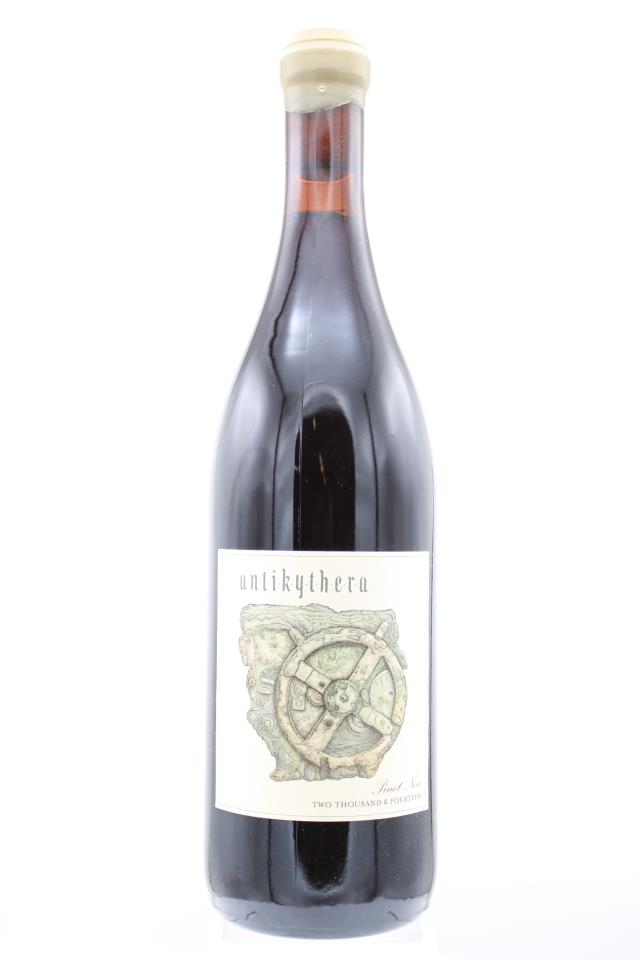 1 / 2
Lot 1837
Estimate: $190
Sold:
This auction has ended. Bidding is closed.
Collection name
Reviews
96WA
"Grapes for the 2014 Pinot Noir Antikythera come from the Antica Terra vineyard, planted in 1989. It's incredibly elegant and ethereal, reminiscent of Rayas with its elegantly degraded, amaro-tinged profile: warm cranberries, ripe raspberries and blackberries are accented by bitter citrus peel, amaro, tree bark, laurel leaves, dried roses, tobacco, ash and scrub. The medium-bodied palate is elegantly styled but intense, layered and with minutely grained tannins, finishing incredibly long, nuanced and with lip-smacking freshness. Wow! ‘My wines don’t exist for a certain goal or to represent a certain philosophy,’ says Maggie Harrison, who learned her craft from the ground up under the tutelage of Manfred Krankl at Sine Qua Non. ‘The way I learned to make wine is head down. Focus on what’s in front of you, what’s there in the moment and how to make it beautiful. Operating in beauty on an incredibly minute scale, making decisions based on the way things are in front of you. If you do it that way, you won’t know where you will end up, but it will be beautiful. You will end up making the most beautiful version of what was in the vineyard, in the wine, in my hands. You’ll end up with something that shines.’ Although her winemaking is extremely detailed, it follows no formula. ‘When you behave this way,’ she says of her winemaking process, ‘it engenders a huge amount of diversity in the cellar. If you go to most any cellar, there’s a plan in advance. I come in each morning and sit with each barrel to see what they want. What’s that barrel’s character? Fruit ends up in tons of different fermenters because we never inoculate, and all the fermenters behave a different way. Maybe if one accumulates a lot of heat, I’ll délestage. If another is locked up, I’ll do pigéage. Say the third is a barrique with the head popped off, I’ll moisten the cap with my hands. As they behave differently, I treat them differently. And that compounds. So, I end up with wildly different fermentation tanks.’ ‘There are no holding tanks and no settling,’ Harrison continues. ‘My winemaking is reliant upon a fairly high level of solids. Each fermenter gets its own barrel program. Wineries have to buy barrels so far in advance. Here, where we have this wild vintage variation, the idea that you can decide in March where your wine will live is far-fetched. I buy enough new oak so that 70% of everything I make can live in a new barrel. I also have enough used barrels for 80% of what I make, so nothing forces my hand. I use six coopers, with wood from five forests, seven different toasts and 11 different barrel sizes. I can fit the wine that has become into the most perfect vessel for it. So, we end up with a cellar full of fraternal twins. The wines are related, but you can’t see it necessarily.’ Harrison’s wines are singular, difficult to define and, in my opinion, some of the most exciting wines being made in Oregon today. They offer a different conception of terroir and beauty and manage to give hedonic pleasure as well as intellectual stimulation—what is this aroma, this flavor? How is this texture achieved? How can I think about this orange-colored rosé? ‘There can be all these different versions of delicious,’ says Harrison, ‘but for me, clarity is the final marker.’ I ask whether clarity is synonymous, in wine speak, as purity. ‘No. That’s not the same for me,’ she says definitively. ‘Clarity is the understandability of the story, the arc of expression. The narrative arc of the wine is knowable.’"
Region
Red
Country
Score
"Grapes for the 2014 Pinot Noir Antikythera come from the Antica Terra vineyard, planted in 1989. It's incredibly elegant and ethereal, reminiscent of Rayas with its elegantly degraded, amaro-tinged profile: warm cranberries, ripe raspberries and blackberries are accented by bitter citrus peel, amaro, tree bark, laurel leaves, dried roses, tobacco, ash and scrub. The medium-bodied palate is elegantly styled but intense, layered and with minutely grained tannins, finishing incredibly long, nuanced and with lip-smacking freshness. Wow! ‘My wines don’t exist for a certain goal or to represent a certain philosophy,’ says Maggie Harrison, who learned her craft from the ground up under the tutelage of Manfred Krankl at Sine Qua Non. ‘The way I learned to make wine is head down. Focus on what’s in front of you, what’s there in the moment and how to make it beautiful. Operating in beauty on an incredibly minute scale, making decisions based on the way things are in front of you. If you do it that way, you won’t know where you will end up, but it will be beautiful. You will end up making the most beautiful version of what was in the vineyard, in the wine, in my hands. You’ll end up with something that shines.’ Although her winemaking is extremely detailed, it follows no formula. ‘When you behave this way,’ she says of her winemaking process, ‘it engenders a huge amount of diversity in the cellar. If you go to most any cellar, there’s a plan in advance. I come in each morning and sit with each barrel to see what they want. What’s that barrel’s character? Fruit ends up in tons of different fermenters because we never inoculate, and all the fermenters behave a different way. Maybe if one accumulates a lot of heat, I’ll délestage. If another is locked up, I’ll do pigéage. Say the third is a barrique with the head popped off, I’ll moisten the cap with my hands. As they behave differently, I treat them differently. And that compounds. So, I end up with wildly different fermentation tanks.’ ‘There are no holding tanks and no settling,’ Harrison continues. ‘My winemaking is reliant upon a fairly high level of solids. Each fermenter gets its own barrel program. Wineries have to buy barrels so far in advance. Here, where we have this wild vintage variation, the idea that you can decide in March where your wine will live is far-fetched. I buy enough new oak so that 70% of everything I make can live in a new barrel. I also have enough used barrels for 80% of what I make, so nothing forces my hand. I use six coopers, with wood from five forests, seven different toasts and 11 different barrel sizes. I can fit the wine that has become into the most perfect vessel for it. So, we end up with a cellar full of fraternal twins. The wines are related, but you can’t see it necessarily.’ Harrison’s wines are singular, difficult to define and, in my opinion, some of the most exciting wines being made in Oregon today. They offer a different conception of terroir and beauty and manage to give hedonic pleasure as well as intellectual stimulation—what is this aroma, this flavor? How is this texture achieved? How can I think about this orange-colored rosé? ‘There can be all these different versions of delicious,’ says Harrison, ‘but for me, clarity is the final marker.’ I ask whether clarity is synonymous, in wine speak, as purity. ‘No. That’s not the same for me,’ she says definitively. ‘Clarity is the understandability of the story, the arc of expression. The narrative arc of the wine is knowable.’"
Have questions?
The fourth-largest wine producer in the world, led by California. American fine wine is defined by ripe, expressive fruit and a spirit of innovation, with Napa Valley Cabernet Sauvignon among the most sought-after wines globally.
A thin-skinned, terroir-sensitive red producing perfumed, silky and elegant wines of red-berry fruit and earthy complexity. It reaches its apogee in Burgundy.