
Loading lot details…
The September 2023 Auction: Part 4
Swipe left for previous · Swipe right for next
 1 / 2
Lot 35
Estimate: $1,100
This auction has ended. Bidding is closed.
Collection name
Reviews
97NM
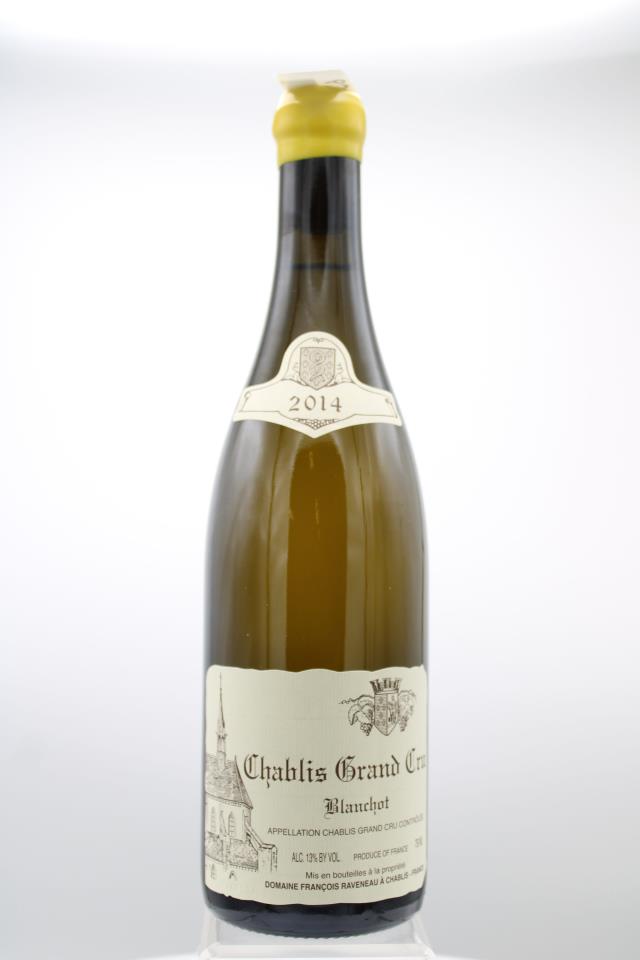
"The 2014 Chablis Grand Cru Blanchot is a contender for Domaine Raveneau's finest release in this great year for Chablis. It has an extremely well defined, marine-influenced bouquet that delivers captivating intensity. This is a Chablis that looks you straight between the eyes. The palate displays exquisite balance with razor-sharp acidity. It feels so lively and vivacious, with a wonderful sense of harmony and poise towards the finish. This is sophisticated and classy, but it will need 4-6 years to really settle into its groove. You cannot bestow too many superlatives here .... It is stiflingly hot in Chablis. The sun is beating down mercilessly. What better way to cool down than a tasting at Domaine Raveneau? Isabelle Raveneau, who has taken an increasingly central role in the running of Chablis’s most famous Domaine, advised that it was particularly cool down in their barrel cellar and recommended a jacket, a thought that was inconceivable given the heat outside. I told her that I would relish the chance to cool down in a T-shirt and managed to taste through their 2013s in bottle and 2014s from barrel without contracting hypothermia. ‘We are happy with the overall quality of the 2013s given the vintage,’ Isabelle told me in her impeccable English, honed during her time living in Kent. ‘September was very sunny but you had humidity, so the grapes turned from ‘just about ripe’ to rot within a week. How quick you harvested was important as botrytis was spread and yields were getting low. Everything harvested at the beginning was more ‘classic,’ for example the Vaillons, compared to say the Fôrets that was harvested later. It was very frustrating. The berries were not very healthy, so we had to use more sulfur than usual. That damages the bacteria and delayed the fermentation and the malolactic. We had to make sure that the juices were clear when they were being racked. You had to be attentive what you were doing and monitor all the time. We bottled two months earlier than usual as they felt they were ready. The acidity is lower and we wanted to keep the freshness and fruit. That was fine because we racked the 2014s early in January, so everything worked out. The 2013s have a botrytis character …. The lack of wine was a real issue for some Domaines in 2013.’ ‘With respect to 2014 - everything changed on August 20. We had a very sunny and warm September and even October was lovely. We picked from September 17 for about five-and-a-half days. It is because of this good weather that the fermentation went smoothly. In 2014, everything was finished before Xmas. By then it was ready to be racked and the wines could come down into the cellar. But for 2013, the malolactics were sometimes still going on in January so we had to keep heating until the summer, yet still the malolactic was going really slow.’ This is an interesting point. Referring to my opening sentence and Raveneau’s temperature inside their barrel cellar, I discerned that they are one or two degrees cooler than other cellars and this would naturally retard the malolactic, which appears to be the case with respect to the 2013s. Some winemakers actually prefer a slower malolactic, believing that it imparts more complexity, though to be honest I am not totally sold on that theory (unlike a slow alcoholic fermentation of course.) The two vintages are commensurate with the style that was passim in Chablis: the 2013s softer and rounded, more approachable, less severe and the 2014s more taut and mineral driven, perhaps more reflective of their respective terroirs, more ‘Chablis’ in a way. My preference leans toward the 2014s, though as you might expect, their 2013s represent some of the best you will find in Chablis. You might argue that should be the case since they are often the most expensive, though simply by dining at one of the local restaurants, you’ll soon see that their ex-cellar prices are little more that other growers’. It is the secondary market, cultism and speculation that adds the premium. One piece of news is that 2014 sees a new addition to the range – at the ‘bottom’ rather than ‘top end.’ For the first time, Domaine Raveneau will offer a Petit Chablis and it should served as an ideal introduction to the delights of this Estate. ‘It comes from a parcel of vines located on top of Vaudésir on the flat area of the plateau. They were planted in 2010,’ Isabelle informed. The 2014s contain huge potential. Even from barrel the tension and energy in these wines is compelling. I tasted few Chablis wines that could match Domaine Raveneau’s Chablis Blanchots that manages to combine intensity and severity. In some ways, it is an uncompromising Chablis wine – but you would not want it any other way. I thought that the finest Premier Crus from Raveneau actually touch the quality of the Grand Crus this year, perhaps none more so than their spellbinding Chablis Montée de Tonnerre that just crescendos in the mouth. Following our tasting, it was time to re-enter the outside world that was as hot as it had been ninety minutes earlier. I am tempted to ask Isabelle whether it is possible to spend the rest of the afternoon in their cellar, but I my next appointment next-door at Jean Dauvissat awaited. It had been a wonderful tasting …. There can be no denying the quality inside every waxed bottle of Raveneau and the care and complexity within .... There is no question in my mind that the 2014s have something extra when compared to 2015s [as well], however the latter should not be overlooked because there are some very beautiful wines born in this vintage. What it comes down to is that there are no snow-peaked pinnacles in 2015, like there are in 2014--peaks like Blanchots, Les Clos and perhaps even Butteaux, all extraordinary and life-affirming Chablis that are thrilling from very first sip."
Region
White
Country
Score
"The 2014 Chablis Grand Cru Blanchot is a contender for Domaine Raveneau's finest release in this great year for Chablis. It has an extremely well defined, marine-influenced bouquet that delivers captivating intensity. This is a Chablis that looks you straight between the eyes. The palate displays exquisite balance with razor-sharp acidity. It feels so lively and vivacious, with a wonderful sense of harmony and poise towards the finish. This is sophisticated and classy, but it will need 4-6 years to really settle into its groove. You cannot bestow too many superlatives here .... It is stiflingly hot in Chablis. The sun is beating down mercilessly. What better way to cool down than a tasting at Domaine Raveneau? Isabelle Raveneau, who has taken an increasingly central role in the running of Chablis’s most famous Domaine, advised that it was particularly cool down in their barrel cellar and recommended a jacket, a thought that was inconceivable given the heat outside. I told her that I would relish the chance to cool down in a T-shirt and managed to taste through their 2013s in bottle and 2014s from barrel without contracting hypothermia. ‘We are happy with the overall quality of the 2013s given the vintage,’ Isabelle told me in her impeccable English, honed during her time living in Kent. ‘September was very sunny but you had humidity, so the grapes turned from ‘just about ripe’ to rot within a week. How quick you harvested was important as botrytis was spread and yields were getting low. Everything harvested at the beginning was more ‘classic,’ for example the Vaillons, compared to say the Fôrets that was harvested later. It was very frustrating. The berries were not very healthy, so we had to use more sulfur than usual. That damages the bacteria and delayed the fermentation and the malolactic. We had to make sure that the juices were clear when they were being racked. You had to be attentive what you were doing and monitor all the time. We bottled two months earlier than usual as they felt they were ready. The acidity is lower and we wanted to keep the freshness and fruit. That was fine because we racked the 2014s early in January, so everything worked out. The 2013s have a botrytis character …. The lack of wine was a real issue for some Domaines in 2013.’ ‘With respect to 2014 - everything changed on August 20. We had a very sunny and warm September and even October was lovely. We picked from September 17 for about five-and-a-half days. It is because of this good weather that the fermentation went smoothly. In 2014, everything was finished before Xmas. By then it was ready to be racked and the wines could come down into the cellar. But for 2013, the malolactics were sometimes still going on in January so we had to keep heating until the summer, yet still the malolactic was going really slow.’ This is an interesting point. Referring to my opening sentence and Raveneau’s temperature inside their barrel cellar, I discerned that they are one or two degrees cooler than other cellars and this would naturally retard the malolactic, which appears to be the case with respect to the 2013s. Some winemakers actually prefer a slower malolactic, believing that it imparts more complexity, though to be honest I am not totally sold on that theory (unlike a slow alcoholic fermentation of course.) The two vintages are commensurate with the style that was passim in Chablis: the 2013s softer and rounded, more approachable, less severe and the 2014s more taut and mineral driven, perhaps more reflective of their respective terroirs, more ‘Chablis’ in a way. My preference leans toward the 2014s, though as you might expect, their 2013s represent some of the best you will find in Chablis. You might argue that should be the case since they are often the most expensive, though simply by dining at one of the local restaurants, you’ll soon see that their ex-cellar prices are little more that other growers’. It is the secondary market, cultism and speculation that adds the premium. One piece of news is that 2014 sees a new addition to the range – at the ‘bottom’ rather than ‘top end.’ For the first time, Domaine Raveneau will offer a Petit Chablis and it should served as an ideal introduction to the delights of this Estate. ‘It comes from a parcel of vines located on top of Vaudésir on the flat area of the plateau. They were planted in 2010,’ Isabelle informed. The 2014s contain huge potential. Even from barrel the tension and energy in these wines is compelling. I tasted few Chablis wines that could match Domaine Raveneau’s Chablis Blanchots that manages to combine intensity and severity. In some ways, it is an uncompromising Chablis wine – but you would not want it any other way. I thought that the finest Premier Crus from Raveneau actually touch the quality of the Grand Crus this year, perhaps none more so than their spellbinding Chablis Montée de Tonnerre that just crescendos in the mouth. Following our tasting, it was time to re-enter the outside world that was as hot as it had been ninety minutes earlier. I am tempted to ask Isabelle whether it is possible to spend the rest of the afternoon in their cellar, but I my next appointment next-door at Jean Dauvissat awaited. It had been a wonderful tasting …. There can be no denying the quality inside every waxed bottle of Raveneau and the care and complexity within .... There is no question in my mind that the 2014s have something extra when compared to 2015s [as well], however the latter should not be overlooked because there are some very beautiful wines born in this vintage. What it comes down to is that there are no snow-peaked pinnacles in 2015, like there are in 2014--peaks like Blanchots, Les Clos and perhaps even Butteaux, all extraordinary and life-affirming Chablis that are thrilling from very first sip."
Have questions?
The world's most influential fine-wine producer and the benchmark for Bordeaux, Burgundy, Champagne and the Rhone. Its appellation (AOC) system codifies geography, grape and method, and its wines set the global standard for age-worthiness and terroir expression.
Produces the world's most revered Pinot Noir and Chardonnay from a mosaic of tiny, terroir-defined climats. Its hierarchy of village, Premier Cru and Grand Cru vineyards makes site the ultimate expression of quality.
Produces steely, mineral Chardonnay from Kimmeridgian limestone in Burgundy's cool north, prized for precision, purity and saline drive.
2014 in Burgundy is a benchmark white vintage, tense, fresh and mineral, though Cote de Beaune hail cut yields; the reds are balanced and classically proportioned, with good freshness and medium-term aging potential.
The world's most versatile white grape, producing everything from steely Chablis to rich, oaked whites. Its neutrality makes it a mirror of terroir and winemaking, and the foundation of white Burgundy and Champagne.