
Loading lot details…
The September 2023 Auction: Part 4
Swipe left for previous · Swipe right for next
 1 / 2
Lot 45
Estimate: $950
This auction has ended. Bidding is closed.
Collection name
Reviews
96WA
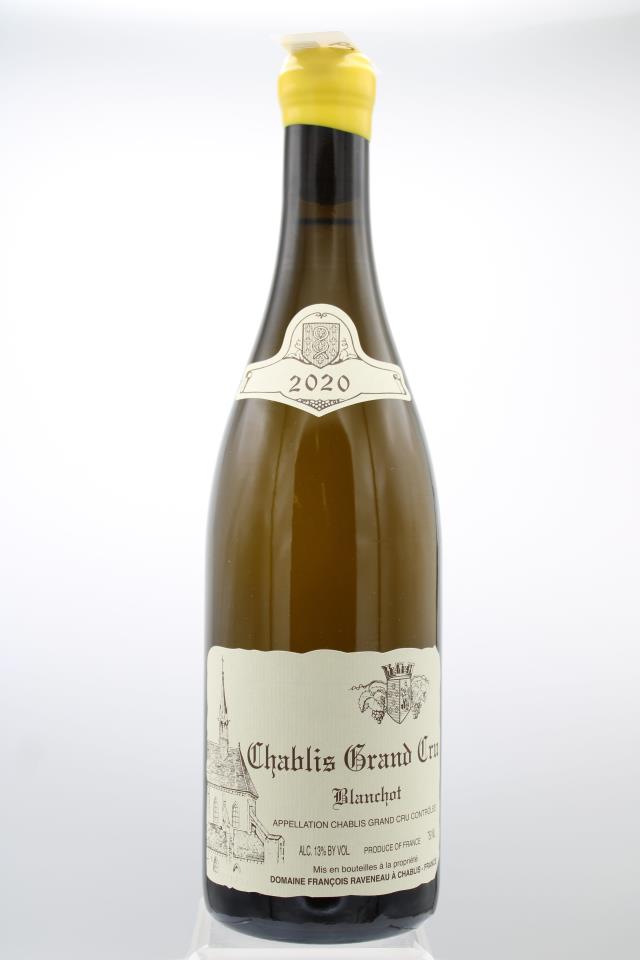
“The 2020 Chablis Grand Cru Blanchot is a broad, enveloping wine, wafting from the glass with aromas of orange oil, apricot, freshly baked bread, green apple, pastry cream and petrol. Full-bodied, rich and concentrated, it's satiny and layered, with lively acids, terrific depth at the core and a long, sapid finish. An embarrassment of riches awaited me at Domaine Raveneau, where I revisited the now just-bottled 2020s and also tasted the 2019s that were mid-bottling during my last visit to the Domaine. Isabelle and Maxime Raveneau began the harvest on August 28, 2020, and were happy with their choice, reporting finished alcohol levels between 12.8% to 13.5%. Bright and incisive, the 2020s have turned out brilliantly, as have the 2019s, in their somewhat richer, more muscular register. Chablis lovers will have a hard time choosing between them—and a lot of fun comparing them—over the decades to come. Readers looking for more information on this estate are directed to my producer commentary in Issue 244 End of August 2019, as well as my feature on the Domaine in the End of March 2019 issue of The Wine Advocate. Since my last visit to Domaine Raveneau, a generational transition has been quietly effected: Bernard Raveneau retired on January 1, 2020, replaced by his daughter Isabelle; and Jean-Marie Raveneau retired on May 1, 2021, replaced by his son Maxime. Neither plan to change a tried-and-tested formula, and both are intimately versed in the Domaine’s secrets, so the future is secure. Isabelle Raveneau was bottling the 2019 vintage when I visited, so I tasted bottled 2018s and 2020s from barrel with Maxime Raveneau in the cellars underneath the winery; reviews on those 2019s will appear in due course. The 2018 vintage is the largest crop here since 1982, and in the warm, sunny conditions, the Raveneaus chose to pick early, a decision they don't regret. It was necessary to purchase more new barrels than usual; but to minimize the impact of the oak, they fermented in the barrels, maturing the ensuing wine in tank, while wine that fermented in tank was matured in the new barrels. The result is a supple, giving vintage that will show well comparatively early—though, in typical Raveneau fashion, they're still quite tightly wound out of the gates: a vintage, then, to drink at age 10 rather than age 20. The 2020 vintage, at this early stage, is more concentrated and more incisive, with some stylistic parallels to 2017: wines, in other words, that I eagerly look forward to revisiting in bottle.”
Region
White
Country
Score
“The 2020 Chablis Grand Cru Blanchot is a broad, enveloping wine, wafting from the glass with aromas of orange oil, apricot, freshly baked bread, green apple, pastry cream and petrol. Full-bodied, rich and concentrated, it's satiny and layered, with lively acids, terrific depth at the core and a long, sapid finish. An embarrassment of riches awaited me at Domaine Raveneau, where I revisited the now just-bottled 2020s and also tasted the 2019s that were mid-bottling during my last visit to the Domaine. Isabelle and Maxime Raveneau began the harvest on August 28, 2020, and were happy with their choice, reporting finished alcohol levels between 12.8% to 13.5%. Bright and incisive, the 2020s have turned out brilliantly, as have the 2019s, in their somewhat richer, more muscular register. Chablis lovers will have a hard time choosing between them—and a lot of fun comparing them—over the decades to come. Readers looking for more information on this estate are directed to my producer commentary in Issue 244 End of August 2019, as well as my feature on the Domaine in the End of March 2019 issue of The Wine Advocate. Since my last visit to Domaine Raveneau, a generational transition has been quietly effected: Bernard Raveneau retired on January 1, 2020, replaced by his daughter Isabelle; and Jean-Marie Raveneau retired on May 1, 2021, replaced by his son Maxime. Neither plan to change a tried-and-tested formula, and both are intimately versed in the Domaine’s secrets, so the future is secure. Isabelle Raveneau was bottling the 2019 vintage when I visited, so I tasted bottled 2018s and 2020s from barrel with Maxime Raveneau in the cellars underneath the winery; reviews on those 2019s will appear in due course. The 2018 vintage is the largest crop here since 1982, and in the warm, sunny conditions, the Raveneaus chose to pick early, a decision they don't regret. It was necessary to purchase more new barrels than usual; but to minimize the impact of the oak, they fermented in the barrels, maturing the ensuing wine in tank, while wine that fermented in tank was matured in the new barrels. The result is a supple, giving vintage that will show well comparatively early—though, in typical Raveneau fashion, they're still quite tightly wound out of the gates: a vintage, then, to drink at age 10 rather than age 20. The 2020 vintage, at this early stage, is more concentrated and more incisive, with some stylistic parallels to 2017: wines, in other words, that I eagerly look forward to revisiting in bottle.”
Have questions?
The world's most influential fine-wine producer and the benchmark for Bordeaux, Burgundy, Champagne and the Rhone. Its appellation (AOC) system codifies geography, grape and method, and its wines set the global standard for age-worthiness and terroir expression.
Produces the world's most revered Pinot Noir and Chardonnay from a mosaic of tiny, terroir-defined climats. Its hierarchy of village, Premier Cru and Grand Cru vineyards makes site the ultimate expression of quality.
Produces steely, mineral Chardonnay from Kimmeridgian limestone in Burgundy's cool north, prized for precision, purity and saline drive.
2020 in Burgundy was warm, with an early harvest yielding concentrated yet fresh reds of vivid fruit and fine tannins; the whites retain surprising acidity and balance, forming an excellent, versatile vintage.
The world's most versatile white grape, producing everything from steely Chablis to rich, oaked whites. Its neutrality makes it a mirror of terroir and winemaking, and the foundation of white Burgundy and Champagne.