
Loading lot details…
The October 2023 Auction: Part 2
Swipe left for previous · Swipe right for next
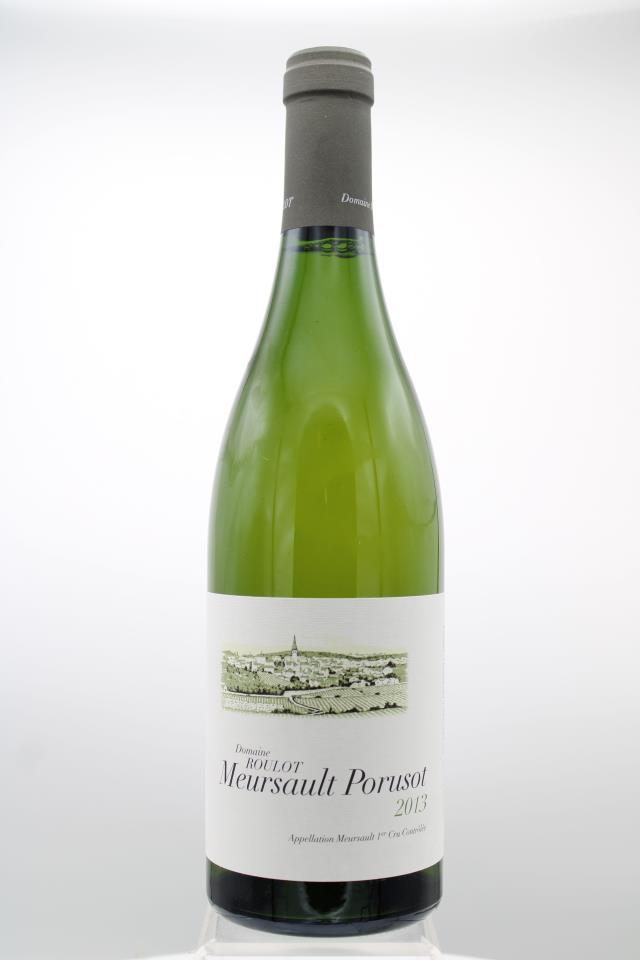 1 / 2
Lot 328
Estimate: $850
This auction has ended. Bidding is closed.
Collection name
Reviews
94NM
"The 2013 Meursault 1er Cru le Porusot had a slight reduction on the nose, but underneath there is real drive, real mineralité coming through, with fantastic delineation. The palate is lively and vivacious, with superb acidity, again just a touch of reduction, but there is a lovely twist of sour lemon and ginger on the long, sustained finish. This is an outstanding Meursault from Jean-Marc .... Jean-Marc was away in Bordeaux filming when I visited the Domaine to taste his 2013s from bottle, the silver lining being that his assistant Annabelle was there to escort me through the wines that were mostly in bottles in the second week of March. During the tasting we touched on a number of issues, One concerned Roulot's move towards biodynamics. ‘We have been working with a consultant for biodynamics for a while and he pushed us more towards doing the artisan teas,’ she told me. ‘But now we are delegating someone else to produce the compost. It's difficult here because of the lack of humus on the soil.’ Biodynamics is being practiced throughout all of their vineyards, although apparently Jean-Marc is undecided whether to pursue certification, whereas I think he would prefer to be flexible. I asked Annabelle how the wines had changed since barrel and she mentioned that some of them are just coming out of their bottle shock. Of course, production has been depleted over the last three years: 60% down in 2012, 40% down in 2013 and 50% in 2014, due to a combination of poor flowering and hail. She remarked that the 2013s don't have the acidity of the 2012s, and slightly less alcohol. Some parcels did suffer a little pourriture in the vineyard. Generally, this was an exemplary set of wines that, if anything, I feel have slightly improved since they were bottled, the standouts being a superb Auxey-Duresses Blanc, the Meursault Meix Chavaux, Porusot and a fabulous Meursault 1er Cru Charmes that I thought outperformed the more reticent Meursault Perrières. Most will be approachable in their youth with a couple of exceptions that I have pointed out. The one question mark was over the Meursault Tillets that did not have the same verve or details as its peers - surprising given how well it showed in barrel. Jean-Marc Roulot has our usual discussion about what is ‘ticking our boxes’ in the film world before embarking upon a journey through the 2013s. He was pleased how the wines had turned out and at least this time I could actually taste them. Last year a majority of his 2012s were lagging behind in terms of their malolactics; ‘The 2013s went straight into malo after the alcohol fermentation as we kept the cellar warm. They were finished by January then racked in July so that they are now in stainless steel.’ Incidentally, I asked whether Jean-Marc would continue this strategy of keeping the cellar slightly warmer and he said that indeed he would. I wanted to go back and see how he had approached the challenges of the 2013s season. ‘It was more comfortable in terms of vineyard condition [than 2012]. Hail only affected vineyards to the north of the house. It was a huge storm with tiny hailstones. But the low yields are not because of that. It comes from difficult flowering, especially in vineyards such as ‘Les Tillets.’ Also the weather conditions before harvest were difficult with the humidity and rain. It was a later vintage than usual and we started harvesting around 25 September. It has been a long time since we had harvested in October.’ They are subtle changes in Jean-Marc’s approach behind the scenes apart from the cellar temperature… ‘I decided to lessen and postpone the addition of SO2 around harvest time. I used to add it when the juice was dropping, but now I delay and let it oxidize a little, let it go a brown. Since 2009, I have allowed the last 10% to oxidize completely for a night and then the day after I cool it down, separate the clear juice from the ‘dirty’ part, then the clear juice is sulfured and blended back into the 90%. We did one comparison and preferred that to the normal one without oxidization.’ I asked Jean-Marc to compare the 2013 with the previous vintage. ‘The 2012? That is a very intellectual vintage, not an easy wine, but very persistent,’ and then described the 2013s are being different in style, perhaps more approachable and easier to understand. Jean-Marc’s 2013s are an impressive set of newborns, although perhaps like the winemaker himself, I have a preference for the 2012s. His wines are always deftly crafted and nuanced from barrel. Occasionally some of the crus seemed laconic, had little to say upon first acquaintance, but their nuances are there in their primal state and will surely be translated once the wines are bottled next year. My scores are constant throughout his range. It’s not that Jean-Marc’s premier crus fall short, but rather than over the years, he has become the master of translating his portfolio of village crus to such an extent that the common consensus is that they equal premier cru quality (much like Domaine Coche-Dury, the family to whom the Roulots are related on his mother’s side)."
Region
White
Country
Score
"The 2013 Meursault 1er Cru le Porusot had a slight reduction on the nose, but underneath there is real drive, real mineralité coming through, with fantastic delineation. The palate is lively and vivacious, with superb acidity, again just a touch of reduction, but there is a lovely twist of sour lemon and ginger on the long, sustained finish. This is an outstanding Meursault from Jean-Marc .... Jean-Marc was away in Bordeaux filming when I visited the Domaine to taste his 2013s from bottle, the silver lining being that his assistant Annabelle was there to escort me through the wines that were mostly in bottles in the second week of March. During the tasting we touched on a number of issues, One concerned Roulot's move towards biodynamics. ‘We have been working with a consultant for biodynamics for a while and he pushed us more towards doing the artisan teas,’ she told me. ‘But now we are delegating someone else to produce the compost. It's difficult here because of the lack of humus on the soil.’ Biodynamics is being practiced throughout all of their vineyards, although apparently Jean-Marc is undecided whether to pursue certification, whereas I think he would prefer to be flexible. I asked Annabelle how the wines had changed since barrel and she mentioned that some of them are just coming out of their bottle shock. Of course, production has been depleted over the last three years: 60% down in 2012, 40% down in 2013 and 50% in 2014, due to a combination of poor flowering and hail. She remarked that the 2013s don't have the acidity of the 2012s, and slightly less alcohol. Some parcels did suffer a little pourriture in the vineyard. Generally, this was an exemplary set of wines that, if anything, I feel have slightly improved since they were bottled, the standouts being a superb Auxey-Duresses Blanc, the Meursault Meix Chavaux, Porusot and a fabulous Meursault 1er Cru Charmes that I thought outperformed the more reticent Meursault Perrières. Most will be approachable in their youth with a couple of exceptions that I have pointed out. The one question mark was over the Meursault Tillets that did not have the same verve or details as its peers - surprising given how well it showed in barrel. Jean-Marc Roulot has our usual discussion about what is ‘ticking our boxes’ in the film world before embarking upon a journey through the 2013s. He was pleased how the wines had turned out and at least this time I could actually taste them. Last year a majority of his 2012s were lagging behind in terms of their malolactics; ‘The 2013s went straight into malo after the alcohol fermentation as we kept the cellar warm. They were finished by January then racked in July so that they are now in stainless steel.’ Incidentally, I asked whether Jean-Marc would continue this strategy of keeping the cellar slightly warmer and he said that indeed he would. I wanted to go back and see how he had approached the challenges of the 2013s season. ‘It was more comfortable in terms of vineyard condition [than 2012]. Hail only affected vineyards to the north of the house. It was a huge storm with tiny hailstones. But the low yields are not because of that. It comes from difficult flowering, especially in vineyards such as ‘Les Tillets.’ Also the weather conditions before harvest were difficult with the humidity and rain. It was a later vintage than usual and we started harvesting around 25 September. It has been a long time since we had harvested in October.’ They are subtle changes in Jean-Marc’s approach behind the scenes apart from the cellar temperature… ‘I decided to lessen and postpone the addition of SO2 around harvest time. I used to add it when the juice was dropping, but now I delay and let it oxidize a little, let it go a brown. Since 2009, I have allowed the last 10% to oxidize completely for a night and then the day after I cool it down, separate the clear juice from the ‘dirty’ part, then the clear juice is sulfured and blended back into the 90%. We did one comparison and preferred that to the normal one without oxidization.’ I asked Jean-Marc to compare the 2013 with the previous vintage. ‘The 2012? That is a very intellectual vintage, not an easy wine, but very persistent,’ and then described the 2013s are being different in style, perhaps more approachable and easier to understand. Jean-Marc’s 2013s are an impressive set of newborns, although perhaps like the winemaker himself, I have a preference for the 2012s. His wines are always deftly crafted and nuanced from barrel. Occasionally some of the crus seemed laconic, had little to say upon first acquaintance, but their nuances are there in their primal state and will surely be translated once the wines are bottled next year. My scores are constant throughout his range. It’s not that Jean-Marc’s premier crus fall short, but rather than over the years, he has become the master of translating his portfolio of village crus to such an extent that the common consensus is that they equal premier cru quality (much like Domaine Coche-Dury, the family to whom the Roulots are related on his mother’s side)."
Have questions?
The world's most influential fine-wine producer and the benchmark for Bordeaux, Burgundy, Champagne and the Rhone. Its appellation (AOC) system codifies geography, grape and method, and its wines set the global standard for age-worthiness and terroir expression.
Produces the world's most revered Pinot Noir and Chardonnay from a mosaic of tiny, terroir-defined climats. Its hierarchy of village, Premier Cru and Grand Cru vineyards makes site the ultimate expression of quality.
The Cote de Beaune's largest white-wine village, known for rich, nutty, buttery Chardonnay of generous texture.
2013 in Burgundy was a difficult, cool and hail-hit year with a late harvest and small crop; the wines are fresh, lean and classically styled, with bright acidity and firm structure, especially the reds.
The world's most versatile white grape, producing everything from steely Chablis to rich, oaked whites. Its neutrality makes it a mirror of terroir and winemaking, and the foundation of white Burgundy and Champagne.