
Loading lot details…
The October 2023 Auction: Part 2
Swipe left for previous · Swipe right for next
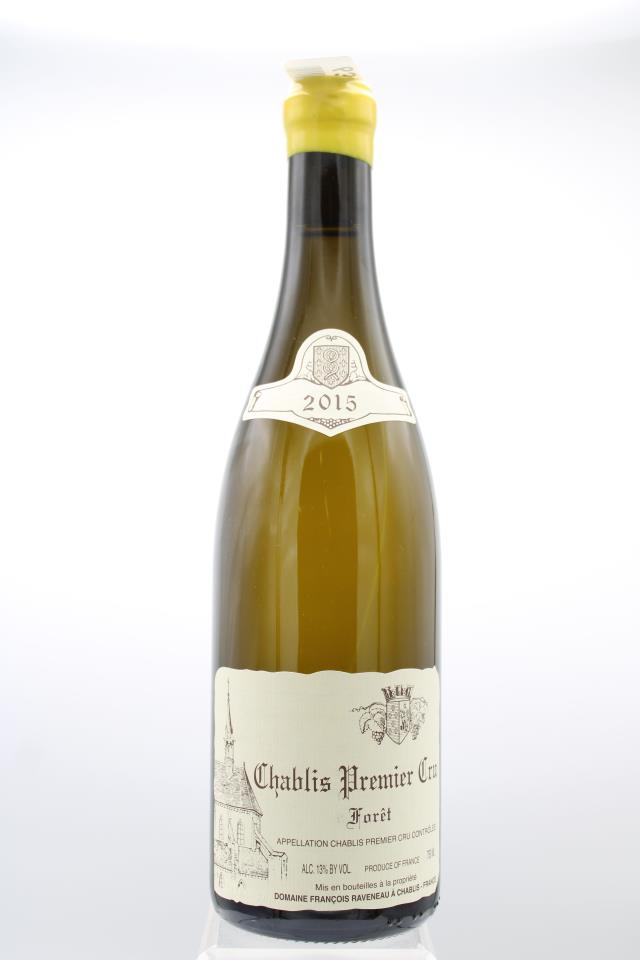 1 / 2
Lot 543
Estimate: $450
This auction has ended. Bidding is closed.
Collection name
Reviews
92NM
"The 2015 Chablis 1er Cru Forets has a tightly wound bouquet, perhaps a little resinous compared to other premier crus, with a touch of nutmeg developing with aeration. The palate is very well balanced with a citric twist on the entry—touches of orange zest and clementine leading to a pretty, poised and quite elegant finish. What a beauty this Forêts is becoming. Since 2010, Isabelle Raveneau has deftly slipped into the daily running of the most revered Chablis domain of them all. When we met up I wanted to know a little more about how she became the next generation to tend the vines. Her journey was certainly not a direct one. It rather zigzagged its way back to Chablis. Winemaking found her, not the other way round. Growing up, there was no expectation of continuing the winemaking tradition and instead she did what normal young people do: backpacked around Australia, working as a waitress then in an office job in England where she clearly honed her almost fluent English, enjoying hobbies such as handball where she played for the region. It was only after the passing of her grandmother, when she realized that her family's winemaking tradition might come to an end, that she accepted the baton from her father and uncle. You might assume that Isabelle must feel pressure upon her shoulders. She is a Raveneau (at least I assume so!). Yet she has what at first appears a carefree, not careless, sensibility and one that I find refreshing. Working alongside her father Bernard and her uncle Jean-Marie, she is all too aware of the standards expected by Chablis aficionados that hold up Raveneau as a standard bearer. She takes it in stride. Having experienced and savored life outside the oft parochial vinous world, she entered her profession when it suited her—much better than fledgling winemakers that are sometimes badgered into oenological studies as soon as they leave school and marched down to the cellars with the ink barely dry on their graduation papers. It was only in her late twenties that she finally enrolled at the University of Dijon. I assume her studies could not prepare her for the challenges that faced her and her family in 2015 and 2016. ‘The 2016 vintage was very complicated,’ she explained with typical sangfroid as I commenced my tasting in their barrel cellar. ‘We had a spring frost like most people and it hit places that are usually protected. There was a lot of rain afterwards and then high mildew pressure that we were able to control because fortunately, we were able to spray on time and never had to delay it. Then came the drought in summer and the vineyard suffered a lot, with some of the young vines dying. Even the winemaking was complicated. Usually everything is racked and ready before Christmas, but the 2016s took their time so that some wine did not finish fermentation until March, which is something we don’t like. There is a big difference from one cuvée to another depending on the yield. Some parcels were at 15 hectoliters per hectare and others, where there was no spring frost, were at 45 to 50 hectoliters per hectare so that the wines feel more…Chablis-like. I think 2015 gives you a real idea of the vintage whereas in 2016, it’s all over the place. Some wines are still quite reductive and they need their time in barrel. It is one of those vintages where everything happened,’ Isabelle said. Pondering the 2016 vintage, she added rhetorically, ‘Maybe we only remember the bad things.’ I inquired about the 2015 vintage and how the domain coped with hail on the eve of harvest. ‘We started the picking on 3 September with the grand crus because they were badly hit by the hail and then moved on to the Montée de Tonnerre, which we finished a few days later,’ Isabelle explained. ‘The 2015s were bottled about two or three weeks ago [at the beginning of June]. The Petit Chablis and Chablis were racked before harvest and the rest stayed in barrel until February. The vintage was tender so we did not want to leave them too long in barrel. They were all bottled simultaneously.’ I tasted through the domain's complete range of 2015s in bottle and 2016s from barrel. The 2015s have flourished since they were bottled, with one or two crus such as the Butteaux, Montée de Tonnerre and the ever-flattering Vaillons all surpassing my estimation from barrel. The 2016s are perhaps more inconsistent by comparison, although that is to be expected because I agree with Isabelle that they express terroir more than the growing season. But when good, the wines are fantastic. The 2015s are crowned by a thrilling Les Clos that must stand as one of the wines of the vintage, as predictable as that might be. I had a harder time getting to grips with the Blanchot that here was outflanked by a couple of over-performing premier crus but overall, they show great potential. Nota bene: U.S. Importer Kermit Lynch advised me that they have not set their prices for 2015 or 2016 at the time of writing. Isabelle Raveneau was in fine form when I rang the doorbell of the most renowned grower in Chablis. This being just after the Brexit and the following morning from the English football team’s embarrassing defeat to Iceland in Euro 2016, Isabelle did not know which subject to broach first--though I detected a morsel of sympathy between stifling her laughs. Although my own country has a mountain of problems, so has Isabelle, the only difference being that hers are not self-inflicted. With the slew of frost damage, hailstorms and at the time of tasting, omnipresent risk of mildew after what has been a wet period, like everyone else Raveneau is not spared the challenges of the 2016 growing season. But today, I was here to taste through the 2014s now in bottle and the 2015s from barrel. ‘We began the 2015 harvest on September 3. There was a hailstorm two days before harvest,’ she told me. ‘The affected vineyards were Les Forets, Montmains, Montée de Tonnerre, Les Clos and Blanchots. We had to change the organization of the picking, so we went into Les Clos and Blanchots first as they were damaged. After the storm, we had sunny days and cool nights, which kept the grapes fairly healthy. There is a big difference in terms of yield as there was 110 millimeters of rain, as well. Fortunately, the summer had been dry and the berries needed rain anyway and the skins did not split. We were ready to start by that time, but we were expecting lower yields. I think 2015 is not a classic vintage. The acidity is not as high as 2014 and the wines are very smooth and round. It seems a bit like 2006 on paper.’ For further details on 2014, I would refer readers to last year’s Chablis report. I asked Isabelle whether they had changed much since they were bottles. ‘They have become a bit more closed than they were. They were a bit shocked by the bottling at the beginning of May. It is a great vintage--I might compare it to 2010 due to its salinity and mineralité. It is also just very drinkable at the same time.’ Suffice to say, the 2014s are some of greatest wines that I have tasted from Raveneau and I concur with Isabelle that they do resemble the 2010 (I have included a note for the 2010 Les Butteaux that I tasted later that day in Chablis). They are everything that Chablis should aspire to: tensile, mineral-laden, energetic, aloof and terroir-driven. Perhaps they do highlight what the 2015s might lack, render them easier-drinking than I think they really are. There is no question in my mind that the 2014s have something extra when compared to 2015s, however the latter should not be overlooked because there are some very beautiful wines born in this vintage. What it comes down to is that there are no snow-peaked pinnacles in 2015, like there are in 2014--peaks like Blanchots, Les Clos and perhaps even Butteaux, all extraordinary and life-affirming Chablis that are thrilling from very first sip. The only caveat is that retail prices are so high, a reflection of the global demand. To put that in perspective, I calculated that it is cheaper for me to buy a ticket from my home to Chablis and order Raveneau off a restaurant list down there, than pop into London and purchase a bottle from a merchant.”
Region
White
Country
Score
"The 2015 Chablis 1er Cru Forets has a tightly wound bouquet, perhaps a little resinous compared to other premier crus, with a touch of nutmeg developing with aeration. The palate is very well balanced with a citric twist on the entry—touches of orange zest and clementine leading to a pretty, poised and quite elegant finish. What a beauty this Forêts is becoming. Since 2010, Isabelle Raveneau has deftly slipped into the daily running of the most revered Chablis domain of them all. When we met up I wanted to know a little more about how she became the next generation to tend the vines. Her journey was certainly not a direct one. It rather zigzagged its way back to Chablis. Winemaking found her, not the other way round. Growing up, there was no expectation of continuing the winemaking tradition and instead she did what normal young people do: backpacked around Australia, working as a waitress then in an office job in England where she clearly honed her almost fluent English, enjoying hobbies such as handball where she played for the region. It was only after the passing of her grandmother, when she realized that her family's winemaking tradition might come to an end, that she accepted the baton from her father and uncle. You might assume that Isabelle must feel pressure upon her shoulders. She is a Raveneau (at least I assume so!). Yet she has what at first appears a carefree, not careless, sensibility and one that I find refreshing. Working alongside her father Bernard and her uncle Jean-Marie, she is all too aware of the standards expected by Chablis aficionados that hold up Raveneau as a standard bearer. She takes it in stride. Having experienced and savored life outside the oft parochial vinous world, she entered her profession when it suited her—much better than fledgling winemakers that are sometimes badgered into oenological studies as soon as they leave school and marched down to the cellars with the ink barely dry on their graduation papers. It was only in her late twenties that she finally enrolled at the University of Dijon. I assume her studies could not prepare her for the challenges that faced her and her family in 2015 and 2016. ‘The 2016 vintage was very complicated,’ she explained with typical sangfroid as I commenced my tasting in their barrel cellar. ‘We had a spring frost like most people and it hit places that are usually protected. There was a lot of rain afterwards and then high mildew pressure that we were able to control because fortunately, we were able to spray on time and never had to delay it. Then came the drought in summer and the vineyard suffered a lot, with some of the young vines dying. Even the winemaking was complicated. Usually everything is racked and ready before Christmas, but the 2016s took their time so that some wine did not finish fermentation until March, which is something we don’t like. There is a big difference from one cuvée to another depending on the yield. Some parcels were at 15 hectoliters per hectare and others, where there was no spring frost, were at 45 to 50 hectoliters per hectare so that the wines feel more…Chablis-like. I think 2015 gives you a real idea of the vintage whereas in 2016, it’s all over the place. Some wines are still quite reductive and they need their time in barrel. It is one of those vintages where everything happened,’ Isabelle said. Pondering the 2016 vintage, she added rhetorically, ‘Maybe we only remember the bad things.’ I inquired about the 2015 vintage and how the domain coped with hail on the eve of harvest. ‘We started the picking on 3 September with the grand crus because they were badly hit by the hail and then moved on to the Montée de Tonnerre, which we finished a few days later,’ Isabelle explained. ‘The 2015s were bottled about two or three weeks ago [at the beginning of June]. The Petit Chablis and Chablis were racked before harvest and the rest stayed in barrel until February. The vintage was tender so we did not want to leave them too long in barrel. They were all bottled simultaneously.’ I tasted through the domain's complete range of 2015s in bottle and 2016s from barrel. The 2015s have flourished since they were bottled, with one or two crus such as the Butteaux, Montée de Tonnerre and the ever-flattering Vaillons all surpassing my estimation from barrel. The 2016s are perhaps more inconsistent by comparison, although that is to be expected because I agree with Isabelle that they express terroir more than the growing season. But when good, the wines are fantastic. The 2015s are crowned by a thrilling Les Clos that must stand as one of the wines of the vintage, as predictable as that might be. I had a harder time getting to grips with the Blanchot that here was outflanked by a couple of over-performing premier crus but overall, they show great potential. Nota bene: U.S. Importer Kermit Lynch advised me that they have not set their prices for 2015 or 2016 at the time of writing. Isabelle Raveneau was in fine form when I rang the doorbell of the most renowned grower in Chablis. This being just after the Brexit and the following morning from the English football team’s embarrassing defeat to Iceland in Euro 2016, Isabelle did not know which subject to broach first--though I detected a morsel of sympathy between stifling her laughs. Although my own country has a mountain of problems, so has Isabelle, the only difference being that hers are not self-inflicted. With the slew of frost damage, hailstorms and at the time of tasting, omnipresent risk of mildew after what has been a wet period, like everyone else Raveneau is not spared the challenges of the 2016 growing season. But today, I was here to taste through the 2014s now in bottle and the 2015s from barrel. ‘We began the 2015 harvest on September 3. There was a hailstorm two days before harvest,’ she told me. ‘The affected vineyards were Les Forets, Montmains, Montée de Tonnerre, Les Clos and Blanchots. We had to change the organization of the picking, so we went into Les Clos and Blanchots first as they were damaged. After the storm, we had sunny days and cool nights, which kept the grapes fairly healthy. There is a big difference in terms of yield as there was 110 millimeters of rain, as well. Fortunately, the summer had been dry and the berries needed rain anyway and the skins did not split. We were ready to start by that time, but we were expecting lower yields. I think 2015 is not a classic vintage. The acidity is not as high as 2014 and the wines are very smooth and round. It seems a bit like 2006 on paper.’ For further details on 2014, I would refer readers to last year’s Chablis report. I asked Isabelle whether they had changed much since they were bottles. ‘They have become a bit more closed than they were. They were a bit shocked by the bottling at the beginning of May. It is a great vintage--I might compare it to 2010 due to its salinity and mineralité. It is also just very drinkable at the same time.’ Suffice to say, the 2014s are some of greatest wines that I have tasted from Raveneau and I concur with Isabelle that they do resemble the 2010 (I have included a note for the 2010 Les Butteaux that I tasted later that day in Chablis). They are everything that Chablis should aspire to: tensile, mineral-laden, energetic, aloof and terroir-driven. Perhaps they do highlight what the 2015s might lack, render them easier-drinking than I think they really are. There is no question in my mind that the 2014s have something extra when compared to 2015s, however the latter should not be overlooked because there are some very beautiful wines born in this vintage. What it comes down to is that there are no snow-peaked pinnacles in 2015, like there are in 2014--peaks like Blanchots, Les Clos and perhaps even Butteaux, all extraordinary and life-affirming Chablis that are thrilling from very first sip. The only caveat is that retail prices are so high, a reflection of the global demand. To put that in perspective, I calculated that it is cheaper for me to buy a ticket from my home to Chablis and order Raveneau off a restaurant list down there, than pop into London and purchase a bottle from a merchant.”
Have questions?
The world's most influential fine-wine producer and the benchmark for Bordeaux, Burgundy, Champagne and the Rhone. Its appellation (AOC) system codifies geography, grape and method, and its wines set the global standard for age-worthiness and terroir expression.
Produces the world's most revered Pinot Noir and Chardonnay from a mosaic of tiny, terroir-defined climats. Its hierarchy of village, Premier Cru and Grand Cru vineyards makes site the ultimate expression of quality.
Produces steely, mineral Chardonnay from Kimmeridgian limestone in Burgundy's cool north, prized for precision, purity and saline drive.
2015 in Burgundy was warm and dry, yielding concentrated, powerful and opulent reds with ripe tannins from low yields; the whites are richer and generous, though some show comparatively lower acidity.
The world's most versatile white grape, producing everything from steely Chablis to rich, oaked whites. Its neutrality makes it a mirror of terroir and winemaking, and the foundation of white Burgundy and Champagne.