
Loading lot details…
The October 2023 Auction: Part 2
Swipe left for previous · Swipe right for next
 1 / 2
Lot 2950
Estimate: $400
Sold:
This auction has ended. Bidding is closed.
Collection name
Reviews
94NM
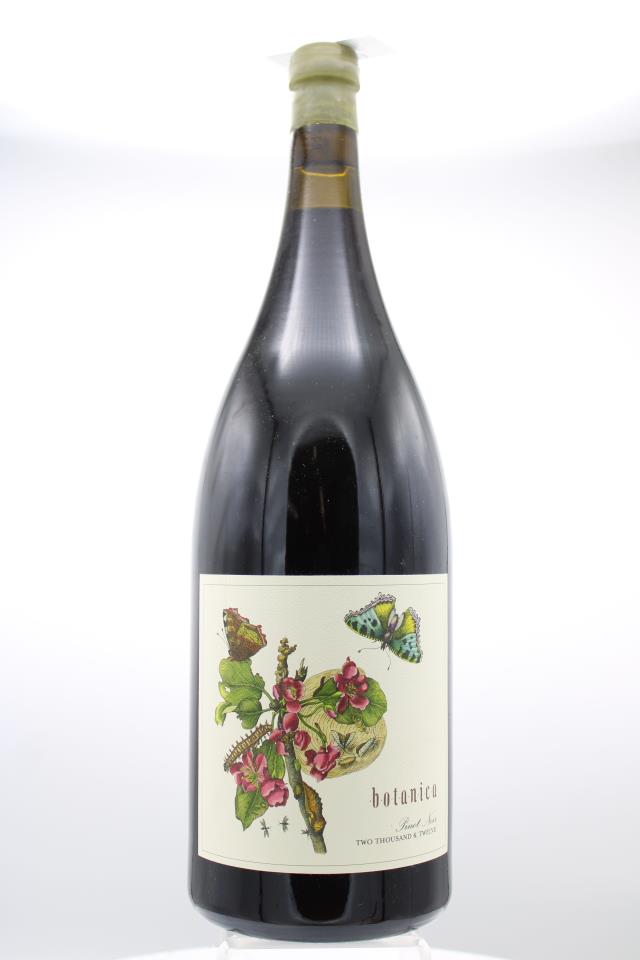
"The 2012 Pinot Noir Botanica is Maggie Harrison's more fruit-driven take on Pinot Noir, instigated after she noticed a difference with a small number of barrels in her debut 2007 vintage. It has more sappy, 'sanguine' red fruit compared to the Botanica, to use her own vernacular. It has a very pure bouquet that offers gorgeous wilted violet and seaweed scents that combine beautifully with the black fruit. The palate is medium-bodied with notes of candied orange peel, dark plum, molasses and a hint of fennel. It is extremely well balanced with very fine acidity and real tension toward the finish. This is another outstanding wine from Antica Terra. Never judge wine by the look of the winery. Pulling up outside Antica Terra, there is no sign indicating that this austere, drab warehouse in downtown Dundee is de facto home to some of Oregon’s finest, most thoughtfully and meticulously produced wines. Winemaker Maggie Harrison’s rise from assisting Manfred and Elaine Krankl at Sine Qua Non in California, to Antica Terra in Oregon, has been well documented by my predecessor. It is clear that Manfred’s philosophy permeates her own vision toward winemaking, and vision here is the most appropriate word, even if stylistically the wines are not contiguous from Manfred's. Maggie’s personality is tangible from afar. You sense the energy before seeing the person: petite with a mass of corkscrew black hair and large 1980s spectacles that confer an air of erudition that is realized as soon as you embark in conversation. During our exchange she came across as a person who contemplates not just wine, but its central place within life. Ergo our ping-pong conversation had a tendency to spin off tangentially and revert to wine with unerring frequency. Not wishing to sound banal, but my immediate impression of Maggie’s wines were that they were ‘interesting,’ insofar that these are not wines you simply want to drink, but wines that halt you in your tracks and subliminally say: ‘Hold on a minute. Think about me. Then knock me back and enjoy.’ There is an intellectual dimension to Antica Terra’s fermented grape juice allied with a meticulous approach that I suspect is uncommon not only in Oregon, but anywhere. I asked her how the two vintages differed in terms of her own perspective… ‘In 2011, there was a moment earlier in the year where it felt you were not going to get your fruit ripe,’ Maggie explained. ‘So much was uncertain, so there was a huge amount of risk in taking decisions earlier. We dropped fruit before flowering so there is a large risk - but you get the biggest impact. Even having dropped the fruit, you did not know whether you would get there. If you told me I would get these Pinot Noir or Chardonnay I would have stopped crying. In 2012, it was the first time when there was a lot of conversation about alcohol and so forth, but I did not want to force it into something that it didn't want to be. You had to be unafraid what the vintage gave you and lavish attention on it and that was super-exciting.’ Tasting through Antica Terra’s current releases, one has to approach each on their own merit because there no leitmotif runs through her range, save for attention to detail and complexity. For want of a better phrase, these wines have something to say, whether it is the transparency of the ‘Botanica,’ the intensity of the ‘Antikythera,’ or the precision of the ‘Aurata.’ Yes, there is terroir expressed in these wines, yet there is strong guidance in the winery, a kind hand ushering them toward their personalities in the glass like a child being guided gently into the correct classroom on their first day at school. For example, the rosé, under the name ‘Angelicall’ is inspired by the Pinot Noirs of Northern Italy, fermented on the skins for a week until there comes a day when the bouquet seems to explode, at which point the juice is drawn and transferred into barrel. It’s a wine that crosses genres and you spend time deliberating upon whether you are drinking red or rosé. I’ve encountered very few wines cut from a similar cloth and it was quite bewitching. Overall, these wines might not come cheap, but you often get what you pay for. Apart from the eye-catching labels, the wines inside are strongly recommended. Even so, you have the feeling the Antica Terra has only finished its first chapter. I look forward to reading the rest of the book."
Region
Red
Country
Score
"The 2012 Pinot Noir Botanica is Maggie Harrison's more fruit-driven take on Pinot Noir, instigated after she noticed a difference with a small number of barrels in her debut 2007 vintage. It has more sappy, 'sanguine' red fruit compared to the Botanica, to use her own vernacular. It has a very pure bouquet that offers gorgeous wilted violet and seaweed scents that combine beautifully with the black fruit. The palate is medium-bodied with notes of candied orange peel, dark plum, molasses and a hint of fennel. It is extremely well balanced with very fine acidity and real tension toward the finish. This is another outstanding wine from Antica Terra. Never judge wine by the look of the winery. Pulling up outside Antica Terra, there is no sign indicating that this austere, drab warehouse in downtown Dundee is de facto home to some of Oregon’s finest, most thoughtfully and meticulously produced wines. Winemaker Maggie Harrison’s rise from assisting Manfred and Elaine Krankl at Sine Qua Non in California, to Antica Terra in Oregon, has been well documented by my predecessor. It is clear that Manfred’s philosophy permeates her own vision toward winemaking, and vision here is the most appropriate word, even if stylistically the wines are not contiguous from Manfred's. Maggie’s personality is tangible from afar. You sense the energy before seeing the person: petite with a mass of corkscrew black hair and large 1980s spectacles that confer an air of erudition that is realized as soon as you embark in conversation. During our exchange she came across as a person who contemplates not just wine, but its central place within life. Ergo our ping-pong conversation had a tendency to spin off tangentially and revert to wine with unerring frequency. Not wishing to sound banal, but my immediate impression of Maggie’s wines were that they were ‘interesting,’ insofar that these are not wines you simply want to drink, but wines that halt you in your tracks and subliminally say: ‘Hold on a minute. Think about me. Then knock me back and enjoy.’ There is an intellectual dimension to Antica Terra’s fermented grape juice allied with a meticulous approach that I suspect is uncommon not only in Oregon, but anywhere. I asked her how the two vintages differed in terms of her own perspective… ‘In 2011, there was a moment earlier in the year where it felt you were not going to get your fruit ripe,’ Maggie explained. ‘So much was uncertain, so there was a huge amount of risk in taking decisions earlier. We dropped fruit before flowering so there is a large risk - but you get the biggest impact. Even having dropped the fruit, you did not know whether you would get there. If you told me I would get these Pinot Noir or Chardonnay I would have stopped crying. In 2012, it was the first time when there was a lot of conversation about alcohol and so forth, but I did not want to force it into something that it didn't want to be. You had to be unafraid what the vintage gave you and lavish attention on it and that was super-exciting.’ Tasting through Antica Terra’s current releases, one has to approach each on their own merit because there no leitmotif runs through her range, save for attention to detail and complexity. For want of a better phrase, these wines have something to say, whether it is the transparency of the ‘Botanica,’ the intensity of the ‘Antikythera,’ or the precision of the ‘Aurata.’ Yes, there is terroir expressed in these wines, yet there is strong guidance in the winery, a kind hand ushering them toward their personalities in the glass like a child being guided gently into the correct classroom on their first day at school. For example, the rosé, under the name ‘Angelicall’ is inspired by the Pinot Noirs of Northern Italy, fermented on the skins for a week until there comes a day when the bouquet seems to explode, at which point the juice is drawn and transferred into barrel. It’s a wine that crosses genres and you spend time deliberating upon whether you are drinking red or rosé. I’ve encountered very few wines cut from a similar cloth and it was quite bewitching. Overall, these wines might not come cheap, but you often get what you pay for. Apart from the eye-catching labels, the wines inside are strongly recommended. Even so, you have the feeling the Antica Terra has only finished its first chapter. I look forward to reading the rest of the book."
Have questions?
The fourth-largest wine producer in the world, led by California. American fine wine is defined by ripe, expressive fruit and a spirit of innovation, with Napa Valley Cabernet Sauvignon among the most sought-after wines globally.
A thin-skinned, terroir-sensitive red producing perfumed, silky and elegant wines of red-berry fruit and earthy complexity. It reaches its apogee in Burgundy.