
Loading lot details…
The March 2024 Auction: Part 4
Swipe left for previous · Swipe right for next
 1 / 2
Lot 325
Estimate: $1,500
This auction has ended. Bidding is closed.
Collection name
Reviews
96WA
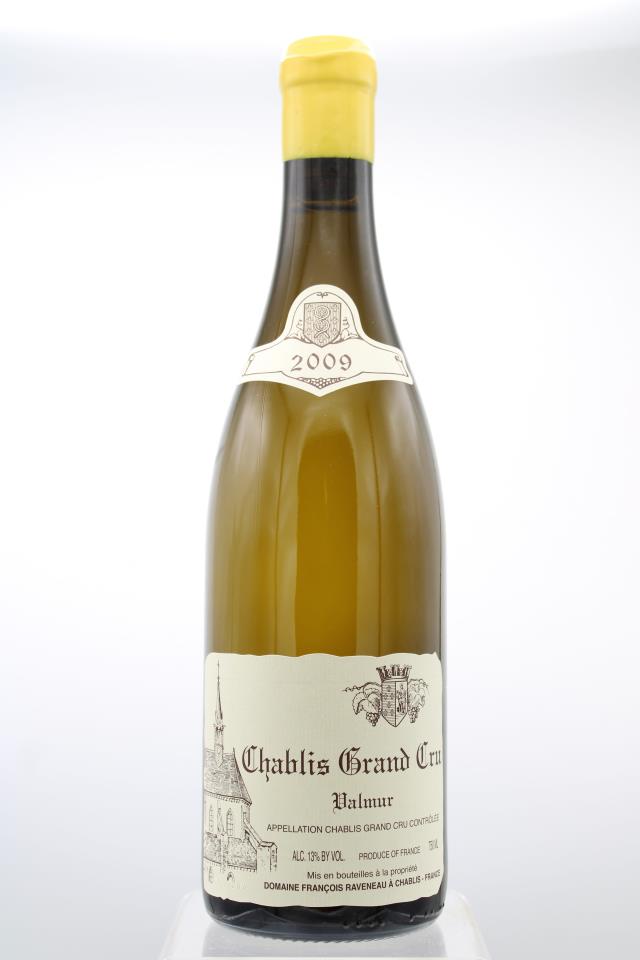
“The 2009 Chablis Grand Cru Valmur is a brilliant wine that's still a mere adolescent as it approaches its tenth birthday, unfurling in the glass with notes of waxy lemon rind, lime zest, wheat toast and iodine, framed by light reduction. On the palate, it's full-bodied, satiny and concentrated, with immense density and controlled power, displaying a deep, tight-knit core and concluding with a long, mineral and beautifully defined finish. This is a fabulous rendition of Raveneau Valmur with its terroir front and center despite the warmth of the vintage. What explains the Raveneau magic? Yields here aren't excessively high, but they're not the region's lowest. Fermentation at between 18 and 20 degrees centigrade in tank, followed by élevage on the lees in used barrels define the very elementary outlines of the winemaking process—a description that would equally apply to Vincent Dauvissat's stylistically different wines. The devil is, presumably, in the details. And it's a conundrum I'm content to ponder for the foreseeable future, as the Domaine Raveneau is undoubtedly the source of some of Chablis's greatest wines—and its most dependably long-lived. Isabelle Raveneau told me that the 2016s we tasted had been bottled in mid-April. In this vintage, yields were down 30% for the domaine as a whole, but yields varied considerably by location, from as little as 15 hectoliters per hectare in some sites to as much as 50 hectoliters per hectare in others. The wines vary in profile accordingly. At this early stage, the 2017s appear more homogeneous, classic but charming in style, marrying characteristically Chablisien cut and tension with a touch of sun-kissed generosity. I suspect they may end up resembling a hypothetical blend of the 2009 and 2010 vintages—but their quality and character will be more clear after more élevage. I'll try to retaste them again at the end of the year if I can.”
Region
White
Country
Score
“The 2009 Chablis Grand Cru Valmur is a brilliant wine that's still a mere adolescent as it approaches its tenth birthday, unfurling in the glass with notes of waxy lemon rind, lime zest, wheat toast and iodine, framed by light reduction. On the palate, it's full-bodied, satiny and concentrated, with immense density and controlled power, displaying a deep, tight-knit core and concluding with a long, mineral and beautifully defined finish. This is a fabulous rendition of Raveneau Valmur with its terroir front and center despite the warmth of the vintage. What explains the Raveneau magic? Yields here aren't excessively high, but they're not the region's lowest. Fermentation at between 18 and 20 degrees centigrade in tank, followed by élevage on the lees in used barrels define the very elementary outlines of the winemaking process—a description that would equally apply to Vincent Dauvissat's stylistically different wines. The devil is, presumably, in the details. And it's a conundrum I'm content to ponder for the foreseeable future, as the Domaine Raveneau is undoubtedly the source of some of Chablis's greatest wines—and its most dependably long-lived. Isabelle Raveneau told me that the 2016s we tasted had been bottled in mid-April. In this vintage, yields were down 30% for the domaine as a whole, but yields varied considerably by location, from as little as 15 hectoliters per hectare in some sites to as much as 50 hectoliters per hectare in others. The wines vary in profile accordingly. At this early stage, the 2017s appear more homogeneous, classic but charming in style, marrying characteristically Chablisien cut and tension with a touch of sun-kissed generosity. I suspect they may end up resembling a hypothetical blend of the 2009 and 2010 vintages—but their quality and character will be more clear after more élevage. I'll try to retaste them again at the end of the year if I can.”
Have questions?
The world's most influential fine-wine producer and the benchmark for Bordeaux, Burgundy, Champagne and the Rhone. Its appellation (AOC) system codifies geography, grape and method, and its wines set the global standard for age-worthiness and terroir expression.
Produces the world's most revered Pinot Noir and Chardonnay from a mosaic of tiny, terroir-defined climats. Its hierarchy of village, Premier Cru and Grand Cru vineyards makes site the ultimate expression of quality.
Produces steely, mineral Chardonnay from Kimmeridgian limestone in Burgundy's cool north, prized for precision, purity and saline drive.
2009 in Burgundy was warm and sunny, producing ripe, rich and generous reds of hedonistic charm and supple tannins; the whites are opulent but can lack acidity, making them best enjoyed relatively young.
The world's most versatile white grape, producing everything from steely Chablis to rich, oaked whites. Its neutrality makes it a mirror of terroir and winemaking, and the foundation of white Burgundy and Champagne.