
Loading lot details…
The May 2024 Auction: Part 2
Swipe left for previous · Swipe right for next
 1 / 2
Lot 724
Estimate: $16
Sold:
This auction has ended. Bidding is closed.
Collection name
Reviews
94WA
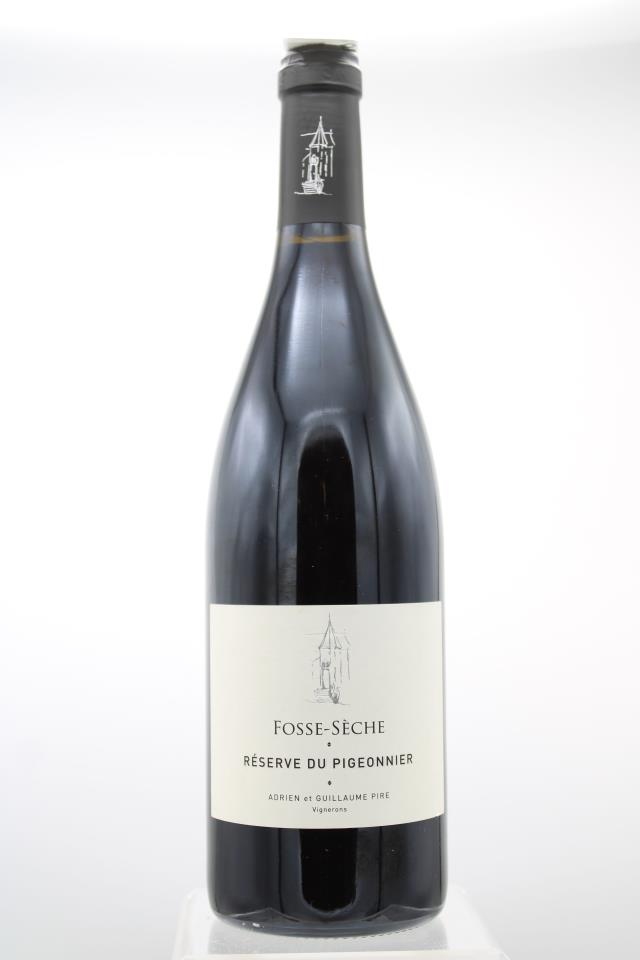
“From 60+-year-old vines yielding no more than 11 hectoliters per hectare, macerated for 20 days and aged in concrete eggs for 14 months, the 2019 Réserve du Pigeonnier offers a spectacular deep, ripe and intense, slightly toasty yet still pure, refined and floral-scented bouquet of raw meat, black berries, cherries, crushed stones, ivy and licorice intertwined with this unique elegant, iron-scented Fosse-Sèche note. Medium to full-bodied yet concentrated, round, intense and firm on the palate, this is a fresh, refined and elegant Cab Franc that is based on perfectly ripe and concentrated dark fruits and this nervy silex acidity of Fosse-Sèche. The finish is powerful yet always pure, mineral and refreshing. This is a noble red from Saumur, unfortunately declassified as Vin de France. 12% alcohol. Tasted in January 2021. I admit: Château de Fosse-Sèche, run by the couples Julie and Guilhaume Pire and Cecile and Adrien Pire, is one of my personal favorite wine producers not only in Saumur but in all of France. The vineyards are organically and biodynamically farmed, and the white and red wines (Chenin Blanc and Cabernet Franc) are bright and light and characterized by their outstanding purity, elegance and finesse, which gives them an almost unrivalled balance and drinkability. Fosse-Sèche is located at the end of the Brossay plateau, a small village of about 300 inhabitants. ‘This plateau is a geological curiosity in this area. It is composed of a Jurassic soil containing no free limestone but flint stones and iron oxide trapped in this flint gravel in complete degradation,’ Guilhaume explained to me during my visit. ‘The location of the vineyard is slightly convex and therefore provides a cool and windy exposure. Added to the warm soil due to the effect of the flint, this gives the wines of Fosse-Sèche a very particular straightness.’ Fosse-Sèche hasn't used any barriques since 2007, and all their wines are vinified in concrete eggs and amphorae du grès. I cannot remember having tasted any wine here in recent years that has more than 12% alcohol, and the wines tend to have even less than that. The wines are fermented with natural yeasts and aged without the addition of SO2 until the bottling, when they get a moderate total of 15-25 milligrams per liter. The Pire family, who originated from Belgium but also spent many years working and living in Madagascar, started their project in November 1998 and have since revitalized one of the oldest domaines in all of France. The 45-hectare property was founded by Benedictine monks more than a thousand years ago, but I can hardly imagine the wines ever having more soul than they do today. Only 15 hectares are planted with vines, whereas the rest is cultivated to enhance biodiversity. Fosse-Sèche has become a place where the respect of the fauna and the flora is a priority: birds, animals, insects, batrachians and bats can be found there, and they have allowed the reconstitution of an ecosystem. In the last years, the family has planted thousands of trees, and the lieu-dit has become a natural paradise for ornithologists as well as for lovers of true or authentic Saumur wines and their humanely spirited producers. Baudouin Pire, the father of the two twin brothers, lived and worked for 37 years in West Africa, building wells whose water enabled more than a million people to grow their own vegetables and feed themselves. Six years ago, a few weeks before he planned to move to Fosse-Sèche, Baudoin died. In honor of him and his commitment, but above all out of love, his sons, who grew up in Africa, have bottled their best 2015 Chenin Blanc in magnums: 2,000 bottles of 1.5 liters each, the sale of which will continue their father's well project for years to come. Each year, 150 bottles go on sale. With the proceeds of the impressive 2015, two wells for a total of 360 families could be built via an endowment fund. In the end, there should be a total of 65, ‘one for each year of Papa's life,’ says Guilhaume. Instead of having to walk miles with their mothers to the next village to fetch water, as they used to, the little girls now go to school, just like their brothers. ‘Better education will perhaps create a new, better, equal relationship between women and men in the future,’ hopes Julie Pire, Guilhaume's wife. ‘Vive la Vie!’ is the name of the wine, long live life, and that doesn't just mean our own.”
Region
Red
Country
Score
“From 60+-year-old vines yielding no more than 11 hectoliters per hectare, macerated for 20 days and aged in concrete eggs for 14 months, the 2019 Réserve du Pigeonnier offers a spectacular deep, ripe and intense, slightly toasty yet still pure, refined and floral-scented bouquet of raw meat, black berries, cherries, crushed stones, ivy and licorice intertwined with this unique elegant, iron-scented Fosse-Sèche note. Medium to full-bodied yet concentrated, round, intense and firm on the palate, this is a fresh, refined and elegant Cab Franc that is based on perfectly ripe and concentrated dark fruits and this nervy silex acidity of Fosse-Sèche. The finish is powerful yet always pure, mineral and refreshing. This is a noble red from Saumur, unfortunately declassified as Vin de France. 12% alcohol. Tasted in January 2021. I admit: Château de Fosse-Sèche, run by the couples Julie and Guilhaume Pire and Cecile and Adrien Pire, is one of my personal favorite wine producers not only in Saumur but in all of France. The vineyards are organically and biodynamically farmed, and the white and red wines (Chenin Blanc and Cabernet Franc) are bright and light and characterized by their outstanding purity, elegance and finesse, which gives them an almost unrivalled balance and drinkability. Fosse-Sèche is located at the end of the Brossay plateau, a small village of about 300 inhabitants. ‘This plateau is a geological curiosity in this area. It is composed of a Jurassic soil containing no free limestone but flint stones and iron oxide trapped in this flint gravel in complete degradation,’ Guilhaume explained to me during my visit. ‘The location of the vineyard is slightly convex and therefore provides a cool and windy exposure. Added to the warm soil due to the effect of the flint, this gives the wines of Fosse-Sèche a very particular straightness.’ Fosse-Sèche hasn't used any barriques since 2007, and all their wines are vinified in concrete eggs and amphorae du grès. I cannot remember having tasted any wine here in recent years that has more than 12% alcohol, and the wines tend to have even less than that. The wines are fermented with natural yeasts and aged without the addition of SO2 until the bottling, when they get a moderate total of 15-25 milligrams per liter. The Pire family, who originated from Belgium but also spent many years working and living in Madagascar, started their project in November 1998 and have since revitalized one of the oldest domaines in all of France. The 45-hectare property was founded by Benedictine monks more than a thousand years ago, but I can hardly imagine the wines ever having more soul than they do today. Only 15 hectares are planted with vines, whereas the rest is cultivated to enhance biodiversity. Fosse-Sèche has become a place where the respect of the fauna and the flora is a priority: birds, animals, insects, batrachians and bats can be found there, and they have allowed the reconstitution of an ecosystem. In the last years, the family has planted thousands of trees, and the lieu-dit has become a natural paradise for ornithologists as well as for lovers of true or authentic Saumur wines and their humanely spirited producers. Baudouin Pire, the father of the two twin brothers, lived and worked for 37 years in West Africa, building wells whose water enabled more than a million people to grow their own vegetables and feed themselves. Six years ago, a few weeks before he planned to move to Fosse-Sèche, Baudoin died. In honor of him and his commitment, but above all out of love, his sons, who grew up in Africa, have bottled their best 2015 Chenin Blanc in magnums: 2,000 bottles of 1.5 liters each, the sale of which will continue their father's well project for years to come. Each year, 150 bottles go on sale. With the proceeds of the impressive 2015, two wells for a total of 360 families could be built via an endowment fund. In the end, there should be a total of 65, ‘one for each year of Papa's life,’ says Guilhaume. Instead of having to walk miles with their mothers to the next village to fetch water, as they used to, the little girls now go to school, just like their brothers. ‘Better education will perhaps create a new, better, equal relationship between women and men in the future,’ hopes Julie Pire, Guilhaume's wife. ‘Vive la Vie!’ is the name of the wine, long live life, and that doesn't just mean our own.”
Have questions?
The world's most influential fine-wine producer and the benchmark for Bordeaux, Burgundy, Champagne and the Rhone. Its appellation (AOC) system codifies geography, grape and method, and its wines set the global standard for age-worthiness and terroir expression.
An aromatic red grape lending perfume, red fruit and a leafy, savory edge. It thrives in the Loire and as a key blending partner in Bordeaux, especially Saint-Emilion.