
Loading lot details…
The May 2024 Auction: Part 2
Swipe left for previous · Swipe right for next
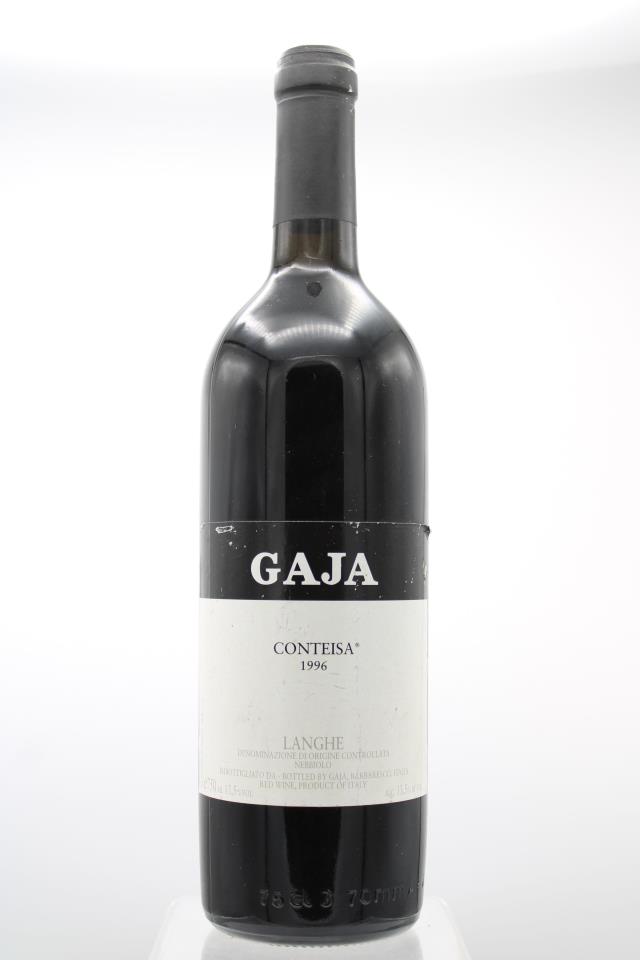 1 / 2
Lot 907
Estimate: $950
1 Top shoulder, 1 high shoulder, 2 lightly scuffed capsules, 2 scuffed, 1 lightly torn label.
This auction has ended. Bidding is closed.
Collection name
Reviews
94AG
"The 1996 Conteisa shows the darker, more masculine side of its personality. Sweet black cherry, tobacco, dried herbs, menthol, licorice and pine infuse this deeply expressive, layered wine. In many vintages, Conteisa leans towards the more delicate side of things, but not in 1996. Gaja was THE estate in Piedmont back in 1996 when Angelo Gaja and Guido Rivella made these wines. Since then, quality has gone up meaningfully at many estates throughout Piedmont. Driven by an unrelenting quest for perfection, Gaja took his family's estate to the top. These wines show that all the hype that surrounded Gaja during this era was more than justified. Quite simply, the Gaja 1996s are stellar. Today, twenty-plus years later, Gaja doesn't seem to have lost any of the energy he had back then. If anything, he appears to be re-energized by the presence of his daughters Gaia and Rossana at the winery, while son Giovanni is learning about the sales and distribution part of the business in the US. The 1996s are the first vintage Gaja made outside of the formal Barbaresco and Barolo designations for his five crus: Costa Russi, Sorì Tildìn, Sorì San Lorenzo, Conteisa and Sperss. The wines all had a small amount of Barbera blended in, ostensibly to aid with acidity. Interestingly, the Gaja children have brought all five wines back into their historic denominations while pursuing a more sustainable approach to farming and, especially in recent years, improving quality in a meaningful way."
Region
Red
Country
Score
"The 1996 Conteisa shows the darker, more masculine side of its personality. Sweet black cherry, tobacco, dried herbs, menthol, licorice and pine infuse this deeply expressive, layered wine. In many vintages, Conteisa leans towards the more delicate side of things, but not in 1996. Gaja was THE estate in Piedmont back in 1996 when Angelo Gaja and Guido Rivella made these wines. Since then, quality has gone up meaningfully at many estates throughout Piedmont. Driven by an unrelenting quest for perfection, Gaja took his family's estate to the top. These wines show that all the hype that surrounded Gaja during this era was more than justified. Quite simply, the Gaja 1996s are stellar. Today, twenty-plus years later, Gaja doesn't seem to have lost any of the energy he had back then. If anything, he appears to be re-energized by the presence of his daughters Gaia and Rossana at the winery, while son Giovanni is learning about the sales and distribution part of the business in the US. The 1996s are the first vintage Gaja made outside of the formal Barbaresco and Barolo designations for his five crus: Costa Russi, Sorì Tildìn, Sorì San Lorenzo, Conteisa and Sperss. The wines all had a small amount of Barbera blended in, ostensibly to aid with acidity. Interestingly, the Gaja children have brought all five wines back into their historic denominations while pursuing a more sustainable approach to farming and, especially in recent years, improving quality in a meaningful way."
Have questions?
Italy grows more indigenous grape varieties than any other country and produces wine in all 20 of its regions. From Piedmont's Nebbiolo to Tuscany's Sangiovese, its finest wines pair structure and bright acidity with a strong sense of place.
In Italy's northwest, Piedmont is home to Nebbiolo, the grape behind the powerful, perfumed and long-lived reds of Barolo and Barbaresco. Fog-shrouded hills and calcareous soils define its greatest wines.
The 'King of Wines,' a powerful, tannic and perfumed Nebbiolo from Piedmont's Langhe hills, celebrated for tar-and-roses aromatics and extraordinary aging potential.
Produces pale but powerfully tannic and perfumed reds with tar, rose and cherry notes. The grape behind Barolo and Barbaresco, it is among the most age-worthy in the world.