
Loading lot details…
The August 2024 Auction: Part 1
Swipe left for previous · Swipe right for next
 1 / 2
Lot 488
Estimate: $325
Sold:
This auction has ended. Bidding is closed.
Collection name
Reviews
100JD
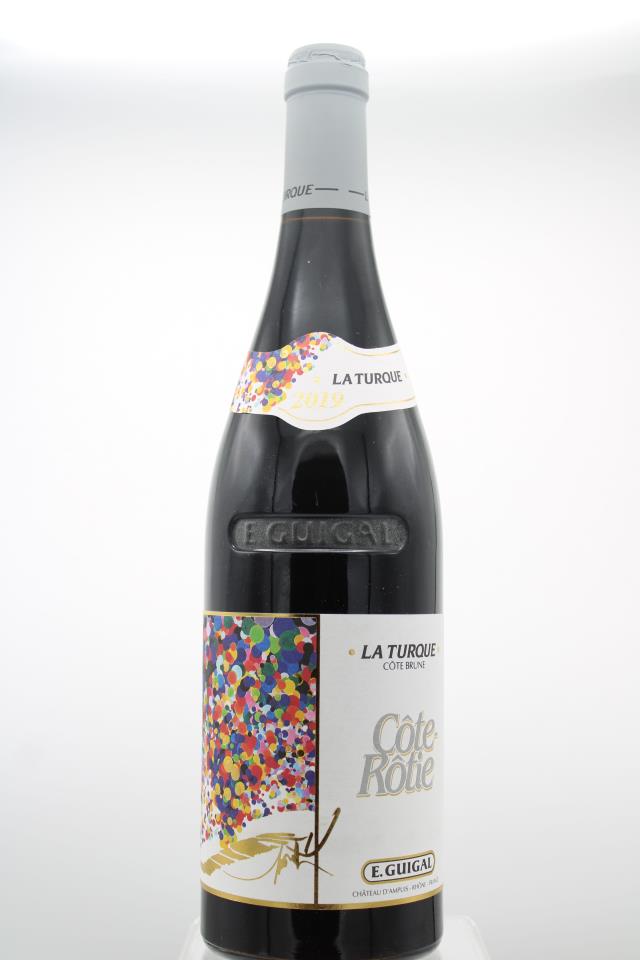
“The 2019 Côte Rôtie La Turque reminds me slightly of the 2010, which at a recent tasting I thought was the greatest young wine I had ever tasted. The 2019 reveals a saturated purple hue as well as insane aromatics of bloody blue and red fruits, roasted meats, iron, ground pepper, and graphite, with perfectly integrated background oak. With full-bodied richness as well as a deep, layered, multi-dimensional mouthfeel, it has building tannins, flawless balance, and a finish that won't quit. This is an absolutely legendary Côte Rôtie in the making. It deserves 7-8 years of bottle age and will see its 30th birthday in fine form. While this reference point estate continues to produce brilliant wines, there are subtle yet not insignificant changes happening. First and foremost, there’s a new Côte Rôtie La La in the lineup, the Côte Rôtie La Reynarde, which was created in honor of Philippe and Eves’s twin sons, Etienne and Charles. Coming from a tiny parcel in the Fongeant lieu-dit planted in 2015 and all Syrah, it’s not destemmed (like La Landonne) and fermented using only punch downs (similar to La Turque.) It will see the same 40+ months in new barrels as its siblings. While 2022 will be the first year released, I’ve been lucky enough to taste this cuvée since 2019 (these will not be released), and stylistically it fits in nicely between the La Turque and La Landonne. Quality-wise, it unquestionably merits being included in the lineup. Secondly, there’s been a shift in the source of the oak for the barrels over the past few years starting in 2020, moving away from Seguin-Moreau to a tighter grained, less impactful Chassin wood. This is driven largely by the changing climate and the family’s goal to have slightly less impact, and you can clearly see the change in the current releases …. As to the Côte Rôtie, there are six releases. The Brune et Blonde can be thought of as the entry-level cuvée and comes from a mix of vineyards, most of which are estate, yet there is some purchased fruit. It drinks well on release and has a solid 15-20 years of longevity in top vintages. A smaller production release, the Côte Rôtie Château d’Ampuis is named after the Château d’Ampuis estate (which lies in the town of Ampuis, right up along the Rhône River, and was purchased by the Guigals in 1995) and is a blend of their top seven estate vineyards, including the La Garde, Le Clos, Grande-Plantee, Pommière, Pavillon, Le Moulin, and La Viria lieux-dits. It sees 42 months in new French oak and is handled exactly like the single vineyard releases. There are roughly 2,500 cases of this produced, and in top years, its quality can be just as high as the single vineyard releases, making it a terrific value. There are four single vineyards that are affectionally labeled “La Las,” the La Mouline, La Turque, La Reynarde, and La Landonne. First made in 1966, the La Mouline (400-500 cases) comes from a parcel in the Côte Blonde and is the warmest, earliest site of the single vineyards. It includes some of the oldest vines of the estate, sees upwards of 10% co-fermented Viognier, see only pump-overs during fermentation, and has always spent four years in new French oak. The La Mouline is always the most approachable of the single vineyard releases and is also the earliest maturing. Nevertheless, top vintages can easily keep for 30 years. The Côte Rotie La Turque (400 cases) was first made in 1985 and comes from a steep parcel in the Côte Brune. It sees slightly less Viognier than the La Mouline and is a co-fermented blend of 93% Syrah and 7% Viognier. It sees a more aggressive punch-down regime during fermentation and spends 48 months in new French oak. The La Turque always splits the difference between the La Mouline and La Landonne stylistically and shows slightly more minerality and structure than the La Mouline, yet not quite the austerity and structure found in the La Landonne. It normally needs 10-15 years of bottle age to show its true self. A new cuvée introduced in 2022 in honor of Eve and Philippe’s twin sons, the Côte Rotie La Turque comes from a parcel in the Fongeant lieu-dit, just above the Côte Brune, and is 100% Syrah that’s not destemmed and vinified similar to the La Turque, seeing only punch downs. The stems show here, giving this a style not too far off the La Landonne, and it fits nicely between the La Turque and La Landonne. Lastly, the Côte Rotie La Landonne comes from a great lieu-dit in the Côte Brune side of the appellation, and there are roughly 1,000 cases produced in a vintage. It is always 100% Syrah and is made using a cap immersion technique for fermentation. This cuvée was first made in 1978, and each vintage has spent 48 months in new French oak. The La Landonne is always the most backward, structured, age-worthy in the lineup and needs the most bottle age to hit maturity. It is also, however, the most consistent in terms of quality of the three single vineyards.”
Region
Red
Country
Score
“The 2019 Côte Rôtie La Turque reminds me slightly of the 2010, which at a recent tasting I thought was the greatest young wine I had ever tasted. The 2019 reveals a saturated purple hue as well as insane aromatics of bloody blue and red fruits, roasted meats, iron, ground pepper, and graphite, with perfectly integrated background oak. With full-bodied richness as well as a deep, layered, multi-dimensional mouthfeel, it has building tannins, flawless balance, and a finish that won't quit. This is an absolutely legendary Côte Rôtie in the making. It deserves 7-8 years of bottle age and will see its 30th birthday in fine form. While this reference point estate continues to produce brilliant wines, there are subtle yet not insignificant changes happening. First and foremost, there’s a new Côte Rôtie La La in the lineup, the Côte Rôtie La Reynarde, which was created in honor of Philippe and Eves’s twin sons, Etienne and Charles. Coming from a tiny parcel in the Fongeant lieu-dit planted in 2015 and all Syrah, it’s not destemmed (like La Landonne) and fermented using only punch downs (similar to La Turque.) It will see the same 40+ months in new barrels as its siblings. While 2022 will be the first year released, I’ve been lucky enough to taste this cuvée since 2019 (these will not be released), and stylistically it fits in nicely between the La Turque and La Landonne. Quality-wise, it unquestionably merits being included in the lineup. Secondly, there’s been a shift in the source of the oak for the barrels over the past few years starting in 2020, moving away from Seguin-Moreau to a tighter grained, less impactful Chassin wood. This is driven largely by the changing climate and the family’s goal to have slightly less impact, and you can clearly see the change in the current releases …. As to the Côte Rôtie, there are six releases. The Brune et Blonde can be thought of as the entry-level cuvée and comes from a mix of vineyards, most of which are estate, yet there is some purchased fruit. It drinks well on release and has a solid 15-20 years of longevity in top vintages. A smaller production release, the Côte Rôtie Château d’Ampuis is named after the Château d’Ampuis estate (which lies in the town of Ampuis, right up along the Rhône River, and was purchased by the Guigals in 1995) and is a blend of their top seven estate vineyards, including the La Garde, Le Clos, Grande-Plantee, Pommière, Pavillon, Le Moulin, and La Viria lieux-dits. It sees 42 months in new French oak and is handled exactly like the single vineyard releases. There are roughly 2,500 cases of this produced, and in top years, its quality can be just as high as the single vineyard releases, making it a terrific value. There are four single vineyards that are affectionally labeled “La Las,” the La Mouline, La Turque, La Reynarde, and La Landonne. First made in 1966, the La Mouline (400-500 cases) comes from a parcel in the Côte Blonde and is the warmest, earliest site of the single vineyards. It includes some of the oldest vines of the estate, sees upwards of 10% co-fermented Viognier, see only pump-overs during fermentation, and has always spent four years in new French oak. The La Mouline is always the most approachable of the single vineyard releases and is also the earliest maturing. Nevertheless, top vintages can easily keep for 30 years. The Côte Rotie La Turque (400 cases) was first made in 1985 and comes from a steep parcel in the Côte Brune. It sees slightly less Viognier than the La Mouline and is a co-fermented blend of 93% Syrah and 7% Viognier. It sees a more aggressive punch-down regime during fermentation and spends 48 months in new French oak. The La Turque always splits the difference between the La Mouline and La Landonne stylistically and shows slightly more minerality and structure than the La Mouline, yet not quite the austerity and structure found in the La Landonne. It normally needs 10-15 years of bottle age to show its true self. A new cuvée introduced in 2022 in honor of Eve and Philippe’s twin sons, the Côte Rotie La Turque comes from a parcel in the Fongeant lieu-dit, just above the Côte Brune, and is 100% Syrah that’s not destemmed and vinified similar to the La Turque, seeing only punch downs. The stems show here, giving this a style not too far off the La Landonne, and it fits nicely between the La Turque and La Landonne. Lastly, the Côte Rotie La Landonne comes from a great lieu-dit in the Côte Brune side of the appellation, and there are roughly 1,000 cases produced in a vintage. It is always 100% Syrah and is made using a cap immersion technique for fermentation. This cuvée was first made in 1978, and each vintage has spent 48 months in new French oak. The La Landonne is always the most backward, structured, age-worthy in the lineup and needs the most bottle age to hit maturity. It is also, however, the most consistent in terms of quality of the three single vineyards.”
Have questions?
The world's most influential fine-wine producer and the benchmark for Bordeaux, Burgundy, Champagne and the Rhone. Its appellation (AOC) system codifies geography, grape and method, and its wines set the global standard for age-worthiness and terroir expression.
Spans the Syrah-driven northern crus of Cote-Rotie and Hermitage and the Grenache-based blends of the warmer south, led by Chateauneuf-du-Pape. Its wines are known for power, spice and warmth.
The northern Rhone's most prestigious red appellation, producing perfumed, elegant Syrah, often co-fermented with a little Viognier, from steep terraced slopes.
Syrah (Shiraz) produces dark, powerful reds with black fruit, pepper and smoked-meat notes. It yields elegant, perfumed wines in the northern Rhone and bold, rich styles in Australia.