
Loading lot details…
The June 2025 Auction: Part 4
Swipe left for previous · Swipe right for next
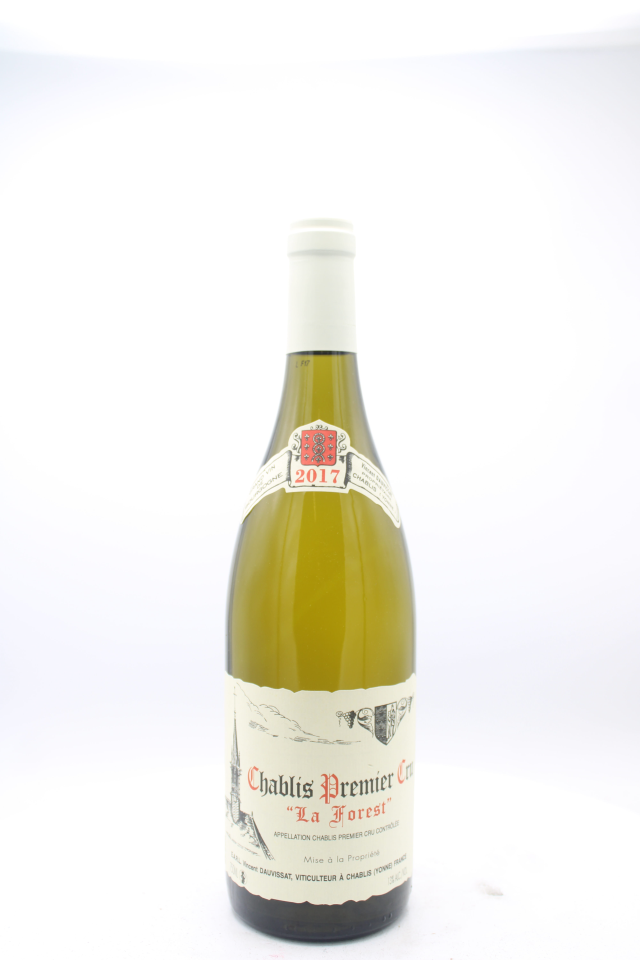 1 / 2
Lot 1179
Estimate: $150
Sold:
This auction has ended. Bidding is closed.
Collection name
Reviews
95WA
“A brilliant rendition of Vincent Dauvissat's emblematic premier cru, the 2017 Chablis 1er Cru La Forest reveals a complex bouquet of oyster shell, crisp green apple and lemon oil mingled with notes of dried white flowers and freshly baked bread. On the palate, the wine is medium to full-bodied, satiny and complete, with a deep and concentrated core, striking energy and cut and a long, mineral finish. Amounting to some 4.5 hectares, La Forest accounts for a third of the domaine's surface area, so it will be the easiest Dauvissat wine for readers to find. Happily, it ranks alongside the 2014 and 2008 as one of the very best of recent years. Tasting Vincent Dauvissat's 2017s from bottle in his cellars in Chablis was one of the high points of my ten days in the region. The wines met or exceeded the high expectations I formed when tasting them from barrel last year, showing more energy and overt structure after a second winter in wood, their beautifully expressive fruit tones in no way eclipsing their unerringly precise expression of site. This is clearly Dauvissat's best vintage since 2014, and while it may not eclipse that effectively perfect year, it's a worthy challenger. If these are Chablis' greatest wines, they are also the region's most mercurial. They tend to shut down hard a year or two after bottling, and they can sometimes seem fatigued. Yet after ten to 15 years in the cellar, they emerge in all their glory, the expression of site invariably dominating the vagaries of the vintage. My experience is that they also respond very receptively to oxygen, and opening them in advance or even decanting them is warmly recommended. A recent bottle of the 2005 La Forest, for example—a warm, ripe vintage where Dauvissat told me he saw appreciable levels of botrytis—became more and more classically Chablisien as I followed it for three hours. In short, there are few better illustrations of the fact that age-worthy, artisanal wine is as much a journey as it is a destination. Such finer points aside, what are the methods that produce bottles that, at their best, number among France's finest and most singular wines? Organic and biodynamic—without certification—in the vineyards, Dauvissat's wines are fermented in tank before racking to barrel (some small percentage of which are renewed each year) with the very fine lees. They see two winters in barrel before bottling.”
Region
White
Country
Score
“A brilliant rendition of Vincent Dauvissat's emblematic premier cru, the 2017 Chablis 1er Cru La Forest reveals a complex bouquet of oyster shell, crisp green apple and lemon oil mingled with notes of dried white flowers and freshly baked bread. On the palate, the wine is medium to full-bodied, satiny and complete, with a deep and concentrated core, striking energy and cut and a long, mineral finish. Amounting to some 4.5 hectares, La Forest accounts for a third of the domaine's surface area, so it will be the easiest Dauvissat wine for readers to find. Happily, it ranks alongside the 2014 and 2008 as one of the very best of recent years. Tasting Vincent Dauvissat's 2017s from bottle in his cellars in Chablis was one of the high points of my ten days in the region. The wines met or exceeded the high expectations I formed when tasting them from barrel last year, showing more energy and overt structure after a second winter in wood, their beautifully expressive fruit tones in no way eclipsing their unerringly precise expression of site. This is clearly Dauvissat's best vintage since 2014, and while it may not eclipse that effectively perfect year, it's a worthy challenger. If these are Chablis' greatest wines, they are also the region's most mercurial. They tend to shut down hard a year or two after bottling, and they can sometimes seem fatigued. Yet after ten to 15 years in the cellar, they emerge in all their glory, the expression of site invariably dominating the vagaries of the vintage. My experience is that they also respond very receptively to oxygen, and opening them in advance or even decanting them is warmly recommended. A recent bottle of the 2005 La Forest, for example—a warm, ripe vintage where Dauvissat told me he saw appreciable levels of botrytis—became more and more classically Chablisien as I followed it for three hours. In short, there are few better illustrations of the fact that age-worthy, artisanal wine is as much a journey as it is a destination. Such finer points aside, what are the methods that produce bottles that, at their best, number among France's finest and most singular wines? Organic and biodynamic—without certification—in the vineyards, Dauvissat's wines are fermented in tank before racking to barrel (some small percentage of which are renewed each year) with the very fine lees. They see two winters in barrel before bottling.”
Have questions?
The world's most influential fine-wine producer and the benchmark for Bordeaux, Burgundy, Champagne and the Rhone. Its appellation (AOC) system codifies geography, grape and method, and its wines set the global standard for age-worthiness and terroir expression.
Produces the world's most revered Pinot Noir and Chardonnay from a mosaic of tiny, terroir-defined climats. Its hierarchy of village, Premier Cru and Grand Cru vineyards makes site the ultimate expression of quality.
Produces steely, mineral Chardonnay from Kimmeridgian limestone in Burgundy's cool north, prized for precision, purity and saline drive.
2017 in Burgundy delivered generous yields and fresh, elegant wines; the whites are especially fine, bright and precise, while the reds are charming, supple and aromatic, drinking well relatively early.
The world's most versatile white grape, producing everything from steely Chablis to rich, oaked whites. Its neutrality makes it a mirror of terroir and winemaking, and the foundation of white Burgundy and Champagne.