
Loading lot details…
The July 2025 Auction: Part 3
Swipe left for previous · Swipe right for next
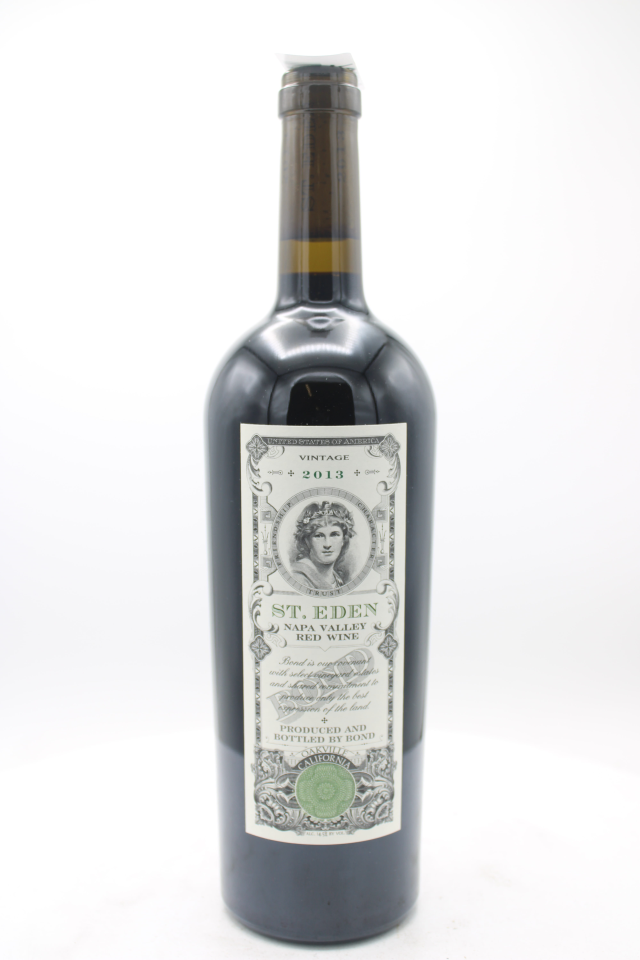 1 / 2
Lot 1184
Estimate: $300
Sold:
This auction has ended. Bidding is closed.
Collection name
Reviews
99RP
"The 2013 St. Eden is absolutely mind-blowing, with notes of blackcurrant liqueur and licorice as well as hints of Asian soy and lead pencil. Wonderful fruit that hits the palate with a cascade of glycerin, silky but noticeable tannins, and a big, earthy, rich, full-throttle, majestic finish of close to a minute add to this wine’s compelling personality. It should drink well for at least 30-40 years. These exceptionally impressive wines from Bill Harlan are all majestic in 2012. There are between 500 and 600 cases of each of these essentially single vineyard wines from five separate micro-climates in Napa Valley, with the exception of the Matriarch, which comes from the barrels and lots culled from the different single vineyards that were considered slightly more forward and less profound than the individual wines. All of them have great singularity and are made with absolutely no compromises. In the great vintages, such as 2012 and no doubt 2013, these wines clearly have 25-35+ years of aging potential. I wouldn’t be surprised in certain years to see them go on for 50 or more years. The 2013s from Bond should prove to be fabulous wines with additional aging. They were scheduled to be bottled several months after my visit, and like the vintage itself, this is a great year for all of the Bill Harlan offerings. The wines are more structured than the 2012s, slightly more restrained, and coiled tightly at present, but bursting with super-concentrated blue and black fruits, huge body, structure and power. I still think the best comparison of the 2013 is a modern-day version of 2001, whereas 2012 is like a modern clone of 2002—two great vintages in both cases, but very different styles in terms of the way they present themselves to the taster, both aromatically and on the palate. Just to remind readers: Bill Harlan has 25-year leases on all these single-vineyard estates. Their origins represent completely different expositions, terroirs and micro-climates in Napa Valley. For example, the Melbury originates in the hillsides north of Lake Hennessey, in the hills east of Rutherford and is a seven-acre, rocky vineyard. The Quella is a nine-acre site in the eastern hills overlooking Napa Valley. Its composition is cobble and various sizes of rocks as well as the white volcanic ash called tufa. St. Eden is just north of the Oakville crossroad on an 11-acre rocky knoll in the foothills of the Vaca Mountains. Soils here are iron-rich, fractured volcanic rock. The Vecina, which is closest to the Bond and Harlan vineyards and wineries is an 11-acre site facing east toward the Vaca Mountains in the Mayacamas foothills. This is made up of very pebbly, alluvial soils over sedimentary, fractured bedrock. Lastly, the Pluribus is a seven-acre site on Spring Mountain at an elevation of 1,100 feet. Soils here are all of volcanic origin, and the exposition is north and east. The five separate single vineyards that Bill Harlan has under long-term contract continue to perform at first growth quality levels. They generate between 500 and 600 cases of these single-vineyard wines that all represent distinctive and separate micro-climates of Napa Valley. The culled out barrels that don’t make the cut are blended together for a wine called Matriarch, which in itself is a terrific offering. Last year I touted the brilliance and drama of the 2012s, which are strikingly beautiful, and the otherworldly 2013s, but now we have the fruit-forward and luscious 2014s, and although I didn’t taste them, I suspect the 2015s will reach a new qualitative pinnacle for this extraordinary visionary project of Bill Harlan and his winemaking team, led by Bob Levy."
Region
Red
Country
Score
"The 2013 St. Eden is absolutely mind-blowing, with notes of blackcurrant liqueur and licorice as well as hints of Asian soy and lead pencil. Wonderful fruit that hits the palate with a cascade of glycerin, silky but noticeable tannins, and a big, earthy, rich, full-throttle, majestic finish of close to a minute add to this wine’s compelling personality. It should drink well for at least 30-40 years. These exceptionally impressive wines from Bill Harlan are all majestic in 2012. There are between 500 and 600 cases of each of these essentially single vineyard wines from five separate micro-climates in Napa Valley, with the exception of the Matriarch, which comes from the barrels and lots culled from the different single vineyards that were considered slightly more forward and less profound than the individual wines. All of them have great singularity and are made with absolutely no compromises. In the great vintages, such as 2012 and no doubt 2013, these wines clearly have 25-35+ years of aging potential. I wouldn’t be surprised in certain years to see them go on for 50 or more years. The 2013s from Bond should prove to be fabulous wines with additional aging. They were scheduled to be bottled several months after my visit, and like the vintage itself, this is a great year for all of the Bill Harlan offerings. The wines are more structured than the 2012s, slightly more restrained, and coiled tightly at present, but bursting with super-concentrated blue and black fruits, huge body, structure and power. I still think the best comparison of the 2013 is a modern-day version of 2001, whereas 2012 is like a modern clone of 2002—two great vintages in both cases, but very different styles in terms of the way they present themselves to the taster, both aromatically and on the palate. Just to remind readers: Bill Harlan has 25-year leases on all these single-vineyard estates. Their origins represent completely different expositions, terroirs and micro-climates in Napa Valley. For example, the Melbury originates in the hillsides north of Lake Hennessey, in the hills east of Rutherford and is a seven-acre, rocky vineyard. The Quella is a nine-acre site in the eastern hills overlooking Napa Valley. Its composition is cobble and various sizes of rocks as well as the white volcanic ash called tufa. St. Eden is just north of the Oakville crossroad on an 11-acre rocky knoll in the foothills of the Vaca Mountains. Soils here are iron-rich, fractured volcanic rock. The Vecina, which is closest to the Bond and Harlan vineyards and wineries is an 11-acre site facing east toward the Vaca Mountains in the Mayacamas foothills. This is made up of very pebbly, alluvial soils over sedimentary, fractured bedrock. Lastly, the Pluribus is a seven-acre site on Spring Mountain at an elevation of 1,100 feet. Soils here are all of volcanic origin, and the exposition is north and east. The five separate single vineyards that Bill Harlan has under long-term contract continue to perform at first growth quality levels. They generate between 500 and 600 cases of these single-vineyard wines that all represent distinctive and separate micro-climates of Napa Valley. The culled out barrels that don’t make the cut are blended together for a wine called Matriarch, which in itself is a terrific offering. Last year I touted the brilliance and drama of the 2012s, which are strikingly beautiful, and the otherworldly 2013s, but now we have the fruit-forward and luscious 2014s, and although I didn’t taste them, I suspect the 2015s will reach a new qualitative pinnacle for this extraordinary visionary project of Bill Harlan and his winemaking team, led by Bob Levy."
Have questions?
The fourth-largest wine producer in the world, led by California. American fine wine is defined by ripe, expressive fruit and a spirit of innovation, with Napa Valley Cabernet Sauvignon among the most sought-after wines globally.
California's most prestigious wine region, celebrated worldwide for opulent, structured Cabernet Sauvignon. Diverse soils and mountain-to-valley-floor sites yield wines of remarkable ripeness, power and longevity.
A prestigious Napa sub-AVA on the valley floor, home to iconic estates and celebrated for richly textured, powerful Cabernet Sauvignon.
The world's most planted premium red grape, yielding deeply colored, tannic and structured wines with cassis, cedar and graphite notes. Firm tannins and acidity make it exceptionally age-worthy, whether as a varietal or the backbone of a Bordeaux blend.