
Loading lot details…
The October 2025 Auction: Part 5
Swipe left for previous · Swipe right for next
 1 / 2
Lot 441
Estimate: $350
3x2.0cm below short foil.
This auction has ended. Bidding is closed.
Collection name
Reviews
93WA
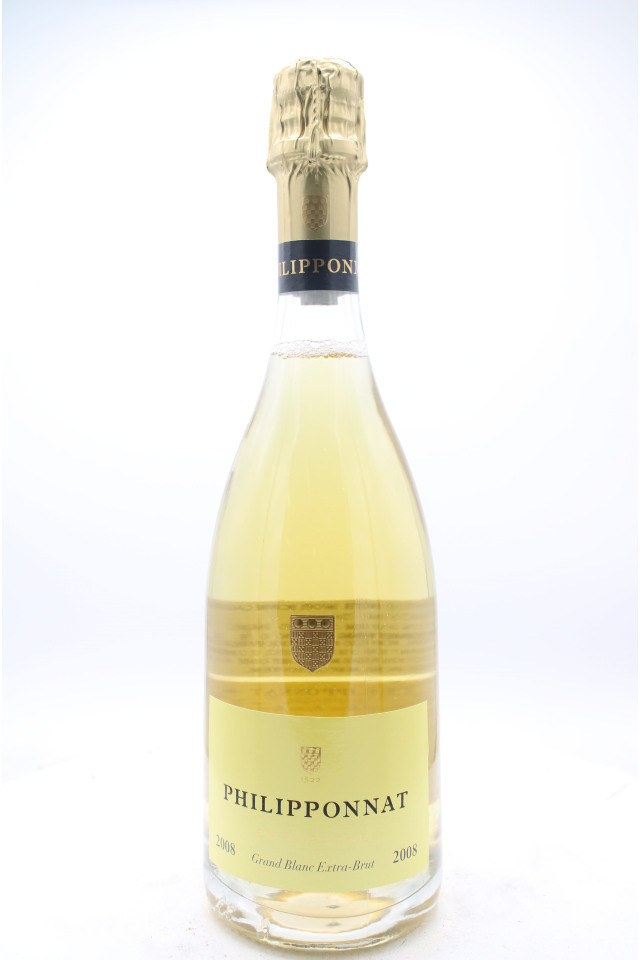
"Disgorged in September 2018 with 4.5 grams per liter dosage, the 2008 Extra Brut Grand Blanc is composed of vins clairs matured in barrel with blocked malolactic and vins clairs matured in tank that were allowed to complete malolactic. Exhibiting aromas of lemon oil, warm bread, hazelnut cream, wet stones and smoke, it's medium to full-bodied, ample and nicely concentrated, with a racy spine of acidity, a fine mousse and delicately chalky structure, concluding with a long and pure finish. Charles Philipponnat took the reins at this historic house in Mareuil-sur-Ay in 1999, initiating a remarkable renaissance that continues to this day. The flagship wine remains the Clos des Goisses, first produced in 1935: this steep, south-facing site is one of Champagne's ripest terroirs and produces what is arguably the region's longest-lived wine; it's the source of many of the greatest old Champagnes that I've ever tasted. And I suspect his experience with the Clos des Goisses informs Charles Philipponnat's pursuit of elevated maturity, his decision to generally block malolactic fermentation and his minimalist approach to dosage. Recent years have seen a new series of lieu-dit bottlings from within the Clos des Goisses, taking the idea of terroir Champagne that this house pioneered back in 1935 even further. And my visit this spring was the occasion to become acquainted with the new "L.V."—or "Long Vieillissement"—range, which formalizes Philipponnat's already extant late-disgorgement program. Every year from now on we will witness a new, 25-year-old L.V. release. I intend to make this important house the subject of a more extensive essay in the near future, but for now, all these recent releases come warmly recommended."
Region
Sparkling
Country
Score
"Disgorged in September 2018 with 4.5 grams per liter dosage, the 2008 Extra Brut Grand Blanc is composed of vins clairs matured in barrel with blocked malolactic and vins clairs matured in tank that were allowed to complete malolactic. Exhibiting aromas of lemon oil, warm bread, hazelnut cream, wet stones and smoke, it's medium to full-bodied, ample and nicely concentrated, with a racy spine of acidity, a fine mousse and delicately chalky structure, concluding with a long and pure finish. Charles Philipponnat took the reins at this historic house in Mareuil-sur-Ay in 1999, initiating a remarkable renaissance that continues to this day. The flagship wine remains the Clos des Goisses, first produced in 1935: this steep, south-facing site is one of Champagne's ripest terroirs and produces what is arguably the region's longest-lived wine; it's the source of many of the greatest old Champagnes that I've ever tasted. And I suspect his experience with the Clos des Goisses informs Charles Philipponnat's pursuit of elevated maturity, his decision to generally block malolactic fermentation and his minimalist approach to dosage. Recent years have seen a new series of lieu-dit bottlings from within the Clos des Goisses, taking the idea of terroir Champagne that this house pioneered back in 1935 even further. And my visit this spring was the occasion to become acquainted with the new "L.V."—or "Long Vieillissement"—range, which formalizes Philipponnat's already extant late-disgorgement program. Every year from now on we will witness a new, 25-year-old L.V. release. I intend to make this important house the subject of a more extensive essay in the near future, but for now, all these recent releases come warmly recommended."
Have questions?
The world's most influential fine-wine producer and the benchmark for Bordeaux, Burgundy, Champagne and the Rhone. Its appellation (AOC) system codifies geography, grape and method, and its wines set the global standard for age-worthiness and terroir expression.
The northerly region that gives its name to the world's most celebrated sparkling wine, made by secondary fermentation in bottle from Chardonnay, Pinot Noir and Pinot Meunier. Chalky soils and a cool climate yield wines of finesse and longevity.
The sole appellation for true Champagne, producing sparkling wines of finesse and complexity by traditional method from Chardonnay, Pinot Noir and Pinot Meunier.
The world's most versatile white grape, producing everything from steely Chablis to rich, oaked whites. Its neutrality makes it a mirror of terroir and winemaking, and the foundation of white Burgundy and Champagne.
A thin-skinned, terroir-sensitive red producing perfumed, silky and elegant wines of red-berry fruit and earthy complexity. It reaches its apogee in Burgundy.