
Loading lot details…
The February 2026 Auction: Part 4
Swipe left for previous · Swipe right for next
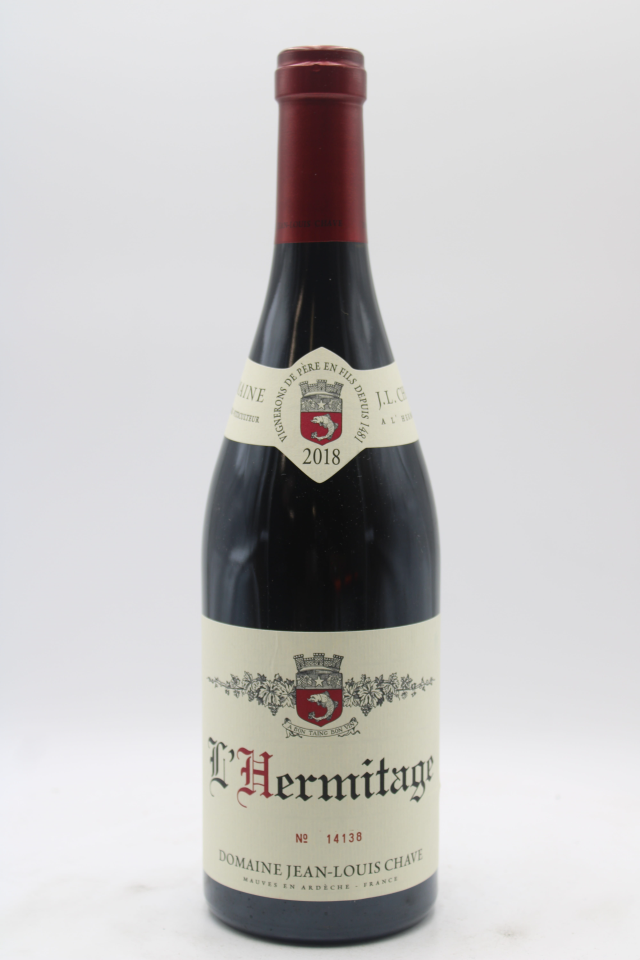 1 / 2
Lot 1322
Estimate: $625
This auction has ended. Bidding is closed.
Collection name
Reviews
99WA
"Chave's 2018 Hermitage is another in a long list of legends to emerge from this meticulously run estate. Showing remarkably complex aromas of pressed violets, ground cloves and cracked peppercorns against a backdrop of cassis, blueberries and licorice, it's a super effort. Full-bodied, concentrated, rich and velvety in feel, it's seamless and long—just the complete package in a wine that's surprisingly approachable, yet should prove capable of aging effortlessly for two decades or more. When I arrived at chez Chave on the afternoon of September 16, Jean-Louis Chave was feeling philosophical about the 2021 vintage. ‘You can be safe and pick early, but without quality grapes. When you wait, you can have the same thing, but you have a chance at something great.’ Thinking long term, he went on to say, ‘We needed the rain.’ With that, and after a quick chat with his American wife, Erin, we headed into the cellars to renew my lessons on the subject of Hermitage. We started with barrels of the 2020 Hermitage blanc, which Chave said was the first time the domaine had ever started their harvest in August (picking commenced on the 28th). ‘You can't express a great site with under-ripeness,’ he said. ‘There's a very narrow window to pick with the current weather.’ We then moved into the bottled whites from 2019 and 2018, the latter of which was simply one of the best white wines I'd ever tasted. From there, we moved into barrels of the reds, first from Saint-Joseph. ‘For me,’ said Chave, ‘Saint-Joseph needs to have a bit of Cornas's rusticity, but in a lighter style.’ I confess that I fail to see that rusticity in Chave's wines from Saint-Joseph, but the lightness is there—not in a sense of lack of weight or richness, but in a sense of airiness, a notion that's present even in such solar vintages as 2018 - 2020. Chave sometimes puts off blending his Hermitage rouge for as long as two years—while he had done some pre-blending of the 2019s, the final blend would only be assembled after the 2021 harvest. So, there were two vintages to taste out of barrel. ‘The beauty of the 2020s,’ Chave said, ‘is that the grands terroirs have something extra—you see the class in 2020.’ By contrast, he said, ‘In 2019, the vintage almost covers the site. I think these wines will be difficult to sell, because they need time.’ I can only add that serious collectors shouldn't let bottles languish once they're available, as the quality is off the charts. Finally, a visit to Chave provides the opportunity to check in with older vintages. The 2011 Hermitage rouge comes across as a bit tight and tannic at the moment, a wine that Chave said was caught between the 2010 and 2012. ‘For me, 2011 has more character than 2012, more game and granite,’ he said. The 2001 Hermitage rouge is part of the current trio of vintages (1999 - 2001) being offered to serious restaurants in France. From what Chave said was a big crop and late harvest, it should continue to drink well for another decade or more."
Region
Red
Country
Score
"Chave's 2018 Hermitage is another in a long list of legends to emerge from this meticulously run estate. Showing remarkably complex aromas of pressed violets, ground cloves and cracked peppercorns against a backdrop of cassis, blueberries and licorice, it's a super effort. Full-bodied, concentrated, rich and velvety in feel, it's seamless and long—just the complete package in a wine that's surprisingly approachable, yet should prove capable of aging effortlessly for two decades or more. When I arrived at chez Chave on the afternoon of September 16, Jean-Louis Chave was feeling philosophical about the 2021 vintage. ‘You can be safe and pick early, but without quality grapes. When you wait, you can have the same thing, but you have a chance at something great.’ Thinking long term, he went on to say, ‘We needed the rain.’ With that, and after a quick chat with his American wife, Erin, we headed into the cellars to renew my lessons on the subject of Hermitage. We started with barrels of the 2020 Hermitage blanc, which Chave said was the first time the domaine had ever started their harvest in August (picking commenced on the 28th). ‘You can't express a great site with under-ripeness,’ he said. ‘There's a very narrow window to pick with the current weather.’ We then moved into the bottled whites from 2019 and 2018, the latter of which was simply one of the best white wines I'd ever tasted. From there, we moved into barrels of the reds, first from Saint-Joseph. ‘For me,’ said Chave, ‘Saint-Joseph needs to have a bit of Cornas's rusticity, but in a lighter style.’ I confess that I fail to see that rusticity in Chave's wines from Saint-Joseph, but the lightness is there—not in a sense of lack of weight or richness, but in a sense of airiness, a notion that's present even in such solar vintages as 2018 - 2020. Chave sometimes puts off blending his Hermitage rouge for as long as two years—while he had done some pre-blending of the 2019s, the final blend would only be assembled after the 2021 harvest. So, there were two vintages to taste out of barrel. ‘The beauty of the 2020s,’ Chave said, ‘is that the grands terroirs have something extra—you see the class in 2020.’ By contrast, he said, ‘In 2019, the vintage almost covers the site. I think these wines will be difficult to sell, because they need time.’ I can only add that serious collectors shouldn't let bottles languish once they're available, as the quality is off the charts. Finally, a visit to Chave provides the opportunity to check in with older vintages. The 2011 Hermitage rouge comes across as a bit tight and tannic at the moment, a wine that Chave said was caught between the 2010 and 2012. ‘For me, 2011 has more character than 2012, more game and granite,’ he said. The 2001 Hermitage rouge is part of the current trio of vintages (1999 - 2001) being offered to serious restaurants in France. From what Chave said was a big crop and late harvest, it should continue to drink well for another decade or more."
Have questions?
The world's most influential fine-wine producer and the benchmark for Bordeaux, Burgundy, Champagne and the Rhone. Its appellation (AOC) system codifies geography, grape and method, and its wines set the global standard for age-worthiness and terroir expression.
Spans the Syrah-driven northern crus of Cote-Rotie and Hermitage and the Grenache-based blends of the warmer south, led by Chateauneuf-du-Pape. Its wines are known for power, spice and warmth.
Produces some of the world's most powerful and long-lived Syrah from a single granite hill, yielding dense, structured reds and rich whites.
Syrah (Shiraz) produces dark, powerful reds with black fruit, pepper and smoked-meat notes. It yields elegant, perfumed wines in the northern Rhone and bold, rich styles in Australia.