
Loading lot details…
The October 2026 Auction: Part 5
Swipe left for previous · Swipe right for next
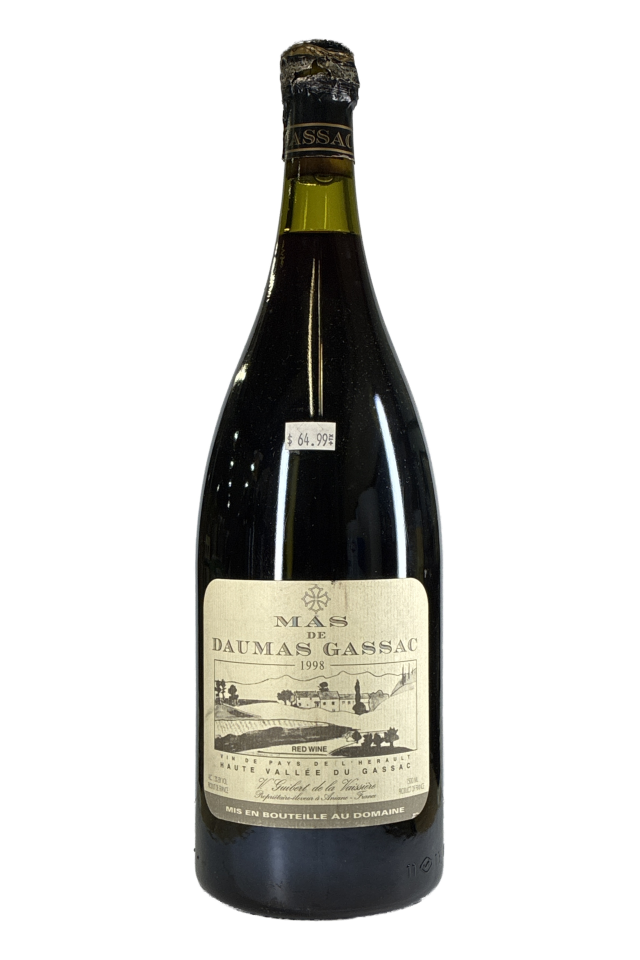 1 / 2
Lot 1434
Estimate: $95
Heavily wrinkled, torn capsule, lightly marked label.
Sold:
This auction has ended. Bidding is closed.
Collection name
Reviews
92ST
"Good deep red. More aromatically complex nose of cherry, redcurrant, candied blackberry, fresh blood, game, licorice, leather, iron and tobacco. Smooth, thick and deep; an uncanny combination of dense texture and spine. Finishes very long and subtle, with superb vinosity and noble tannins that spread out to coat the entire palate. An outstanding vintage for Daumas Gassac. This is distinctly less sweet in style than most Languedoc wines, but more sophisticated and built for long life."
Region
Red
Country
Score
"Good deep red. More aromatically complex nose of cherry, redcurrant, candied blackberry, fresh blood, game, licorice, leather, iron and tobacco. Smooth, thick and deep; an uncanny combination of dense texture and spine. Finishes very long and subtle, with superb vinosity and noble tannins that spread out to coat the entire palate. An outstanding vintage for Daumas Gassac. This is distinctly less sweet in style than most Languedoc wines, but more sophisticated and built for long life."
Have questions?
French wine covers a remarkable range of styles, from the structured reds of Bordeaux to the sparkling wines of Champagne, where a second fermentation in the bottle creates the bubbles. Bordeaux is best known for red blends built around Cabernet Sauvignon or Merlot, but it also makes dry whites and the sweet wines of Sauternes. Burgundy is a benchmark for Pinot Noir and Chardonnay, with wines that can taste distinctly different from one village to the next. The Rhône Valley offers a contrast within a single region: Syrah shapes the reds of the north, while Grenache often leads the blends of the south. In the Loire Valley, Chenin Blanc can be dry, sweet or sparkling, while Cabernet Franc is the signature red grape of appellations such as Chinon and Saumur-Champigny. A French wine label often starts with a place name. The Appellation d’Origine Contrôlée (AOC) identifies a defined area and sets rules for permitted grapes and production. Learning a few appellation names makes it easier to recognize the styles you enjoy and find related wines from neighboring villages or other producers.