Loading lot details…
The November 2026 Auction: Part 1
Swipe left for previous · Swipe right for next
Lot 103
Estimate: $3,000
Next Bid
Opening Bid
Sign in to place bids and add to your watchlist.
Login to BidCollection name
Region
Red
Country
Have questions?
The world's most influential fine-wine producer and the benchmark for Bordeaux, Burgundy, Champagne and the Rhone. Its appellation (AOC) system codifies geography, grape and method, and its wines set the global standard for age-worthiness and terroir expression.
Produces the world's most revered Pinot Noir and Chardonnay from a mosaic of tiny, terroir-defined climats. Its hierarchy of village, Premier Cru and Grand Cru vineyards makes site the ultimate expression of quality.
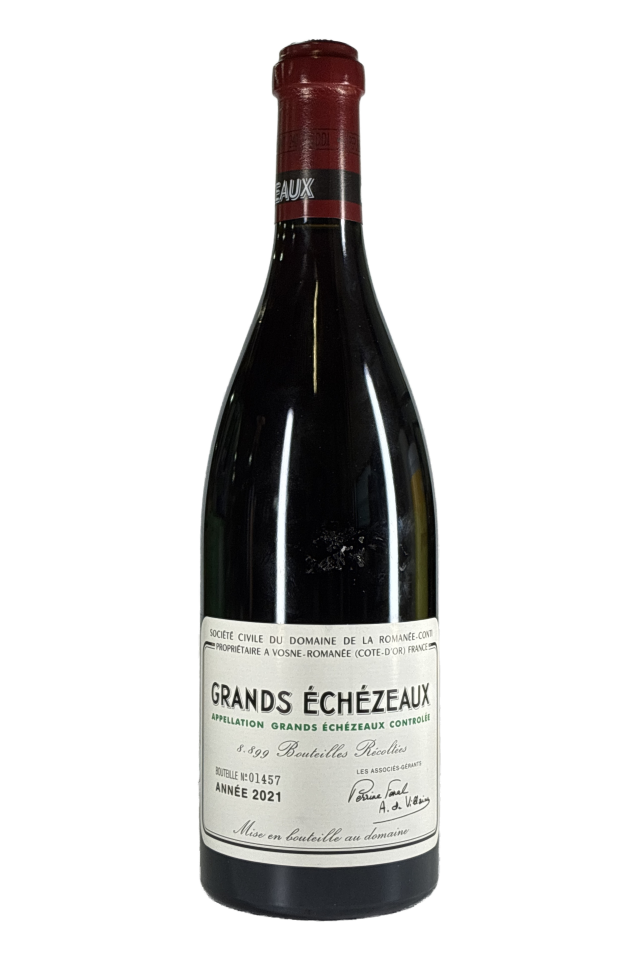
Grands-Echezeaux is a Grand Cru near Vosne-Romanee in Burgundy's Cote de Nuits, producing refined, harmonious Pinot Noir reds that are richer and more structured than neighboring Echezeaux, with silky depth and long aging potential.
Domaine de la Romanée-Conti, often abbreviated DRC, is a Burgundy estate associated with some of the Côte d'Or's most celebrated vineyard sites. Its name comes from Romanée-Conti, the grand cru acquired by the Prince de Conti in 1760. The domaine's identity rests on the individuality of its vineyards and the careful work required to express their character. Pinot Noir is central to its red wines, including Romanée-Conti, La Tâche, Richebourg, Romanée-Saint-Vivant, Grands Échézeaux, Échézeaux and Corton. Romanée-Conti and La Tâche are monopoles, meaning each vineyard is held by a single owner. The domaine also produces white wines from Chardonnay in Montrachet and Corton-Charlemagne, extending its interpretation of Burgundy's grands crus beyond red wine. Respect for soils, attention to natural growing conditions and the preservation of fine Pinot Noir plant material are central to the domaine's stated philosophy. Its approach emphasizes precision, patience and the distinct qualities of each climat, Burgundy's term for an individually named vineyard site. The wines are therefore best understood through their particular vineyard and vintage, within a shared tradition of detailed vineyard work and long-term stewardship.
2021 in Burgundy was shaped by severe April frost, mildew and a cool, wet season that slashed yields; the surviving wines are fresh, elegant and classically styled, with lower alcohol and a welcome return to restraint.
Pinot Noir is a thin-skinned red grape celebrated for aromatic detail, silky texture and sensitivity to its growing site. Cherry and strawberry are familiar flavors, often accompanied by floral notes and, with maturity, earthy or forest-floor complexity. Its wines are commonly light to medium in body, with freshness and fine tannins that can give a sense of delicacy alongside considerable depth. Burgundy is Pinot Noir's historic home and a benchmark for the grape. There, differences in soil, slope and exposure can produce distinct expressions from neighboring vineyards, making Pinot Noir central to the region's emphasis on terroir. Beyond Burgundy, cooler growing regions have developed their own interpretations, including Australia's Yarra Valley, Mornington Peninsula and Tasmania. Pinot Noir can produce fresh, fruit-focused wines for earlier enjoyment as well as more structured examples that gain complexity with age. Vineyard conditions and choices in fermentation and oak aging influence its balance of perfume, fruit and savory character. Its appeal lies in nuance and the way a single grape can communicate the individuality of a place.