
Loading lot details…
The November 2026 Auction: Part 1
Swipe left for previous · Swipe right for next
 1 / 2
Lot 1430
Estimate: $440
Nicked label.
Next Bid
Current Bid
Sign in to place bids and add to your watchlist.
Login to BidCollection name
Reviews
100RP
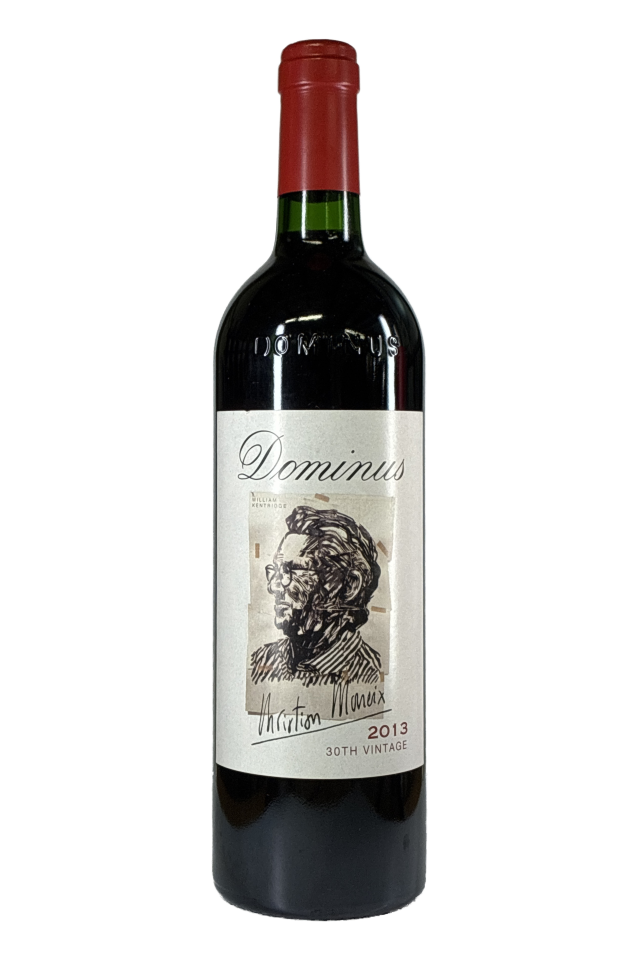
"The 2013 Dominus is, to my way of thinking, one of the most profound wines Christian Moueix has yet made in his rather brilliant winemaking history, both in France and in Napa Valley. This wine, with very low yields of only 3,500 cases and a final blend of 89% Cabernet Sauvignon, 7% Petit Verdot and 4% Cabernet Franc, offers up notes of cedar wood, forest floor, loamy soil and oodles of blackberry and blackcurrant fruit. Very opaque purple in color, super-pure and intense, this wine has low acidity, but ripe, noticeable tannins. This is a 30- to 40-year wine and a profound effort from this famous vineyard in Yountville. Drink it over the next 40+ years. Christian Moueix has probably had his two greatest back-to-back vintages to date with the 2012 and 2013. The 2012s, which are just being released, include the unbelievable Dominus, made of 93% Cabernet Sauvignon and the rest Petit Verdot and Cabernet Franc and coming in at 14.3% natural alcohol. I said last year that it reminded me somewhat of the 1991 and the 1994, which are both still very strong efforts and, while fully mature, showed no signs of decline if well-stored."
Region
Red
Country
Score
"The 2013 Dominus is, to my way of thinking, one of the most profound wines Christian Moueix has yet made in his rather brilliant winemaking history, both in France and in Napa Valley. This wine, with very low yields of only 3,500 cases and a final blend of 89% Cabernet Sauvignon, 7% Petit Verdot and 4% Cabernet Franc, offers up notes of cedar wood, forest floor, loamy soil and oodles of blackberry and blackcurrant fruit. Very opaque purple in color, super-pure and intense, this wine has low acidity, but ripe, noticeable tannins. This is a 30- to 40-year wine and a profound effort from this famous vineyard in Yountville. Drink it over the next 40+ years. Christian Moueix has probably had his two greatest back-to-back vintages to date with the 2012 and 2013. The 2012s, which are just being released, include the unbelievable Dominus, made of 93% Cabernet Sauvignon and the rest Petit Verdot and Cabernet Franc and coming in at 14.3% natural alcohol. I said last year that it reminded me somewhat of the 1991 and the 1994, which are both still very strong efforts and, while fully mature, showed no signs of decline if well-stored."
Have questions?
The fourth-largest wine producer in the world, led by California. American fine wine is defined by ripe, expressive fruit and a spirit of innovation, with Napa Valley Cabernet Sauvignon among the most sought-after wines globally.
California's most prestigious wine region, celebrated worldwide for opulent, structured Cabernet Sauvignon. Diverse soils and mountain-to-valley-floor sites yield wines of remarkable ripeness, power and longevity.
Yountville is a sub-AVA in central Napa Valley, California, producing balanced, structured Cabernet Sauvignon of ripe dark fruit and firm yet refined tannins, blending power with elegance.
Dominus Estate is Christian Moueix's Napa Valley property centered on the historic Napanook vineyard in Yountville, producing a structured, Bordeaux-styled Cabernet-dominated red (with Napanook as its second wine).
Cabernet Franc is an aromatic red grape prized for its perfume, freshness and savory character. Raspberry and violet are familiar notes, often joined by red fruit, herbs and a leafy edge. Its wines can be supple and fragrant or more firmly structured, with the balance of fruit, tannin and herbal complexity shaped by ripeness, vineyard site and winemaking. In France's Loire Valley, Cabernet Franc often takes center stage in wines from Chinon, Bourgueil, Saint-Nicolas-de-Bourgueil and Saumur-Champigny. These expressions highlight the grape's ability to reflect differences between vineyards while retaining a distinctive sense of freshness. In Bordeaux, particularly Saint-Émilion, it is an important partner to Merlot and Cabernet Sauvignon, contributing aromatic lift, finesse and structure. Cabernet Franc generally ripens before Cabernet Sauvignon and produces wines ranging from lively, fruit-focused bottlings to concentrated examples capable of developing additional complexity with age. Its appeal lies in the interplay of fruit, floral perfume and savory detail, whether bottled on its own or used to bring nuance to a blend.
Cabernet Sauvignon is a red grape known for deep color, firm tannins and a clearly defined structure. Blackcurrant, often described as cassis, is a signature flavor, accompanied by blackberry and, depending on the wine, cedar, graphite, mint or herbal notes. Oak aging can add spice and toast, while bottle age may bring tobacco, leather and other savory layers. The grape is a cornerstone of Bordeaux's Left Bank, especially the Médoc and Graves, where it is commonly blended with Merlot, Cabernet Franc and smaller amounts of other varieties. Beyond Bordeaux, Cabernet Sauvignon has established distinctive regional identities, including Australia's Coonawarra and Margaret River. Vineyard climate and ripeness influence whether the emphasis falls on fresh fruit and herbs or richer, fuller expressions. Its tannins, acidity and concentration can support long development in well-balanced examples. Many accessible styles are made for earlier enjoyment, while more structured wines reward time as their tannins soften and their aromas evolve. Cabernet Sauvignon brings depth and backbone to blends and can also express a vineyard's character as a varietal wine.
Petit Verdot is a red grape associated with deeply colored wines, firm tannins and pronounced aromatic intensity. Violet, spice and licorice are characteristic notes, with cocoa or coffee appearing in some expressions. Even a small addition can give a blend greater depth, texture and structure. In Bordeaux, Petit Verdot traditionally plays a supporting role alongside Cabernet Sauvignon and Merlot, especially on the Left Bank in the Médoc and Graves. Its late-ripening cycle makes the growing season important: sufficient warmth and time are needed to bring its fruit and tannins to maturity. The proportion used in a blend therefore varies with the vineyard, vintage and producer's style. Petit Verdot is also bottled on its own, particularly in warm growing regions where it can ripen reliably. These wines give a fuller view of its floral, spicy character and concentrated structure. Careful vineyard work and tannin management are central to balancing its intensity, whether it serves as a small but influential blending component or the principal grape in the bottle.