
Loading lot details…
The November 2026 Auction: Part 1
Swipe left for previous · Swipe right for next
 1 / 2
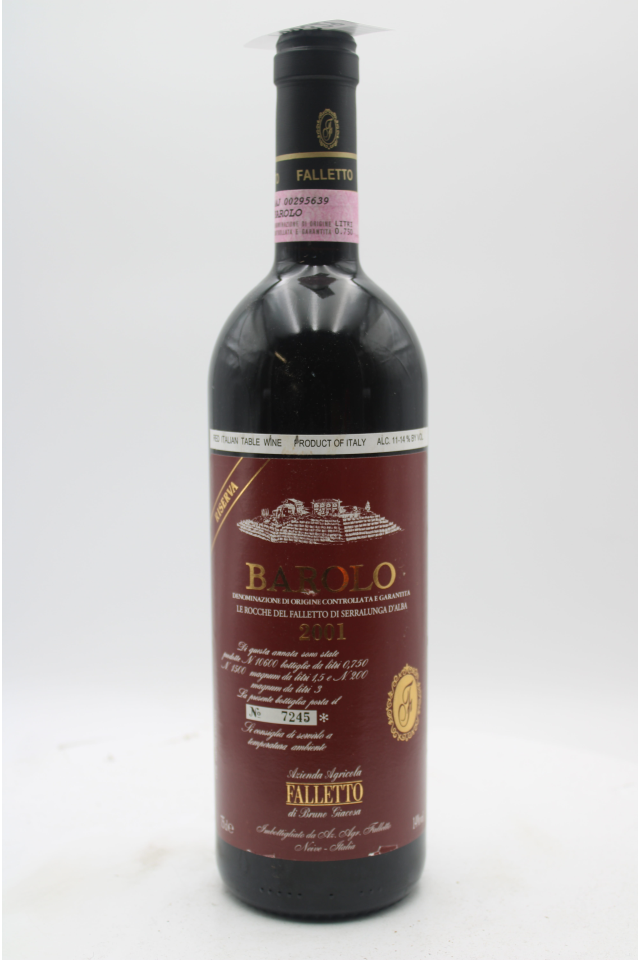
Lot 2748
Estimate: $775
Nicked, lightly scuffed, lightly bin soiled label.
Sold:
This auction has ended. Bidding is closed.
Collection name
Reviews
98AG
"The 2001 vintage in Piedmont has long been a favorite of mine. Bruno Giacosa’s 2001 Barolo Riserva Le Rocche del Falletto is explosive and decadently rich from the very first taste. The 2001 is arguably the last truly classic vintage for the Rocche Red Label. To be sure, the 2004, 2005 and 2007 are all compelling, but the 2001 has more in common stylistically with vintages like 1996 and 1999. Dense, perfumed and wonderfully intense, the 2001 is phenomenally great. Wow."
Region
Red
Country
Score
"The 2001 vintage in Piedmont has long been a favorite of mine. Bruno Giacosa’s 2001 Barolo Riserva Le Rocche del Falletto is explosive and decadently rich from the very first taste. The 2001 is arguably the last truly classic vintage for the Rocche Red Label. To be sure, the 2004, 2005 and 2007 are all compelling, but the 2001 has more in common stylistically with vintages like 1996 and 1999. Dense, perfumed and wonderfully intense, the 2001 is phenomenally great. Wow."
Have questions?
Wine is made in all 20 of Italy’s regions, from Alpine valleys to Mediterranean islands. Much of that variety comes from grapes with deep local roots. In Piedmont, Nebbiolo gives Barolo and Barbaresco their perfume and firm tannins. In Tuscany, Sangiovese brings red cherry and bright acidity to Chianti Classico and Brunello di Montalcino. Veneto spans a different range, from fresh, Garganega-based Soave to Amarone della Valpolicella, made from grapes dried before fermentation. Italy’s whites and sparkling wines are just as varied. The Marche is known for Verdicchio, while Sicily’s Mount Etna produces whites based on Carricante and reds led by Nerello Mascalese. In southern Italy, Campania is home to both Fiano di Avellino and the structured Aglianico reds of Taurasi. For bubbles, look to the orchard fruit of Glera-based Prosecco or the fine mousse and bready notes of Franciacorta, which gets its sparkle from a second fermentation in the bottle. An Italian label often leads with a place name. DOC and DOCG identify protected denominations with rules for where and how the wine is made. IGT also identifies a geographic origin and can give producers more latitude in their choice of grapes and blends.
Piedmont, or Piemonte, lies in northwestern Italy at the foot of the Alps. In the Langhe hills around Alba, Nebbiolo makes the perfumed, firmly structured reds of Barolo and Barbaresco. Vineyard exposure and differences in soils help shape the character of each site. Farther north in Alto Piemonte, Nebbiolo is locally known as Spanna and forms the backbone of reds such as Gattinara and Ghemme. Piedmont’s range goes well beyond Nebbiolo. Barbera d’Asti and Nizza are known for their bright acidity and dark fruit, while Dolcetto from Dogliani often shows dark berries and an almond-like finish. Across the Tanaro from the Langhe, Roero is home to fragrant Arneis as well as red wines based on Nebbiolo. Other regional whites include Gavi, made from Cortese, and Timorasso from the hills around Tortona. Moscato d’Asti offers another side of Piedmont: gently fizzy, sweet and fragrant with orange blossom and fresh grapes.
The 'King of Wines,' a powerful, tannic and perfumed Nebbiolo from Piedmont's Langhe hills, celebrated for tar-and-roses aromatics and extraordinary aging potential.
From his cellar in Neive, Bruno Giacosa helped establish single-vineyard Barolo and Barbaresco as benchmarks for Nebbiolo. He built his reputation by choosing fruit from growers he knew well. His Santo Stefano di Neive Barbaresco and Collina Rionda Barolo are among the best-known wines from that era. In 1982 he bought Falletto in Serralunga d’Alba, giving the family an estate vineyard in Barolo. Asili and Rabajà became two of the estate’s signature Barbaresco sites. Barolo Falletto Vigna Le Rocche, also found on older labels as Le Rocche del Falletto, comes from a parcel within Falletto. In Barbaresco, Asili is prized for its perfume and finesse. Giacosa’s distinctive red label marks a Riserva, bottled only in selected vintages. Barbaresco Asili Riserva and Barolo Falletto Vigna Le Rocche Riserva are two of the best-known examples. The white-label releases can also age beautifully. Bruna Giacosa carried on the family’s work after her father’s death in 2018. The range extends beyond Barolo and Barbaresco to wines such as Nebbiolo d’Alba Vigna Valmaggiore and Roero Arneis.