
Loading lot details…
The November 2026 Auction: Part 2
Swipe left for previous · Swipe right for next
 1 / 2
Lot 62
Estimate: $90
Lightly bin soiled label.
Next Bid
Current Bid
Sign in to place bids and add to your watchlist.
Login to BidCollection name
Reviews
97NM
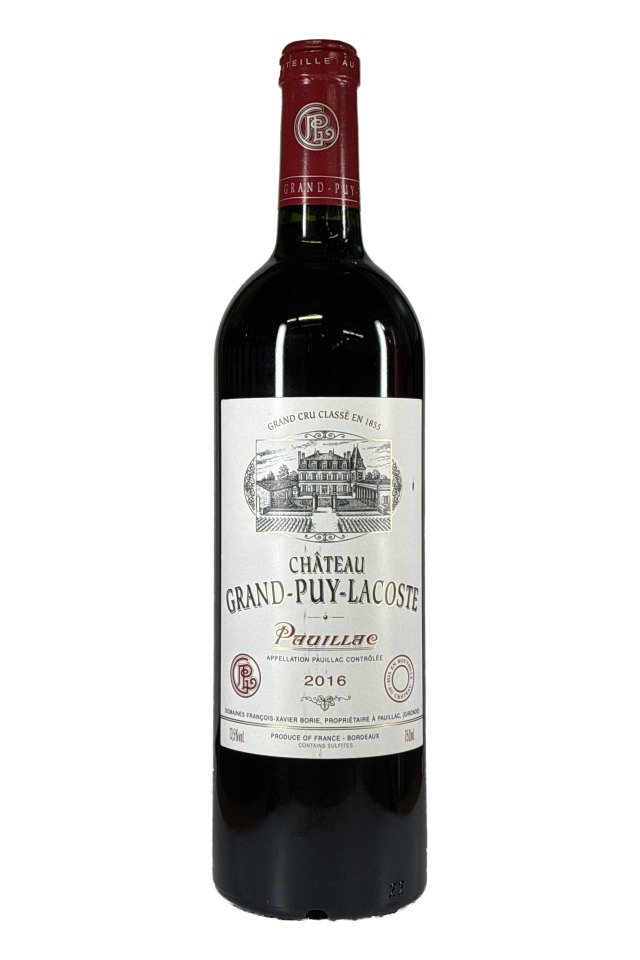
"The 2016 Grand Puy-Lacoste has a clean, precise bouquet with nicely detailed blackberry, briar and tobacco aromas, touches of mint emerging with time, all utterly charming. The palate is medium-bodied with supple tannins and a fine bead of acidity, conveying a sense of symmetry throughout and leading into a deft, quite persistent finish. This is very classy, and it should age with style. Tasted blind at the Southwold tasting."
Region
Red
Country
Score
"The 2016 Grand Puy-Lacoste has a clean, precise bouquet with nicely detailed blackberry, briar and tobacco aromas, touches of mint emerging with time, all utterly charming. The palate is medium-bodied with supple tannins and a fine bead of acidity, conveying a sense of symmetry throughout and leading into a deft, quite persistent finish. This is very classy, and it should age with style. Tasted blind at the Southwold tasting."
Have questions?
The world's most influential fine-wine producer and the benchmark for Bordeaux, Burgundy, Champagne and the Rhone. Its appellation (AOC) system codifies geography, grape and method, and its wines set the global standard for age-worthiness and terroir expression.
The world's largest fine-wine region, built around blends of Cabernet Sauvignon and Merlot. Divided by the Gironde estuary into the structured Left Bank and the plush, Merlot-led Right Bank, it is the historic benchmark for age-worthy claret and sweet Sauternes.
Home to three of Bordeaux's five First Growths, Pauillac is the Left Bank benchmark for powerful, structured Cabernet Sauvignon. Its wines are famed for cassis, cedar and graphite notes and exceptional aging potential.
Chateau Grand-Puy-Lacoste is a Fifth Growth estate in Pauillac, Bordeaux, regarded as a benchmark for classic, pure Cabernet Sauvignon of firm structure and excellent aging potential.
2016 in Bordeaux is a benchmark vintage: a wet spring gave way to a dry, sunny summer, producing fresh, deeply aromatic wines with ripe tannins, remarkable balance and excellent long-term aging potential.
Cabernet Sauvignon is a red grape known for deep color, firm tannins and a clearly defined structure. Blackcurrant, often described as cassis, is a signature flavor, accompanied by blackberry and, depending on the wine, cedar, graphite, mint or herbal notes. Oak aging can add spice and toast, while bottle age may bring tobacco, leather and other savory layers. The grape is a cornerstone of Bordeaux's Left Bank, especially the Médoc and Graves, where it is commonly blended with Merlot, Cabernet Franc and smaller amounts of other varieties. Beyond Bordeaux, Cabernet Sauvignon has established distinctive regional identities, including Australia's Coonawarra and Margaret River. Vineyard climate and ripeness influence whether the emphasis falls on fresh fruit and herbs or richer, fuller expressions. Its tannins, acidity and concentration can support long development in well-balanced examples. Many accessible styles are made for earlier enjoyment, while more structured wines reward time as their tannins soften and their aromas evolve. Cabernet Sauvignon brings depth and backbone to blends and can also express a vineyard's character as a varietal wine.
Merlot is a red grape valued for generous fruit, a rounded palate and a supple, often velvety texture. Plum and cherry are characteristic flavors, sometimes accompanied by violet or fig, with chocolate, coffee and savory notes developing in some wines as they mature. Its styles range from bright, approachable reds to deeply concentrated wines with substantial structure. Bordeaux is Merlot's historic home, and the grape is particularly important on the Right Bank in Saint-Émilion, Pomerol and Fronsac. There it can lead a blend, frequently partnered with Cabernet Franc. Across Bordeaux, Merlot also complements Cabernet Sauvignon, contributing fruit and roundness alongside the latter's firmer tannic framework. Merlot generally ripens earlier than Cabernet Sauvignon, helping growers achieve ripe fruit in a range of conditions. Vineyard site, harvest timing and cellar choices determine the final balance of richness, freshness and tannin. Many bottlings offer pleasure in their youth, while fine, well-balanced examples can develop layered aromas and greater complexity through extended aging.