
Loading lot details…
The November 2026 Auction: Part 2
Swipe left for previous · Swipe right for next
 1 / 2
Lot 4134
Estimate: $2,075
OWC.
Next Bid
Opening Bid
Sign in to place bids and add to your watchlist.
Login to BidCollection name
Reviews
100JA
"A classical vintage that perfectly suits the Opus style. Gorgeous vivid plum colour, sculpted, balanced, with a ton of lift, waves of rose petals, iris and peony, soft grilled cumin, sage and white pepper spice. Love the hidden power here and the supple slightly chalky tannins that are structured in their architecture with a precision and carved quality. Precise, layered and stretched out, a brilliant Opus, concentrated and yet delicate. Feels pared back and captures the spirit of early Opus, when it moved forward the conversation of what Napa could be. Michael Silacci director, 100% new oak for ageing extremely well integrated even now."
Region
Red
Country
Score
"A classical vintage that perfectly suits the Opus style. Gorgeous vivid plum colour, sculpted, balanced, with a ton of lift, waves of rose petals, iris and peony, soft grilled cumin, sage and white pepper spice. Love the hidden power here and the supple slightly chalky tannins that are structured in their architecture with a precision and carved quality. Precise, layered and stretched out, a brilliant Opus, concentrated and yet delicate. Feels pared back and captures the spirit of early Opus, when it moved forward the conversation of what Napa could be. Michael Silacci director, 100% new oak for ageing extremely well integrated even now."
Have questions?
The fourth-largest wine producer in the world, led by California. American fine wine is defined by ripe, expressive fruit and a spirit of innovation, with Napa Valley Cabernet Sauvignon among the most sought-after wines globally.
California's most prestigious wine region, celebrated worldwide for opulent, structured Cabernet Sauvignon. Diverse soils and mountain-to-valley-floor sites yield wines of remarkable ripeness, power and longevity.
California's flagship appellation for opulent, structured Cabernet Sauvignon of ripe fruit, plush tannins and cellar-worthy depth.
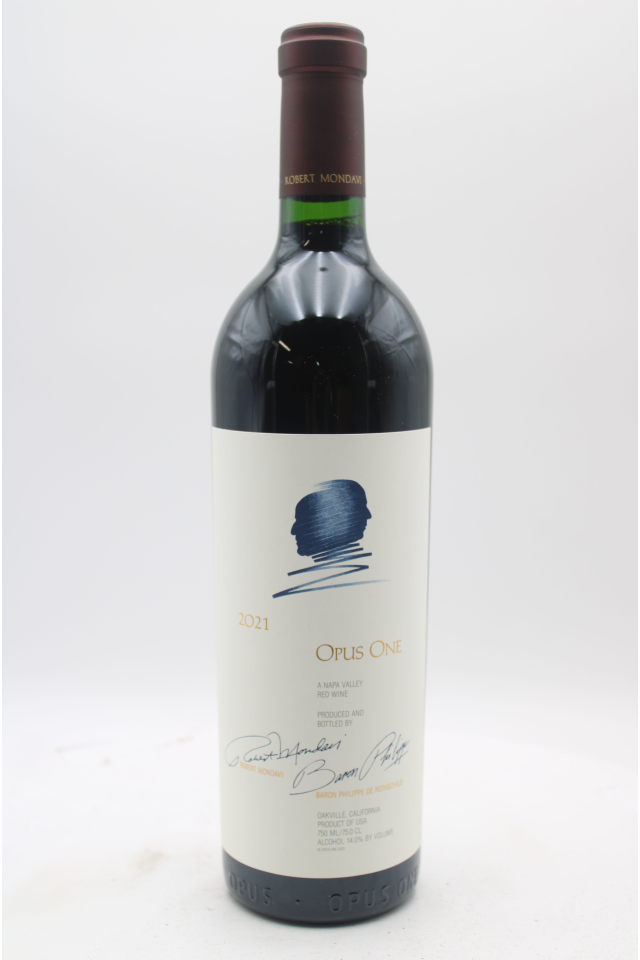
Opus One is a Napa Valley estate in Oakville, founded as a joint venture between Robert Mondavi and Baron Philippe de Rothschild of Mouton, producing a single Bordeaux-style Cabernet-dominated red.
2021 in Napa Valley was a drought year yielding a small crop of concentrated, powerful Cabernet; free of smoke issues, the wines are ripe yet balanced, deeply structured and ageworthy, ranking among the decade's best.
Cabernet Franc is an aromatic red grape prized for its perfume, freshness and savory character. Raspberry and violet are familiar notes, often joined by red fruit, herbs and a leafy edge. Its wines can be supple and fragrant or more firmly structured, with the balance of fruit, tannin and herbal complexity shaped by ripeness, vineyard site and winemaking. In France's Loire Valley, Cabernet Franc often takes center stage in wines from Chinon, Bourgueil, Saint-Nicolas-de-Bourgueil and Saumur-Champigny. These expressions highlight the grape's ability to reflect differences between vineyards while retaining a distinctive sense of freshness. In Bordeaux, particularly Saint-Émilion, it is an important partner to Merlot and Cabernet Sauvignon, contributing aromatic lift, finesse and structure. Cabernet Franc generally ripens before Cabernet Sauvignon and produces wines ranging from lively, fruit-focused bottlings to concentrated examples capable of developing additional complexity with age. Its appeal lies in the interplay of fruit, floral perfume and savory detail, whether bottled on its own or used to bring nuance to a blend.
Yields dark, plush reds with ripe black fruit and soft tannins. A traditional Bordeaux blender, it found its greatest fame in Argentina.
Merlot is a red grape valued for generous fruit, a rounded palate and a supple, often velvety texture. Plum and cherry are characteristic flavors, sometimes accompanied by violet or fig, with chocolate, coffee and savory notes developing in some wines as they mature. Its styles range from bright, approachable reds to deeply concentrated wines with substantial structure. Bordeaux is Merlot's historic home, and the grape is particularly important on the Right Bank in Saint-Émilion, Pomerol and Fronsac. There it can lead a blend, frequently partnered with Cabernet Franc. Across Bordeaux, Merlot also complements Cabernet Sauvignon, contributing fruit and roundness alongside the latter's firmer tannic framework. Merlot generally ripens earlier than Cabernet Sauvignon, helping growers achieve ripe fruit in a range of conditions. Vineyard site, harvest timing and cellar choices determine the final balance of richness, freshness and tannin. Many bottlings offer pleasure in their youth, while fine, well-balanced examples can develop layered aromas and greater complexity through extended aging.
Petit Verdot is a red grape associated with deeply colored wines, firm tannins and pronounced aromatic intensity. Violet, spice and licorice are characteristic notes, with cocoa or coffee appearing in some expressions. Even a small addition can give a blend greater depth, texture and structure. In Bordeaux, Petit Verdot traditionally plays a supporting role alongside Cabernet Sauvignon and Merlot, especially on the Left Bank in the Médoc and Graves. Its late-ripening cycle makes the growing season important: sufficient warmth and time are needed to bring its fruit and tannins to maturity. The proportion used in a blend therefore varies with the vineyard, vintage and producer's style. Petit Verdot is also bottled on its own, particularly in warm growing regions where it can ripen reliably. These wines give a fuller view of its floral, spicy character and concentrated structure. Careful vineyard work and tannin management are central to balancing its intensity, whether it serves as a small but influential blending component or the principal grape in the bottle.