
Loading lot details…
The November 2026 Auction: Part 3
Swipe left for previous · Swipe right for next
 1 / 3
Lot 44
Estimate: $3,000
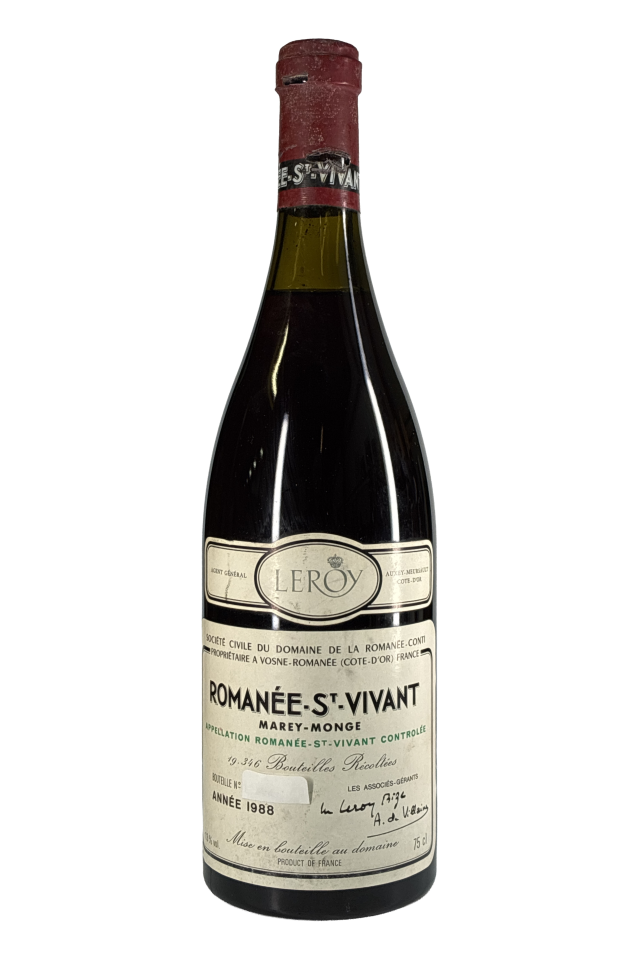
3cm, nicked, scuffed, torn, heavily corroded capsule, slightly recessed cork, nicked, bin soiled label.
Next Bid
Opening Bid
Sign in to place bids and add to your watchlist.
Login to BidCollection name
Reviews
92AM
... classic spice box character of a fine RSV. I particularly like the purity of expression (yet no lack of power) which combined with the outstanding length make this an excellent effort that should continue to hold at this level for a number of years. Consistent notes.
Region
Red
Country
Score
... classic spice box character of a fine RSV. I particularly like the purity of expression (yet no lack of power) which combined with the outstanding length make this an excellent effort that should continue to hold at this level for a number of years. Consistent notes.
Have questions?
French wine covers a remarkable range of styles, from the structured reds of Bordeaux to the sparkling wines of Champagne, where a second fermentation in the bottle creates the bubbles. Bordeaux is best known for red blends built around Cabernet Sauvignon or Merlot, but it also makes dry whites and the sweet wines of Sauternes. Burgundy is a benchmark for Pinot Noir and Chardonnay, with wines that can taste distinctly different from one village to the next. The Rhône Valley offers a contrast within a single region: Syrah shapes the reds of the north, while Grenache often leads the blends of the south. In the Loire Valley, Chenin Blanc can be dry, sweet or sparkling, while Cabernet Franc is the signature red grape of appellations such as Chinon and Saumur-Champigny. A French wine label often starts with a place name. The Appellation d’Origine Contrôlée (AOC) identifies a defined area and sets rules for permitted grapes and production. Learning a few appellation names makes it easier to recognize the styles you enjoy and find related wines from neighboring villages or other producers.
Burgundy, or Bourgogne, is best known for Pinot Noir and Chardonnay. A useful way to explore the region is to follow one grape across several places. Chablis shows Chardonnay’s brisk, citrus and mineral side, while Meursault and Puligny-Montrachet in the Côte de Beaune offer a contrast in texture and richness. In the Côte de Nuits, villages such as Gevrey-Chambertin and Vosne-Romanée are closely associated with Pinot Noir. Farther south, look to Mercurey in the Côte Chalonnaise for Pinot Noir and to Pouilly-Fuissé in the Mâconnais for Chardonnay. Burgundy’s labels tell you how precisely the wine’s origin is defined. A regional appellation can cover a broad area, while a village wine comes from a more narrowly defined area around a named commune. Premier Cru identifies designated vineyard sites within a village appellation, and Grand Cru sites have appellations of their own. These named vineyard parcels, known as climats, can differ in soil, slope and exposure even when they sit side by side. To get a feel for those differences, compare two villages from the same producer and vintage, or try two producers working in the same vineyard. Both comparisons help show how place and winemaking shape the wine in your glass.
Arguably Burgundy's most exalted village, home to legendary Grand Crus. Its Pinot Noir is renowned for perfume, silk and sublime complexity.
Domaine de la Romanée-Conti, often abbreviated DRC, is a Burgundy estate associated with some of the Côte d'Or's most celebrated vineyard sites. Its name comes from Romanée-Conti, the grand cru acquired by the Prince de Conti in 1760. The domaine's identity rests on the individuality of its vineyards and the careful work required to express their character. Pinot Noir is central to its red wines, including Romanée-Conti, La Tâche, Richebourg, Romanée-Saint-Vivant, Grands Échézeaux, Échézeaux and Corton. Romanée-Conti and La Tâche are monopoles, meaning each vineyard is held by a single owner. The domaine also produces white wines from Chardonnay in Montrachet and Corton-Charlemagne, extending its interpretation of Burgundy's grands crus beyond red wine. Respect for soils, attention to natural growing conditions and the preservation of fine Pinot Noir plant material are central to the domaine's stated philosophy. Its approach emphasizes precision, patience and the distinct qualities of each climat, Burgundy's term for an individually named vineyard site. The wines are therefore best understood through their particular vineyard and vintage, within a shared tradition of detailed vineyard work and long-term stewardship.
Pinot Noir is a thin-skinned red grape celebrated for aromatic detail, silky texture and sensitivity to its growing site. Cherry and strawberry are familiar flavors, often accompanied by floral notes and, with maturity, earthy or forest-floor complexity. Its wines are commonly light to medium in body, with freshness and fine tannins that can give a sense of delicacy alongside considerable depth. Burgundy is Pinot Noir's historic home and a benchmark for the grape. There, differences in soil, slope and exposure can produce distinct expressions from neighboring vineyards, making Pinot Noir central to the region's emphasis on terroir. Beyond Burgundy, cooler growing regions have developed their own interpretations, including Australia's Yarra Valley, Mornington Peninsula and Tasmania. Pinot Noir can produce fresh, fruit-focused wines for earlier enjoyment as well as more structured examples that gain complexity with age. Vineyard conditions and choices in fermentation and oak aging influence its balance of perfume, fruit and savory character. Its appeal lies in nuance and the way a single grape can communicate the individuality of a place.