
Loading lot details…
The November 2026 Auction: Part 3
Swipe left for previous · Swipe right for next
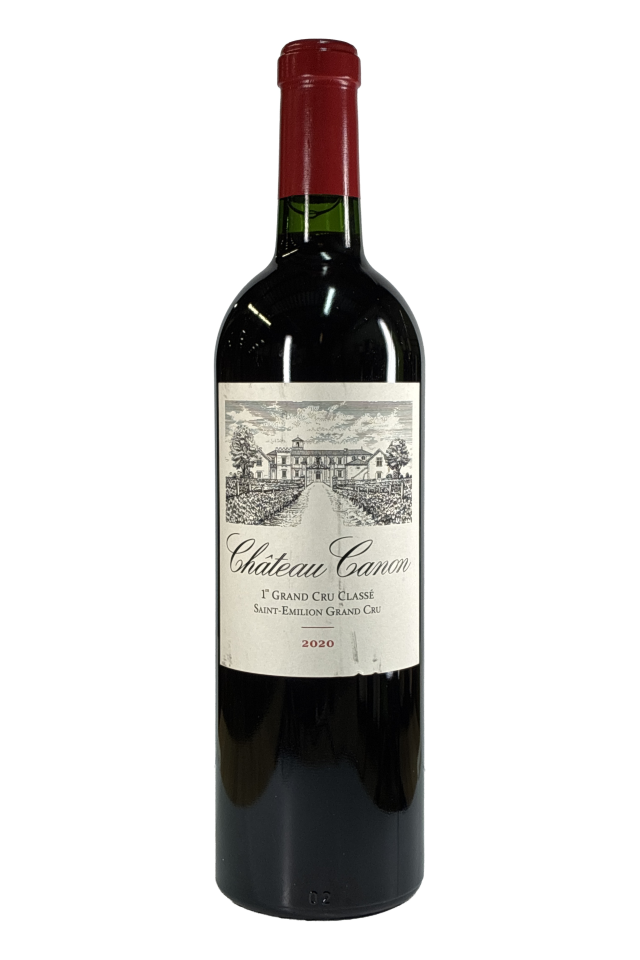 1 / 2
Lot 164
Estimate: $165
Lightly scuffed label.
Next Bid
Current Bid
Sign in to place bids and add to your watchlist.
Login to BidCollection name
Reviews
100WA
"The brilliant 2020 Canon looks set to surpass both the 2019 and 2016 as this estate's finest wine since the post-war period, though like many of the best 2020s, it will require more patience than its 2019 counterpart. Unwinding in the glass with aromas of cherries and raspberries mingled with notions of exotic spices and iris, it's medium to full-bodied, deep and concentrated, with vibrant acids and beautifully polished, chalky tannins. Pure and precise, it concludes with a long, mouthwatering finish. This beautifully constructed wine communicates the essence of this superb limestone terroir, and it will be worth a special effort to track down and cellar. In the last few years, this sleeping giant has well and truly reawakened, and the 2020 vintage represents the finest Canon produced since the early 1960s. Extensive replanting between 1996 and 2003, overseen by Audebert's predecessor, John Kolasa, saw some 50% of the estate's 22 hectares replaced. The fact that these vines are now arriving at full maturity surely goes some way to accounting for Canon's contemporary renaissance. Now, the team is working on restructuring the rest, combining massal selections and clones. Viticulture is thoughtful, with cover crops across the estate, and the terroir itself is relatively homogeneous: solid limestone covered by some 0.25 to 0.7 meters of clay, with a more or less uniform exposition on Saint-Émilion's plateau. There's also one small parcel in the town itself and another by Berliquet. Today, the vineyard is planted with about 70% Merlot and 30% Cabernet Franc, and there are no plans to radically alter that. Winemaking privileges finesse over power, though a certain richness and texture can be taken for granted with a site like this, and maturation is in 50% new oak (mostly from Taransaud, Demptos, Sylvain and Quintessence). Today, the focus is on increasing precision and refinement, rather than revolution. And well it might be, for why change a winning team? ‘To be honest, we didn’t manage anything. That terroir at Canon is insane,’ said Technical Director Nicolas Audebert. ‘It is incredible how it is always the terroir that brings back that freshness. We harvested a little earlier this year. And during the heat, we tried to protect the berries, with techniques I was using in South America to protect the bunches. But in the end, it is the typicity of that limestone that comes through. It is the backbone of the wine. This terroir also comes in earlier—the grapes just motor through. If we had waited 10 more days, it would be completely different. The wine has no excess—this is very important for us. We are not being extreme one way or the other. We look for ripeness and freshness. With the limestone, the vine never stops. The roots take the freshness and can handle these extremes. It is worth remembering that Canon has a southwest exposure, giving that little bit of extra ripeness. Also, I need to mention our work effort. We worked right through August. You know, usually everyone in France takes their holidays in August. Now, our team takes their holidays in July. We cannot wait around in August. Picking date completely makes what you are.’"
Region
Red
Country
Score
"The brilliant 2020 Canon looks set to surpass both the 2019 and 2016 as this estate's finest wine since the post-war period, though like many of the best 2020s, it will require more patience than its 2019 counterpart. Unwinding in the glass with aromas of cherries and raspberries mingled with notions of exotic spices and iris, it's medium to full-bodied, deep and concentrated, with vibrant acids and beautifully polished, chalky tannins. Pure and precise, it concludes with a long, mouthwatering finish. This beautifully constructed wine communicates the essence of this superb limestone terroir, and it will be worth a special effort to track down and cellar. In the last few years, this sleeping giant has well and truly reawakened, and the 2020 vintage represents the finest Canon produced since the early 1960s. Extensive replanting between 1996 and 2003, overseen by Audebert's predecessor, John Kolasa, saw some 50% of the estate's 22 hectares replaced. The fact that these vines are now arriving at full maturity surely goes some way to accounting for Canon's contemporary renaissance. Now, the team is working on restructuring the rest, combining massal selections and clones. Viticulture is thoughtful, with cover crops across the estate, and the terroir itself is relatively homogeneous: solid limestone covered by some 0.25 to 0.7 meters of clay, with a more or less uniform exposition on Saint-Émilion's plateau. There's also one small parcel in the town itself and another by Berliquet. Today, the vineyard is planted with about 70% Merlot and 30% Cabernet Franc, and there are no plans to radically alter that. Winemaking privileges finesse over power, though a certain richness and texture can be taken for granted with a site like this, and maturation is in 50% new oak (mostly from Taransaud, Demptos, Sylvain and Quintessence). Today, the focus is on increasing precision and refinement, rather than revolution. And well it might be, for why change a winning team? ‘To be honest, we didn’t manage anything. That terroir at Canon is insane,’ said Technical Director Nicolas Audebert. ‘It is incredible how it is always the terroir that brings back that freshness. We harvested a little earlier this year. And during the heat, we tried to protect the berries, with techniques I was using in South America to protect the bunches. But in the end, it is the typicity of that limestone that comes through. It is the backbone of the wine. This terroir also comes in earlier—the grapes just motor through. If we had waited 10 more days, it would be completely different. The wine has no excess—this is very important for us. We are not being extreme one way or the other. We look for ripeness and freshness. With the limestone, the vine never stops. The roots take the freshness and can handle these extremes. It is worth remembering that Canon has a southwest exposure, giving that little bit of extra ripeness. Also, I need to mention our work effort. We worked right through August. You know, usually everyone in France takes their holidays in August. Now, our team takes their holidays in July. We cannot wait around in August. Picking date completely makes what you are.’"
Have questions?
French wine covers a remarkable range of styles, from the structured reds of Bordeaux to the sparkling wines of Champagne, where a second fermentation in the bottle creates the bubbles. Bordeaux is best known for red blends built around Cabernet Sauvignon or Merlot, but it also makes dry whites and the sweet wines of Sauternes. Burgundy is a benchmark for Pinot Noir and Chardonnay, with wines that can taste distinctly different from one village to the next. The Rhône Valley offers a contrast within a single region: Syrah shapes the reds of the north, while Grenache often leads the blends of the south. In the Loire Valley, Chenin Blanc can be dry, sweet or sparkling, while Cabernet Franc is the signature red grape of appellations such as Chinon and Saumur-Champigny. A French wine label often starts with a place name. The Appellation d’Origine Contrôlée (AOC) identifies a defined area and sets rules for permitted grapes and production. Learning a few appellation names makes it easier to recognize the styles you enjoy and find related wines from neighboring villages or other producers.
The world's largest fine-wine region, built around blends of Cabernet Sauvignon and Merlot. Divided by the Gironde estuary into the structured Left Bank and the plush, Merlot-led Right Bank, it is the historic benchmark for age-worthy claret and sweet Sauternes.
2020 in Bordeaux, the last of a great trio, was warm and drought-marked, with Merlot excelling; the wines are concentrated and powerful yet fresh, showing deep color, ripe tannins and excellent aging potential.
Cabernet Franc is an aromatic red grape prized for its perfume, freshness and savory character. Raspberry and violet are familiar notes, often joined by red fruit, herbs and a leafy edge. Its wines can be supple and fragrant or more firmly structured, with the balance of fruit, tannin and herbal complexity shaped by ripeness, vineyard site and winemaking. In France's Loire Valley, Cabernet Franc often takes center stage in wines from Chinon, Bourgueil, Saint-Nicolas-de-Bourgueil and Saumur-Champigny. These expressions highlight the grape's ability to reflect differences between vineyards while retaining a distinctive sense of freshness. In Bordeaux, particularly Saint-Émilion, it is an important partner to Merlot and Cabernet Sauvignon, contributing aromatic lift, finesse and structure. Cabernet Franc generally ripens before Cabernet Sauvignon and produces wines ranging from lively, fruit-focused bottlings to concentrated examples capable of developing additional complexity with age. Its appeal lies in the interplay of fruit, floral perfume and savory detail, whether bottled on its own or used to bring nuance to a blend.
Merlot is a red grape valued for generous fruit, a rounded palate and a supple, often velvety texture. Plum and cherry are characteristic flavors, sometimes accompanied by violet or fig, with chocolate, coffee and savory notes developing in some wines as they mature. Its styles range from bright, approachable reds to deeply concentrated wines with substantial structure. Bordeaux is Merlot's historic home, and the grape is particularly important on the Right Bank in Saint-Émilion, Pomerol and Fronsac. There it can lead a blend, frequently partnered with Cabernet Franc. Across Bordeaux, Merlot also complements Cabernet Sauvignon, contributing fruit and roundness alongside the latter's firmer tannic framework. Merlot generally ripens earlier than Cabernet Sauvignon, helping growers achieve ripe fruit in a range of conditions. Vineyard site, harvest timing and cellar choices determine the final balance of richness, freshness and tannin. Many bottlings offer pleasure in their youth, while fine, well-balanced examples can develop layered aromas and greater complexity through extended aging.