
Loading lot details…
The November 2026 Auction: Part 3
Swipe left for previous · Swipe right for next
 1 / 2
Lot 3233
Estimate: $100
Lightly scuffed, bin soiled label.
Next Bid
Opening Bid
Sign in to place bids and add to your watchlist.
Login to BidCollection name
Reviews
95AG
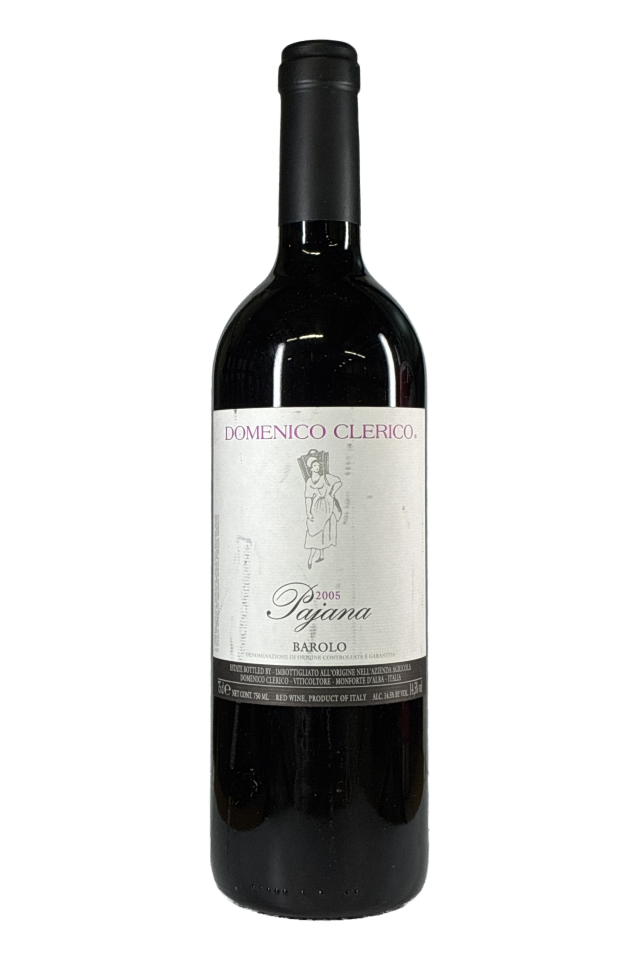
"The 2005 Barolo Pajanà is off the charts. This deeply scented, layered Barolo possesses a striking bouquet of spices, tobacco, graphite, dark cherries and new leather that come together in a breathtaking display of elegance and power that is hard to fully capture in words. The tannins are, as usual, quite broad but they are also remarkably fine. In 2005 the Pajanà shows breathtaking balance and harmony with a long, sensual finish. This is a superb effort from Domenico Clerico, and his team led by the mega-talented Massimo Conterno. Domenico Clerico’s 2005 Barolos are among the handful of wines in this vintage that reveal the three-dimensional qualities that make Barolo such a seductive wine. Unfortunately there is no Percristina, as the vintage that would have been released is the 2002, in which Clerico did not produce his single-vineyard Barolos. In August 2008 I spent a morning driving around Clerico’s vineyards in the Ginestra zone of Monforte, which is the source of his Pajanà and Ciabot Mentin Ginestra Barolos. It is impossible to fully appreciate the backbreaking effort that is required to manually work these steep vineyards without setting foot in the vines themselves. The site of green-harvested fruit strewn across the ground was a testament to Clerico’s dedication to low yields. In recent years Clerico has gradually lengthened maceration times and lowered the use of new oak, both of which are allowing for the purity of that fruit to come through with extraordinary detail."
Region
Red
Country
Score
"The 2005 Barolo Pajanà is off the charts. This deeply scented, layered Barolo possesses a striking bouquet of spices, tobacco, graphite, dark cherries and new leather that come together in a breathtaking display of elegance and power that is hard to fully capture in words. The tannins are, as usual, quite broad but they are also remarkably fine. In 2005 the Pajanà shows breathtaking balance and harmony with a long, sensual finish. This is a superb effort from Domenico Clerico, and his team led by the mega-talented Massimo Conterno. Domenico Clerico’s 2005 Barolos are among the handful of wines in this vintage that reveal the three-dimensional qualities that make Barolo such a seductive wine. Unfortunately there is no Percristina, as the vintage that would have been released is the 2002, in which Clerico did not produce his single-vineyard Barolos. In August 2008 I spent a morning driving around Clerico’s vineyards in the Ginestra zone of Monforte, which is the source of his Pajanà and Ciabot Mentin Ginestra Barolos. It is impossible to fully appreciate the backbreaking effort that is required to manually work these steep vineyards without setting foot in the vines themselves. The site of green-harvested fruit strewn across the ground was a testament to Clerico’s dedication to low yields. In recent years Clerico has gradually lengthened maceration times and lowered the use of new oak, both of which are allowing for the purity of that fruit to come through with extraordinary detail."
Have questions?
Wine is made in all 20 of Italy’s regions, from Alpine valleys to Mediterranean islands. Much of that variety comes from grapes with deep local roots. In Piedmont, Nebbiolo gives Barolo and Barbaresco their perfume and firm tannins. In Tuscany, Sangiovese brings red cherry and bright acidity to Chianti Classico and Brunello di Montalcino. Veneto spans a different range, from fresh, Garganega-based Soave to Amarone della Valpolicella, made from grapes dried before fermentation. Italy’s whites and sparkling wines are just as varied. The Marche is known for Verdicchio, while Sicily’s Mount Etna produces whites based on Carricante and reds led by Nerello Mascalese. In southern Italy, Campania is home to both Fiano di Avellino and the structured Aglianico reds of Taurasi. For bubbles, look to the orchard fruit of Glera-based Prosecco or the fine mousse and bready notes of Franciacorta, which gets its sparkle from a second fermentation in the bottle. An Italian label often leads with a place name. DOC and DOCG identify protected denominations with rules for where and how the wine is made. IGT also identifies a geographic origin and can give producers more latitude in their choice of grapes and blends.
Piedmont, or Piemonte, lies in northwestern Italy at the foot of the Alps. In the Langhe hills around Alba, Nebbiolo makes the perfumed, firmly structured reds of Barolo and Barbaresco. Vineyard exposure and differences in soils help shape the character of each site. Farther north in Alto Piemonte, Nebbiolo is locally known as Spanna and forms the backbone of reds such as Gattinara and Ghemme. Piedmont’s range goes well beyond Nebbiolo. Barbera d’Asti and Nizza are known for their bright acidity and dark fruit, while Dolcetto from Dogliani often shows dark berries and an almond-like finish. Across the Tanaro from the Langhe, Roero is home to fragrant Arneis as well as red wines based on Nebbiolo. Other regional whites include Gavi, made from Cortese, and Timorasso from the hills around Tortona. Moscato d’Asti offers another side of Piedmont: gently fizzy, sweet and fragrant with orange blossom and fresh grapes.
The 'King of Wines,' a powerful, tannic and perfumed Nebbiolo from Piedmont's Langhe hills, celebrated for tar-and-roses aromatics and extraordinary aging potential.
Nebbiolo is the red grape behind Barolo and Barbaresco. Its wines can be pale ruby in the glass yet carry firm tannins and bright acidity. Red cherry, rose and violet are common in youth; with time, dried flowers, tar and earthy notes can emerge. That combination of fragrance and structure is part of what makes the grape so distinctive and gives its most structured wines the ability to age. Nebbiolo buds early and ripens late, so vineyard exposure matters. Its character can change markedly from one hillside to the next. In Piedmont, it also appears as Langhe Nebbiolo and Nebbiolo d’Alba, which often show the grape’s fruit and perfume earlier. In Alto Piemonte, where it is known as Spanna, it anchors wines such as Gattinara and Ghemme. Across the regional border in Lombardy’s Valtellina, the same grape is called Chiavennasca.