
Loading lot details…
The October 2023 Auction: Part 2
Swipe left for previous · Swipe right for next
 1 / 2
Lot 539
Estimate: $1,700
This auction has ended. Bidding is closed.
Collection name
Reviews
92AG
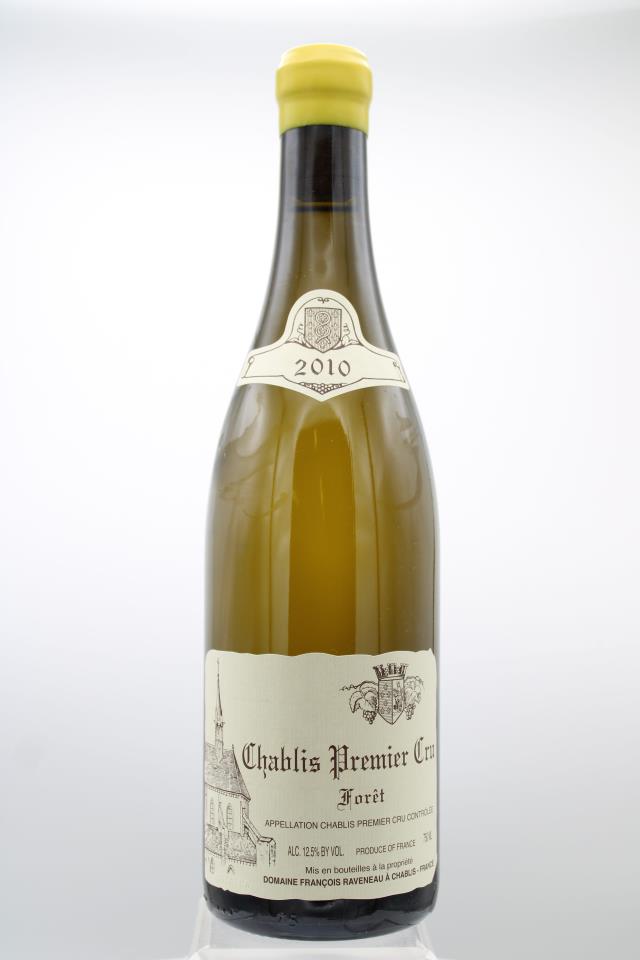
"The 2010 Chablis Foret is rich, layered and totally sensual. A highly expressive tapestry of aromas and flavors emerges from the glass in this rich, textured wine. The Forest is all about harmony. The 2011 isn't the most complex Foret, but it is likely to drink better earlier than some of the other wines in this lineup because of its round, immediate personality. My visit with Bernard Raveneau was one of the highlights of my trip to Chablis earlier this summer. At their best, Raveneau's wines are contemplative and breathtakingly beautiful. I never miss a chance to drink them whenever I can. The 2011 harvest started on September 5th and lasted 6 days. Hail was an issue in some spots, most notable Les Clos and Montée de Tonnerre, where yields were down 25%. Raveneau adds that a measure of minerality is missing because of the late rains in the season. Raveneau thinks the 2010s have more character than the 2011s. The irregular flowering was most severe on the right bank (Clos and Mont de Tonnerre in particular), while the left bank, which was a week later to flower moved through the flowering with only a 10-15% reduction in yields, modest within the context of the vintage. Raveneau told me the 2010s were very austere at the outset. He thought they might stay that way, instead the wines softened considerably after the malos, which turned out to be a pleasant surprise. The 2010s were bottled end of May 2012, quite late by Chablis standards. As for the wines, they are pretty stratospheric. There is a sense of utter life and vividness in the 2010s that makes them utterly irresistible."
Region
White
Country
Score
"The 2010 Chablis Foret is rich, layered and totally sensual. A highly expressive tapestry of aromas and flavors emerges from the glass in this rich, textured wine. The Forest is all about harmony. The 2011 isn't the most complex Foret, but it is likely to drink better earlier than some of the other wines in this lineup because of its round, immediate personality. My visit with Bernard Raveneau was one of the highlights of my trip to Chablis earlier this summer. At their best, Raveneau's wines are contemplative and breathtakingly beautiful. I never miss a chance to drink them whenever I can. The 2011 harvest started on September 5th and lasted 6 days. Hail was an issue in some spots, most notable Les Clos and Montée de Tonnerre, where yields were down 25%. Raveneau adds that a measure of minerality is missing because of the late rains in the season. Raveneau thinks the 2010s have more character than the 2011s. The irregular flowering was most severe on the right bank (Clos and Mont de Tonnerre in particular), while the left bank, which was a week later to flower moved through the flowering with only a 10-15% reduction in yields, modest within the context of the vintage. Raveneau told me the 2010s were very austere at the outset. He thought they might stay that way, instead the wines softened considerably after the malos, which turned out to be a pleasant surprise. The 2010s were bottled end of May 2012, quite late by Chablis standards. As for the wines, they are pretty stratospheric. There is a sense of utter life and vividness in the 2010s that makes them utterly irresistible."
Have questions?
The world's most influential fine-wine producer and the benchmark for Bordeaux, Burgundy, Champagne and the Rhone. Its appellation (AOC) system codifies geography, grape and method, and its wines set the global standard for age-worthiness and terroir expression.
Produces the world's most revered Pinot Noir and Chardonnay from a mosaic of tiny, terroir-defined climats. Its hierarchy of village, Premier Cru and Grand Cru vineyards makes site the ultimate expression of quality.
Produces steely, mineral Chardonnay from Kimmeridgian limestone in Burgundy's cool north, prized for precision, purity and saline drive.
The world's most versatile white grape, producing everything from steely Chablis to rich, oaked whites. Its neutrality makes it a mirror of terroir and winemaking, and the foundation of white Burgundy and Champagne.