
Loading lot details…
The November 2026 Auction: Part 2
Swipe left for previous · Swipe right for next
 1 / 2
Lot 192
Estimate: $85
Next Bid
Current Bid
Sign in to place bids and add to your watchlist.
Login to BidCollection name
Reviews
95JD
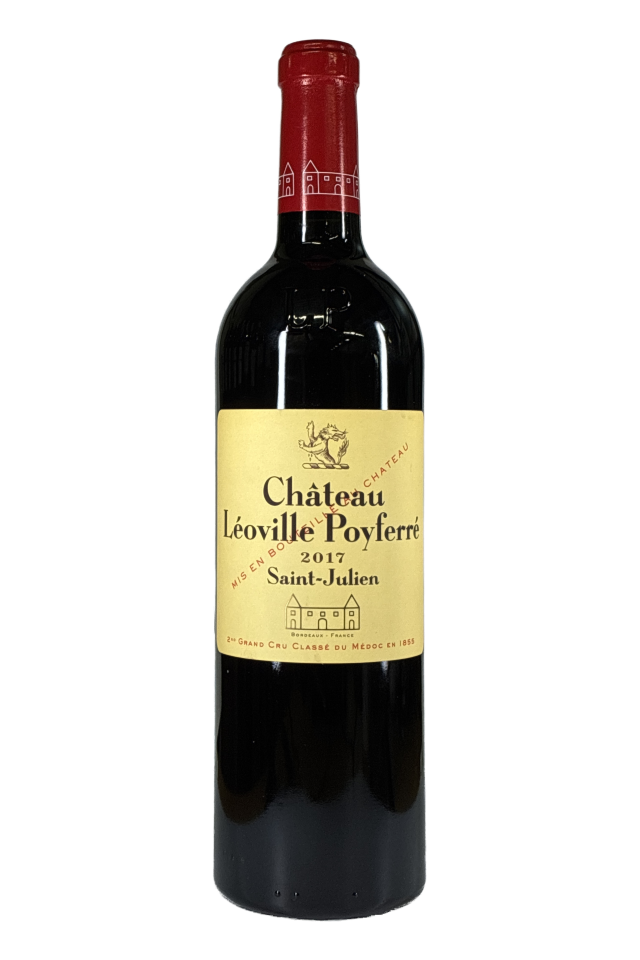
"Based on a blend of 68% Cabernet Sauvignon, 27% Merlot, 3% Cabernet Franc and 2% Petit Verdot, the 2017 Chateau Leoville-Poyferre saw malolactic in barrels and spent 18 months in 80% new French oak. Sporting a deep ruby/purple hue, it delivers big, powerful notes of blackberries, blackcurrants, crushed violets, tobacco, and a touch of chocolate. Possessing medium to full-bodied richness, a rounded, opulent texture, and sweet tannins, it’s unquestionably one of the biggest, richest wines in the vintage. Give bottles 4-6 years of bottle age and enjoy over the following 2-3 decades. Tasted twice."
Region
Red
Country
Score
"Based on a blend of 68% Cabernet Sauvignon, 27% Merlot, 3% Cabernet Franc and 2% Petit Verdot, the 2017 Chateau Leoville-Poyferre saw malolactic in barrels and spent 18 months in 80% new French oak. Sporting a deep ruby/purple hue, it delivers big, powerful notes of blackberries, blackcurrants, crushed violets, tobacco, and a touch of chocolate. Possessing medium to full-bodied richness, a rounded, opulent texture, and sweet tannins, it’s unquestionably one of the biggest, richest wines in the vintage. Give bottles 4-6 years of bottle age and enjoy over the following 2-3 decades. Tasted twice."
Have questions?
The world's most influential fine-wine producer and the benchmark for Bordeaux, Burgundy, Champagne and the Rhone. Its appellation (AOC) system codifies geography, grape and method, and its wines set the global standard for age-worthiness and terroir expression.
The world's largest fine-wine region, built around blends of Cabernet Sauvignon and Merlot. Divided by the Gironde estuary into the structured Left Bank and the plush, Merlot-led Right Bank, it is the historic benchmark for age-worthy claret and sweet Sauternes.
Chateau Leoville Poyferre is a Second Growth estate in Saint-Julien, Bordeaux, known for a richer, more opulent and modern-styled expression of Cabernet-dominated wine.
2017 in Bordeaux was marked by damaging April frost that cut yields; unaffected vineyards made fresh, classically styled wines of moderate weight and charm, generally accessible early and best over the medium term.
Cabernet Sauvignon is a red grape known for deep color, firm tannins and a clearly defined structure. Blackcurrant, often described as cassis, is a signature flavor, accompanied by blackberry and, depending on the wine, cedar, graphite, mint or herbal notes. Oak aging can add spice and toast, while bottle age may bring tobacco, leather and other savory layers. The grape is a cornerstone of Bordeaux's Left Bank, especially the Médoc and Graves, where it is commonly blended with Merlot, Cabernet Franc and smaller amounts of other varieties. Beyond Bordeaux, Cabernet Sauvignon has established distinctive regional identities, including Australia's Coonawarra and Margaret River. Vineyard climate and ripeness influence whether the emphasis falls on fresh fruit and herbs or richer, fuller expressions. Its tannins, acidity and concentration can support long development in well-balanced examples. Many accessible styles are made for earlier enjoyment, while more structured wines reward time as their tannins soften and their aromas evolve. Cabernet Sauvignon brings depth and backbone to blends and can also express a vineyard's character as a varietal wine.